




If your bite feels off after getting a dental crown, you are not imagining it. A crown that feels too high, uneven, or uncomfortable when chewing is one of the most common problems patients experience after crown placement. While mild awareness of a new crown is normal for a few days, ongoing discomfort, jaw tension, or difficulty biting down usually means the bite needs adjustment.
Many patients describe the feeling as:
- “My crown bite feels off”
- “I can’t bite down properly”
- “My teeth don’t fit together anymore”
- “The crown feels too high”
- “My dentist says I’ll get used to it”
In many cases, the problem is a high bite crown, meaning the crown touches before the other teeth when you bite. Even a tiny imbalance can create pressure on your teeth, jaw joints, and chewing muscles.
The good news is that crown bite adjustment is usually a simple and routine dental procedure. However, persistent bite problems should never be ignored because they can lead to jaw pain, headaches, cracked teeth, TMJ strain, and long-term discomfort.
Why Your Bite Feels Off After a Crown
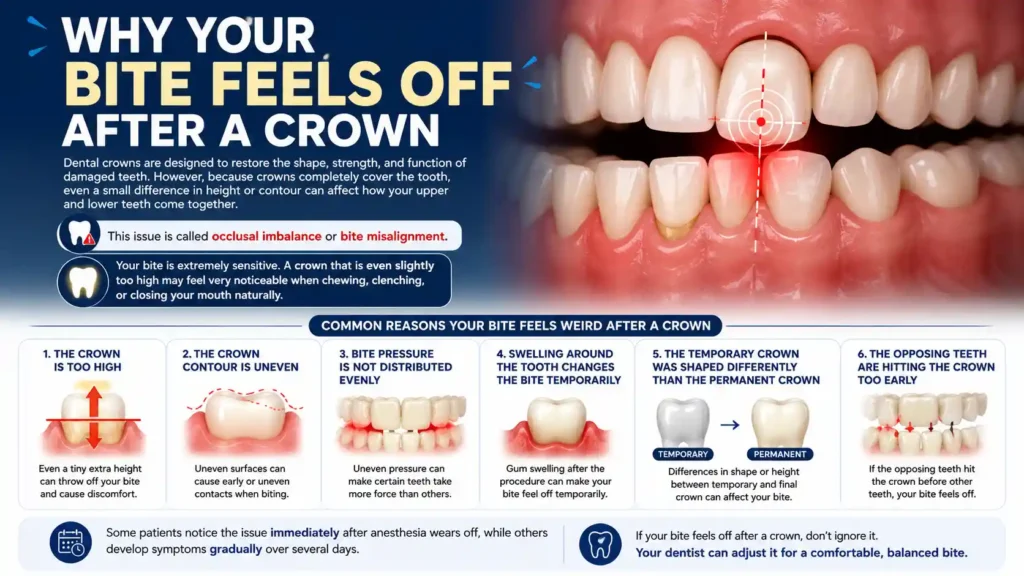
Dental crowns are designed to restore the shape, strength, and function of damaged teeth. However, because crowns completely cover the tooth, even a small difference in height or contour can affect how your upper and lower teeth come together.
This issue is called occlusal imbalance or bite misalignment.
Your bite is extremely sensitive. A crown that is even slightly too high may feel very noticeable when chewing, clenching, or closing your mouth naturally.
Common reasons your bite feels weird after a crown include:
- The crown is too high
- The crown contour is uneven
- Bite pressure is not distributed evenly
- Swelling around the tooth changes the bite temporarily
- The temporary crown was shaped differently than the permanent crown
- The opposing teeth are hitting the crown too early
Some patients notice the issue immediately after anesthesia wears off, while others develop symptoms gradually over several days.
How dentists correct the bite on your crown
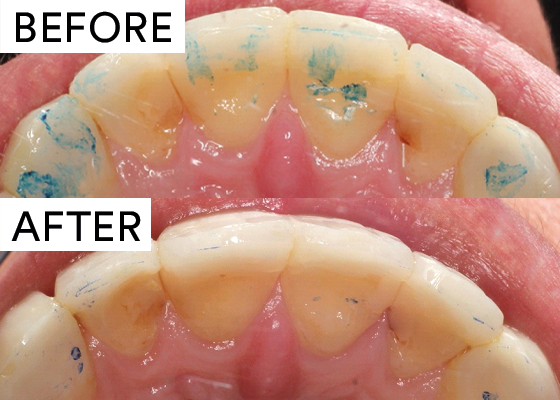
Your bite will never feel exactly the way it did with your original tooth. The dentist can shape the contour to match it as closely as possible. Dentists use a special registration paper to have you “tap tap” your teeth together. This helps them see what parts of the tooth are hitting before the other parts. They can then grind down those spots. It doesn’t weaken the crown to fix those small spots.
You can give yourself some more time to try to adjust to your crown. If you continue to experience discomfort, you will need to do something. It’s not good for your jaw to have your bite off. You could try to see your dentist again, but if he was uncomfortable or not knowledgeable to do it right the first time, it may not end well. You may need to see another dentist to fix it who has a high spot in dentistry.
Understanding the Importance of Proper Occlusion:
Proper occlusion, or the way your teeth come together when you bite, is crucial for the comfort and longevity of dental restorations, including crowns. Bite issues can lead to discomfort, pain, and potential complications if not addressed promptly.
Common Reasons for Bite Discomfort After Crown Placement:
Occlusal Adjustment:
Sometimes, the crown may alter your bite, leading to discomfort. An occlusal adjustment, where the dentist reshapes the crown or opposing teeth, is a common solution.
Crown Thickness:
If the crown is too thick or thin, it can affect your bite. A properly contoured crown ensures a harmonious fit within the dental arch.
Uneven Bite Force:
Uneven distribution of bite force can occur if the crown is higher or lower than the adjacent teeth. This can lead to discomfort and may indicate the need for an adjustment.
Temporary Changes:
It’s normal to experience some sensitivity or discomfort immediately after crown placement. However, persistent issues require attention.
Steps to Take When Your Dentist Won’t Adjust Your Bite:
- Express Your Concerns:
Clearly communicate your discomfort and concerns to your dentist. Ensure they understand the nature of the issue and how it’s affecting your daily life.
- Request an Occlusal Analysis:
Ask your dentist to perform an occlusal analysis to assess your bite. This involves evaluating how the upper and lower teeth come together and identifying any discrepancies.
- Seek a Second Opinion:
If your concerns persist and your dentist is unwilling to make adjustments, consider seeking a second opinion from another qualified dentist. A fresh perspective can provide valuable insights.
- Consult a Specialist:
In some cases, seeking the expertise of a prosthodontist, who specializes in bite issues and dental restorations, may be beneficial. They can offer a comprehensive evaluation and recommend appropriate adjustments.
- Document Your Symptoms:
Keep a record of your symptoms, including when they occur and any activities that worsen or alleviate the discomfort. This documentation can assist in conveying the severity of the issue to your dentist or another oral health professional.
Advocating for Your Dental Well-Being:
It’s crucial to advocate for your dental well-being and seek resolution when facing bite discomfort after a crown. Open communication with your dentist, requesting a thorough evaluation, and being proactive about addressing the issue are key steps in ensuring that your dental treatment results in both comfort and functionality.
What Is a High Bite Crown?
A high bite crown happens when the crown sits slightly taller than surrounding teeth and contacts first when biting down.
This is one of the most common reasons patients say:
- “My bite is off after a crown”
- “My crown feels too high”
- “I can’t bite down on my crown”
- “My new crown feels weird when I chew”
Even very small differences in height can create significant discomfort because your jaw naturally tries to compensate for the imbalance.
Symptoms of a High Bite Crown
A crown that is too high may cause:
- Tooth pain while chewing
- Jaw soreness
- Headaches
- Tooth sensitivity
- Pressure when biting
- Clenching discomfort
- A feeling that teeth don’t fit together correctly
- One tooth touching before the others
- Difficulty chewing evenly
- Jaw pain weeks after crown placement
Some patients also develop TMJ symptoms because the jaw is forced into an unnatural chewing position.
Is It Normal for a Crown to Feel Weird at First?
Yes — but only to a point.
It is common for a new crown to feel slightly different for a few days because your tongue and bite need time to adapt to the new shape.
However, your bite should still feel balanced.
You should not experience:
- Sharp pain while biting
- Ongoing pressure
- Jaw fatigue
- Trouble chewing
- A sensation that one tooth is hitting first
- A bite that feels uneven after one to two weeks
If those symptoms continue, the crown likely needs adjustment rather than more “time to settle.”
Why Proper Crown Bite Alignment Matters
Proper dental crown bite alignment is extremely important for both comfort and long-term oral health.
When your bite is uneven, excessive force concentrates on one area instead of being distributed evenly across your teeth. Over time, this can lead to:
- Crown fractures
- Tooth cracks
- Jaw strain
- TMJ dysfunction
- Teeth grinding
- Gum irritation
- Opposing tooth wear
- Chronic jaw pain
This is why bite adjustment after crown placement is considered a routine and essential part of treatment.
Does Grinding Down a Crown Weaken It?
Minor crown adjustments usually do not weaken the crown when performed correctly.
Dentists routinely adjust crowns after placement because slight refinements are extremely common. Removing tiny amounts of material from high spots is considered normal dental practice.
However, excessive grinding can become problematic if:
- Too much material is removed
- The crown becomes too thin
- Bite support is lost
- The crown becomes too low after adjustment
In some situations, replacing the crown entirely may be necessary if the bite cannot be corrected properly.
Can a Crown Be Adjusted Too Low?
Yes.
While many crowns are initially too high, over-adjustment can sometimes leave the crown too short or uneven.
A crown that is too low may cause:
- Food trapping
- Bite imbalance
- Uneven chewing
- Opposing teeth over-erupting
- Difficulty chewing comfortably
If too much material has been removed, the crown may eventually need replacement.
Why You Can’t Bite Down on Your Crown
If you cannot bite down properly after crown placement, possible causes include:
- High bite pressure
- Inflammation around the tooth ligament
- Root canal irritation
- Bite misalignment
- Temporary swelling
- Crown contour problems
Root canal teeth are especially sensitive to bite pressure after treatment because the surrounding ligament may still be inflamed.
If chewing remains painful beyond several days, your dentist should reevaluate the bite.
What If Your Dentist Refuses to Adjust the Crown?
Most dentists are willing to make minor bite refinements after crown placement because adjustments are a normal part of the process.
However, if your dentist repeatedly dismisses your concerns or insists you should simply “get used to it” despite obvious symptoms, seeking a second opinion is reasonable.
A prosthodontist or experienced restorative dentist can:
- Evaluate the bite properly
- Perform occlusal analysis
- Identify high pressure areas
- Determine whether the crown needs reshaping or replacement
Persistent discomfort should never be ignored simply because a crown is new.
Bite Adjustment After Fillings vs Crowns
Both fillings and crowns can affect your bite if the restoration sits too high.
However, crowns usually feel more noticeable because they cover the entire chewing surface of the tooth and significantly change its shape.
Fortunately, bite adjustments for both fillings and crowns are common and usually provide fast relief.
Jaw Pain Weeks After Crown Placement
Jaw pain two weeks after a crown is often a sign the bite still is not balanced correctly.
When a crown forces the jaw into an unnatural position during chewing, the jaw joints and muscles may become strained over time.
Persistent jaw pain should always be reevaluated because prolonged imbalance can worsen TMJ symptoms and muscle tension.
When to Seek a Second Opinion
You should consider another dental evaluation if:
- Your bite still feels wrong after 1–2 weeks
- You cannot chew comfortably
- The crown feels too high
- Your jaw hurts
- Your dentist refuses to adjust the bite
- Symptoms are worsening
- Headaches or TMJ pain develop
A properly adjusted crown should allow you to chew naturally without ongoing discomfort.
Conclusion:
A crown should restore comfort and function not create ongoing bite problems.
While mild adjustment periods are normal, persistent bite imbalance is not something you should simply “learn to live with.” High bite crowns, uneven chewing pressure, and jaw strain can often be corrected with relatively simple adjustments.
If your crown bite still feels off after several days or weeks, trust your instincts and seek reevaluation. Proper occlusion matters not only for comfort, but also for protecting your teeth, jaw joints, and long-term oral health.
Frequently Asked Questions
Is it normal for a crown to feel weird at first?
Yes. Mild awareness is common for a few days, but ongoing pressure or uneven biting usually means the crown needs adjustment.
Can a high crown cause jaw pain?
Yes. A crown that sits too high can strain the jaw muscles and joints, causing soreness, headaches, and TMJ discomfort.
Does adjusting a crown weaken it?
Small bite adjustments generally do not weaken a properly made dental crown.
How long should it take to adjust to a new crown?
Most patients adjust within a few days. Persistent discomfort beyond one to two weeks should be evaluated.
Can temporary crowns affect your bite?
Yes. Temporary crowns can also feel too high or uneven and may require adjustment.
Why does my crown hurt when I bite down?
Pain while biting may happen because the crown is too high, the tooth is inflamed, or the bite pressure is uneven.
Should I get a second opinion if my dentist refuses to fix my bite?
Yes. Persistent bite problems deserve proper evaluation, especially if chewing becomes painful or jaw symptoms develop.
Can an uneven bite damage other teeth?
Yes. Uneven bite pressure can strain surrounding teeth, wear enamel, and increase the risk of cracks or TMJ issues.