
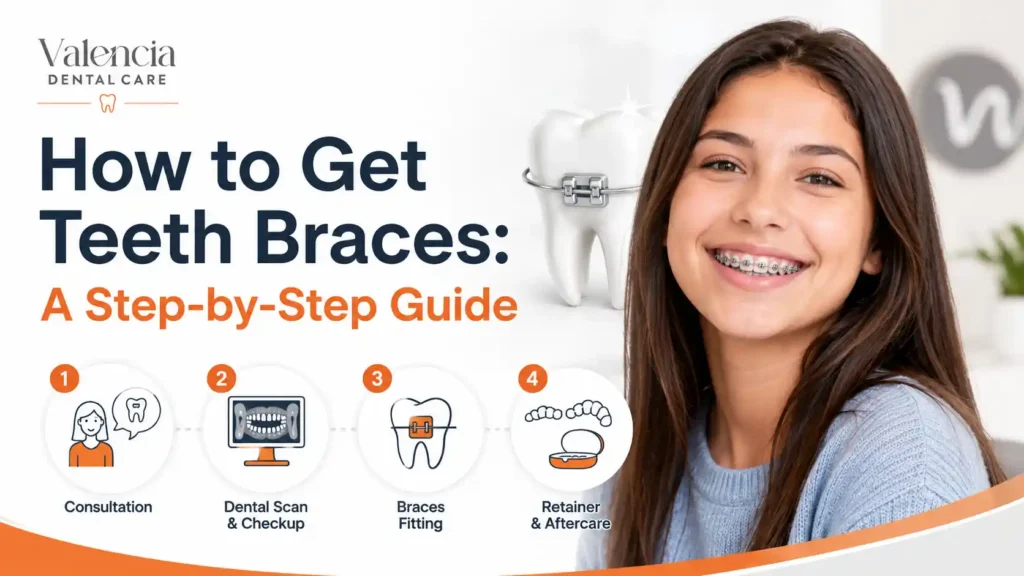




To get teeth braces, start by scheduling an examination with an orthodontist. They will check your teeth, gums, jaws, and bite. X-rays, photographs, or digital scans may also be taken to determine whether braces are suitable for you. A dentist may provide a referral, but many orthodontists also accept direct appointments. Patients in North Mesa, AZ, can also speak with the team at Valencia Dental Care to discuss their oral health and the next steps toward orthodontic treatment.
Before braces are fitted, you may need a professional cleaning, cavity treatment, or care for inflamed gums. Your orthodontist will then recommend the most appropriate option, which may include metal, ceramic, self-ligating, or lingual braces. Clear aligners may also be considered, although they are not suitable for every orthodontic problem.
Fixed braces use brackets and an archwire to move the teeth gradually. The fitting process is not usually painful, but soreness may develop during the first few days. Most patients wear braces for about 12 to 24 months, attend regular adjustment appointments, and wear a retainer after removal. This guide explains every stage, from identifying whether you need braces to caring for your final results.
How Do You Get Teeth Braces?
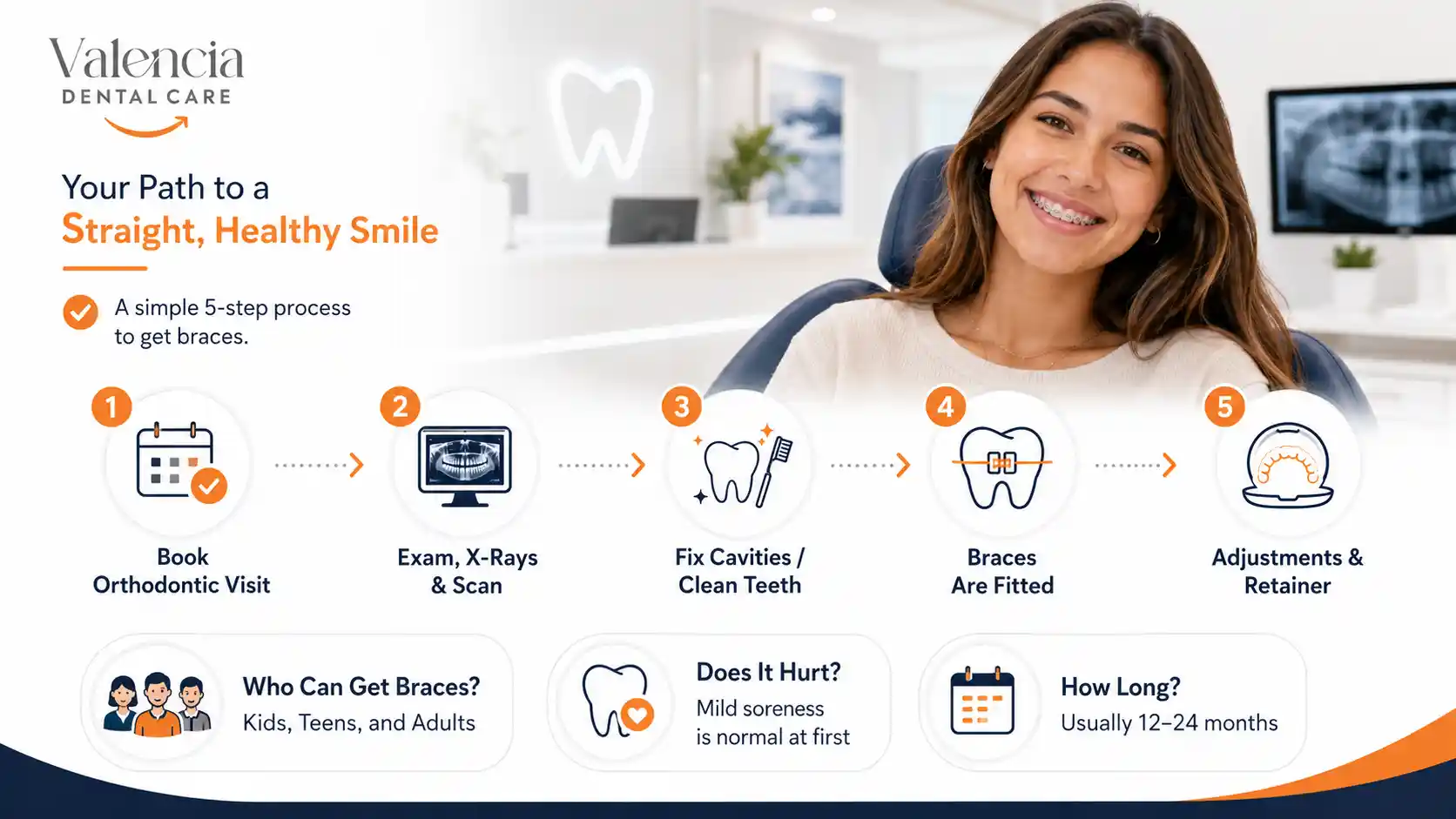
The process of getting braces usually includes an orthodontic consultation, diagnostic records, treatment planning, dental preparation, brace fitting, regular adjustments, removal, and retention. Here is how the process normally works.
Schedule an Appointment With an Orthodontist
Your first step is to arrange an orthodontic evaluation. A general dentist may recommend this appointment after noticing crowded teeth or a bite problem. However, you do not always need to wait for a dentist’s referral. Many orthodontists allow patients to schedule an initial examination directly.
Referral and insurance requirements can vary by location and dental plan. Check with the orthodontic office before booking your visit. An orthodontist focuses on diagnosing and treating problems involving tooth position, jaw alignment, and the bite. While some general dentists provide orthodontic services, an orthodontist completes additional specialist training in this area.
Complete an Orthodontic Examination
During the first visit, the orthodontist examines your teeth, gums, jaws, facial balance, and bite. They may ask you to open and close your mouth several times. This helps them observe how your upper and lower teeth meet. The orthodontist may also ask about:
- Problems with biting or chewing
- Jaw discomfort or clicking
- Previous dental treatment
- Missing or damaged teeth
- Tooth injuries
- Your medical history
- Your concerns about your smile
This examination helps determine whether braces are appropriate for you.
Have X-Rays, Photographs, and Scans Taken
A visual examination does not show everything beneath the gums. Your orthodontist may take dental X-rays to examine tooth roots, jawbones, developing teeth, and teeth that have not erupted. Imaging can also reveal decay, bone loss, root problems, or other conditions that may affect treatment. The office may also take photographs of your face and teeth. Digital scans or impressions can create an accurate model of your bite. These records allow the orthodontist to measure spacing, crowding, tooth angles, and jaw relationships.
Review Your Treatment Plan
After reviewing the examination and records, the orthodontist will explain the diagnosis.
You may learn that you have:
- Crowded or overlapping teeth
- Gaps between teeth
- An overbite
- An under bite
- A cross bite
- An open bite
- Protruding teeth
- Teeth that have not erupted properly
- Upper and lower teeth that do not meet evenly
The orthodontist will then recommend a treatment plan. This plan may include fixed braces, another orthodontic appliance, clear aligners, or a combination of treatments. You should also receive an estimated treatment timeline. The estimate may change as your teeth respond to treatment.
Prepare Your Teeth for Braces
Your teeth and gums should be healthy before braces are fitted. Cavities, gum inflammation, or heavy plaque buildup can make orthodontic treatment more difficult. Braces also create extra spaces where food and plaque can collect. Your orthodontist may ask you to visit your regular dentist before treatment. Any necessary fillings, professional cleaning, or gum care should normally be completed first. Some patients need additional preparation. This could include spacers, removal of certain teeth, or another orthodontic appliance. These procedures are not required for everyone.
Have Your Braces Fitted
Once your mouth is ready, the orthodontist attaches the braces. For fixed braces, brackets are bonded to the teeth with dental adhesive. An archwire connects the brackets. Small elastic ties or built-in clips may hold the wire in place. The wire applies controlled pressure that gradually guides the teeth toward their planned positions.
The fitting appointment should not involve drilling into healthy teeth. You may feel pressure while the orthodontist works, but the placement itself is not normally painful.
Attend Regular Adjustment Appointments
Braces need to be monitored throughout treatment. At follow-up appointments, the orthodontist checks how your teeth are moving. They may replace or adjust the archwire, change elastic ties, or provide new instructions.
Appointments are commonly scheduled every four to twelve weeks. The exact interval depends on the treatment stage and the orthodontist’s plan. Missing appointments can slow treatment. Broken brackets, damaged wires, and inconsistent elastic wear may also delay progress.
Wear a Retainer After Treatment
Getting your braces removed does not mean treatment is completely finished. Teeth can move after braces come off. A retainer holds them in their corrected positions while the surrounding tissues adjust. Retainers may be removable or fixed behind the teeth. Your orthodontist will decide which type is appropriate and how often you should wear it. Following the retainer instructions is essential. Without retention, teeth may gradually shift toward their previous positions.
Who Can Get Braces?
Children, teenagers, and adults may all receive orthodontic treatment. Age alone does not determine whether someone is suitable for braces. The condition of the teeth, gums, jawbones, and supporting tissues matters more.
Braces for Children
The American Association of Orthodontists recommends a first orthodontic check-up by age seven. At this age, many children have both baby and permanent teeth. This allows an orthodontist to observe how the teeth and jaws are developing. A check-up at seven does not mean braces must begin immediately.
Many children only need observation. The orthodontist may monitor growth and wait for more permanent teeth to appear. Early treatment may be recommended when a developing problem could become harder to correct later. Examples may include certain cross bites, severe crowding, jaw growth differences, or protruding front teeth.
Braces for Teenagers
Many patients begin full braces treatment during their teenage years. By this stage, most permanent teeth have appeared. The jaws may still be growing, which can help the orthodontist manage some bite problems. Teenagers must be able to clean around the brackets, avoid damaging foods, and follow instructions for elastics or appliances.
Braces for Adults
Adults can also get braces. There is no fixed upper age limit for moving healthy teeth. However, adult treatment may require more detailed planning. Previous dental work, missing teeth, crowns, bone levels, or gum disease can influence the treatment approach.
Some adults choose ceramic braces, lingual braces, or clear aligners because they are less noticeable. The best option still depends on the bite problem, not appearance alone.
Dental Health Requirements Before Treatment
Braces should normally be placed only after active dental problems are controlled. You may need treatment before braces if you have:
- Untreated cavities
- Gum disease
- Severe gum inflammation
- Poor plaque control
- Dental infections
- Damaged teeth requiring restoration
Your orthodontist and general dentist may coordinate your care before treatment begins. You must also continue visiting your regular dentist while wearing braces. Orthodontic appointments do not replace routine dental examinations and cleanings.
What Happens During Your First Orthodontic Consultation?
The first consultation is mainly an information-gathering and planning appointment. It gives the orthodontist a chance to understand your concerns. It also gives you a chance to understand your options.
Medical and Dental History
The orthodontic team may ask about your health, medicines, previous dental procedures, tooth injuries, and jaw symptoms. Tell the orthodontist about any previous trauma to your teeth. A tooth that was injured years ago may require closer monitoring during orthodontic movement. You should also mention existing crowns, implants, bridges, or root canal treatments.
Examination of Your Teeth and Bite
The orthodontist checks the position of each tooth and how the jaws fit together. They may measure overbite, spacing, crowding, and the relationship between the dental mid lines. They may also examine your facial profile and jaw movement. This examination helps separate cosmetic concerns from functional bite problems.
Diagnostic Records
The orthodontist may recommend X-rays, photographs, and a digital scan. Not every patient needs the same imaging. The orthodontist should select records based on your clinical needs. These records help create a treatment plan that considers both visible tooth positions and structures beneath the gums.
How Do Braces Work?
Braces move teeth by applying light, controlled pressure over time. Traditional braces include brackets, an archwire, and small connecting components. The brackets act as handles on the teeth. The archwire helps guide their movement. As pressure is applied, the tissues and bone around each tooth respond. Bone is gradually remodeled so the tooth can move into a new position.
This process must happen slowly. Applying excessive force does not safely straighten teeth faster. Treatment depends on three main factors:
- The orthodontist’s treatment plan
- The biological response of your teeth and supporting tissues
- Your cooperation with appointments and instructions
Braces may straighten individual teeth while also improving how the upper and lower teeth meet. Orthodontic treatment aims to create a healthier, more functional bite, not only a straighter appearance.
Choosing the Right Type of Braces
There is no single type of braces that is best for every patient. Your orthodontist will consider the complexity of the problem, your age, oral hygiene, lifestyle, and treatment goals.
| Treatment Type | How It Works | Main Consideration |
| Traditional Metal Braces | Metal brackets and wires move the teeth | Visible but suitable for many orthodontic problems |
| Ceramic Braces | Tooth-colored brackets use a wire system | Less noticeable but may require careful cleaning |
| Self-Ligating Braces | Brackets use built-in clips to hold the wire | Still a fixed brace system |
| Lingual Braces | Brackets attach behind the teeth | Less visible but not suitable for every case |
| Clear Aligners | Removable plastic trays move the teeth | Require consistent wear and are not technically braces |
Traditional Metal Braces
Metal braces remain a common choice because they can treat many types of tooth and bite problems. Modern brackets are smaller than many older designs. Patients may also choose different elastic colours where the system uses ties.
Ceramic Braces
Ceramic braces work in a similar way to metal braces. However, the brackets are designed to blend more closely with the teeth. They may be more discreet, but they still require wires and regular adjustments.
Self-Ligating Braces
Self-ligating braces use a small built-in mechanism to hold the archwire. They do not always require separate elastic ties around each bracket. The treatment result still depends on diagnosis and planning. A particular bracket design does not guarantee faster treatment.
Lingual Braces
Lingual braces sit on the inner surfaces of the teeth. They are less visible from the front but can require a longer adjustment period. They may also affect speech or tongue comfort at first. Not every orthodontist offers lingual treatment.
Clear Aligners
Clear aligners are removable trays rather than fixed braces. They may treat many mild or moderate alignment problems. However, some cases are treated more predictably with fixed braces or a combined approach. An orthodontist should determine whether aligners or braces are appropriate for your bite.
How Should You Prepare Before Getting Braces?
Good preparation can make your first week easier.
Complete Recommended Dental Treatment
Visit your dentist if the orthodontist requests a cleaning, filling, or gum treatment. Starting braces with untreated decay or gum inflammation may increase the risk of problems during treatment. Brush and floss consistently before the fitting appointment. This also helps you become comfortable with the routine you will need later.
Follow Instructions for Spacers or Other Appliances
Some patients receive small separators between certain teeth before braces. These create space for orthodontic bands. Other patients may need an expander, removable appliance, or extraction. These steps depend on the treatment plan and are not routine for everyone.
Prepare a Basic Braces Care Kit
Useful supplies may include:
- A soft-bristled toothbrush
- Fluoride toothpaste
- Interdental brushes
- Floss threaders or orthodontic floss
- Orthodontic wax
- A small mirror
- A travel toothbrush
- A suitable mouth guard for sports
Your orthodontic office may provide some of these items.
Plan Soft Meals
Your teeth may feel tender during the first few days. Prepare foods that require little chewing, such as soup, yogurt, eggs, pasta, soft rice, oatmeal, smoothies, or mashed vegetables. Avoid foods that are very sticky, hard, or crunchy.
How Long Does Braces Treatment Take?
Many braces treatments last around 12 to 24 months. Some finish sooner, while complex cases may take longer than two years. Treatment length depends on:
The type and severity of the problem, the amount of tooth movement required, Jaw growth and development, the type of appliance, Biological response to treatment, Appointment attendance, Brace breakages, Elastic or appliance use and Oral hygiene. Official patient guidance commonly places treatment within a range of about one year to two and a half years. Your orthodontist’s estimate will be more relevant to your case.
Visible changes may appear during the first few months. However, teeth that look straight may still need further movement to improve the bite and root positions. Do not stop treatment based only on the appearance of the front teeth.
What Should You Expect During the First Week?
Your mouth needs time to adjust to the new appliance.
Tooth Pressure and Soreness
Your teeth may feel tender for several days after braces are placed. Mild soreness can also return after adjustments. This discomfort is usually temporary. It happens because pressure has been applied to start moving the teeth.
Choose softer foods until chewing feels comfortable. Ask your orthodontist or pharmacist about appropriate pain relief. Follow the product instructions and consider any medical conditions or medicines you already use.
Irritation From Brackets and Wires
Brackets can rub against the cheeks and lips during the adjustment period. Orthodontic wax can cover the irritating area. Dry the bracket first, then press a small piece of wax over it. Contact the orthodontist if a sharp wire continues to cause pain or injury.
Changes in Eating and Speaking
Eating may feel awkward at first. Cut food into smaller pieces and chew slowly. Some patients notice a temporary change in speech, especially with appliances positioned near the tongue. Speech usually becomes easier as the mouth adapts.
Conclusion
Getting teeth braces begins with a professional orthodontic examination. You do not need to select a brace type before your appointment. The orthodontist must first assess your teeth, gums, jaw alignment, bite, and treatment goals.
The process usually includes X-rays or scans, a personalized treatment plan, necessary dental care, brace fitting, and regular adjustments. Children, teenagers, and adults can all receive braces when their teeth and supporting tissues are healthy. The fitting appointment should not normally hurt, although mild pressure and soreness are common afterward.
Treatment often lasts between 12 and 24 months, but complex cases may take longer. Good brushing, daily cleaning between the teeth, regular dental visits, and following instructions for elastics can help prevent delays. Contact your orthodontist if a bracket breaks, a wire causes injury, or pain becomes severe.
After the braces are removed, wearing a retainer is essential because teeth can shift back. If you have crowded teeth, gaps, protruding teeth, or an uneven bite, schedule an orthodontic consultation to learn whether braces are the right next step.
Ready to Start Your Braces Journey in Mesa, AZ?
Concerned about crowded teeth, gaps, or an uneven bite? Schedule a consultation with Valencia Dental Care in North Mesa, AZ. Our team can evaluate your teeth and oral health, explain whether braces may be suitable, and guide you toward the right next step. Book your appointment today and take the first step toward a straighter, healthier smile.
Frequently Asked Questions
Does Getting Braces Hurt?
The fitting process should not normally hurt. However, your teeth may feel sore or pressured for several days after ward. Mild discomfort can also occur after adjustment appointments. Soft foods and appropriate pain relief may help during this period.
How Long Does It Take to Put Braces On?
The appointment length varies according to the type of braces and the number of teeth being treated. Your orthodontic office can provide a more accurate estimate. The braces must be positioned carefully, so the visit may be longer than a routine dental examination.
Do You Need a Dentist Referral to Get Braces?
You can often contact an orthodontist directly without a referral. However, public healthcare systems and some insurance plans may require a dentist’s referral or prior approval. Check the rules that apply to your location and coverage.
Can You Get Braces on Only the Top Teeth?
Braces can sometimes be placed on one arch, but this is not appropriate for every patient. Moving only the upper or lower teeth can change how the bite fits. The orthodontist must examine both arches before recommending limited treatment.
Can Adults Get Braces?
Yes. Adults can get braces if their teeth and supporting tissues are suitable for movement. Previous dental work, missing teeth, gum health, and bone levels may influence the treatment plan.
Are Clear Aligners Better Than Braces?
Neither option is best for everyone. Clear aligners are removable and less visible, but they require consistent wear. Fixed braces may provide more predictable control for certain complex movements. An orthodontic examination is needed to compare them properly.
Can You Eat Normally With Braces?
You can eat many normal foods, but some changes are necessary. Avoid hard, sticky, and chewy foods that may damage the appliance. Cut firm foods into small pieces and choose softer options when your teeth feel sore.
Can You Chew Gum With Braces?
Some orthodontists advise avoiding gum because it can stick to components or damage the appliance. Instructions may vary according to the braces system and gum type. Follow the advice given by your orthodontist.
How Soon Will You See Results?
Some patients notice changes within the first few months. However, early visible improvement does not mean treatment is complete. The roots, back teeth, and bite may still need further correction.
Can Teeth Move Back After Braces?
Yes. Teeth can shift after braces are removed, especially when retainers are not worn. Follow your orthodontist’s retainer schedule and request help quickly if the retainer becomes tight or stops fitting.