


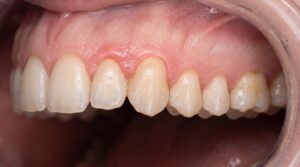




Yes, a toothache can cause head pain. Pain signals from an inflamed, infected, cracked, or decayed tooth can travel through shared facial nerves and be felt in the temple, forehead, ear, cheek, jaw, or side of the head. Teeth grinding, jaw clenching, and temporomandibular joint disorders can also cause tooth pain and headaches at the same time.
Head pain is more likely to have a dental cause when one tooth hurts, biting makes the pain worse, or hot and cold foods trigger sensitivity. Dental abscesses, deep cavities, wisdom tooth infections, cracked teeth, and root canal complications are common causes. Tooth pain may also spread toward the ear or behind the eye, while jaw tension can lead to neck pain and morning headaches.
However, sinus infections and migraines can cause similar symptoms. Pressure across several upper teeth with congestion may point to a sinus problem rather than a damaged tooth. At Valencia Dental Care in Mesa, AZ, our dental team can examine the source of persistent tooth and head pain and recommend the appropriate next step. See a dentist if the pain lasts longer than two days, keeps returning, or occurs with swelling, fever, or a bad taste. Seek urgent care if swelling affects your eye, neck, breathing, or swallowing.
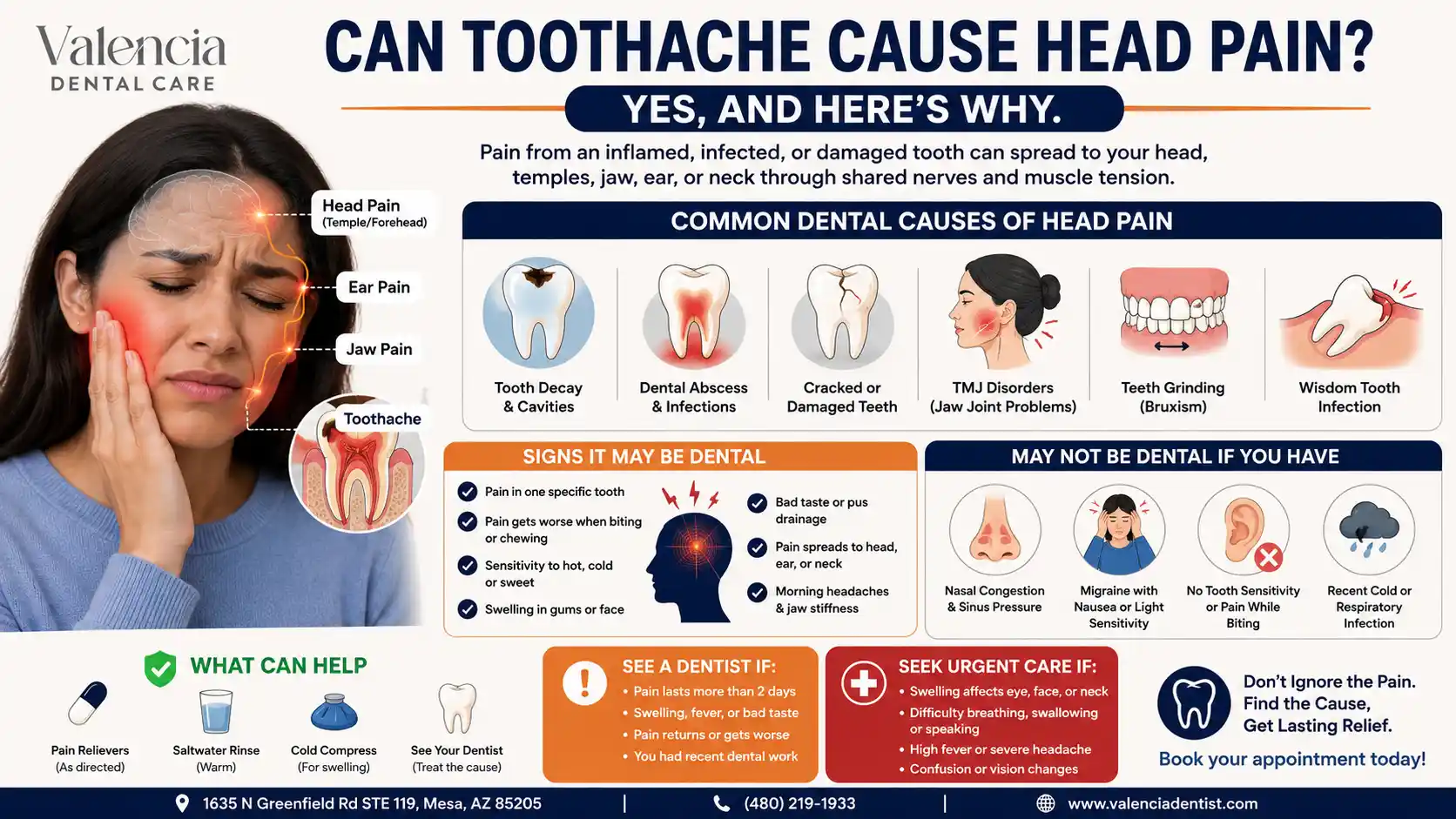
What Does a Tooth-Related Headache Feel Like?
There is no single type of tooth-related headache. The sensation depends on whether the pain begins in a tooth, the jaw muscles, the temporomandibular joint, or an infection. Some people feel a dull ache, while others notice throbbing pressure or sharp pain that becomes stronger when they bite or chew. The location and triggers can help indicate whether the discomfort is connected to the teeth or jaw.
Pain Around the Jaw, Temples, Forehead, or Ear
Dental pain is often strongest near the affected tooth, but it can spread into nearby areas. Pain from a lower tooth may travel along the jaw or toward the ear, while an upper tooth may cause discomfort in the cheek, temple, forehead, or around the eye. Jaw joint problems can also cause aching near the ear because the temporomandibular joints sit directly in front of it. This can make the pain feel like an earache or headache.
Head Pain That Worsens When Biting or Chewing
Head or facial pain that becomes stronger when you bite may point to a cracked tooth, deep decay, an inflamed tooth nerve, or an abscess near the root. A loose filling, an uneven bite, or a recently treated tooth that feels too high can also create similar discomfort. Biting places pressure on the tooth and the tissues around its root, so even light force may cause sharp or throbbing pain when those tissues are inflamed.
Pain while chewing should not be ignored when it occurs with swelling, red gums, fever, or a bad taste in the mouth. These symptoms may suggest an infection or another dental problem that requires professional assessment. A dentist can examine the tooth, check the bite, and determine whether the pain is coming from decay, a crack, inflammation, or infection.
Pain When Opening or Moving Your Mouth
Pain that increases when you yawn, speak, chew, or open your mouth widely may come from the jaw joint or surrounding muscles rather than one specific tooth. Temporomandibular disorders can cause jaw stiffness, limited movement, painful clicking, facial discomfort, or tenderness in the chewing muscles. Some people also notice that the jaw locks or that their teeth no longer meet in the same way.
Painless clicking is common and may not require treatment. However, clicking that occurs with pain, stiffness, locking, or restricted movement should be evaluated. These symptoms can indicate irritation in the jaw joint or overworked muscles caused by clenching, grinding, or changes in the bite.
Neck Pain and Facial Tenderness
Jaw tension can affect more than the mouth. Tight chewing muscles may place strain on the temples, cheeks, shoulders, and neck, creating a wider pattern of discomfort. Tenderness may be noticeable in front of the ears, along the jawline, across the temples, inside the cheeks, or on the sides of the neck.
This pattern is more common with teeth grinding, jaw clenching, and temporomandibular disorders than with a simple cavity. Morning headaches, jaw fatigue, and facial soreness may also suggest that the muscles remain tense during sleep.
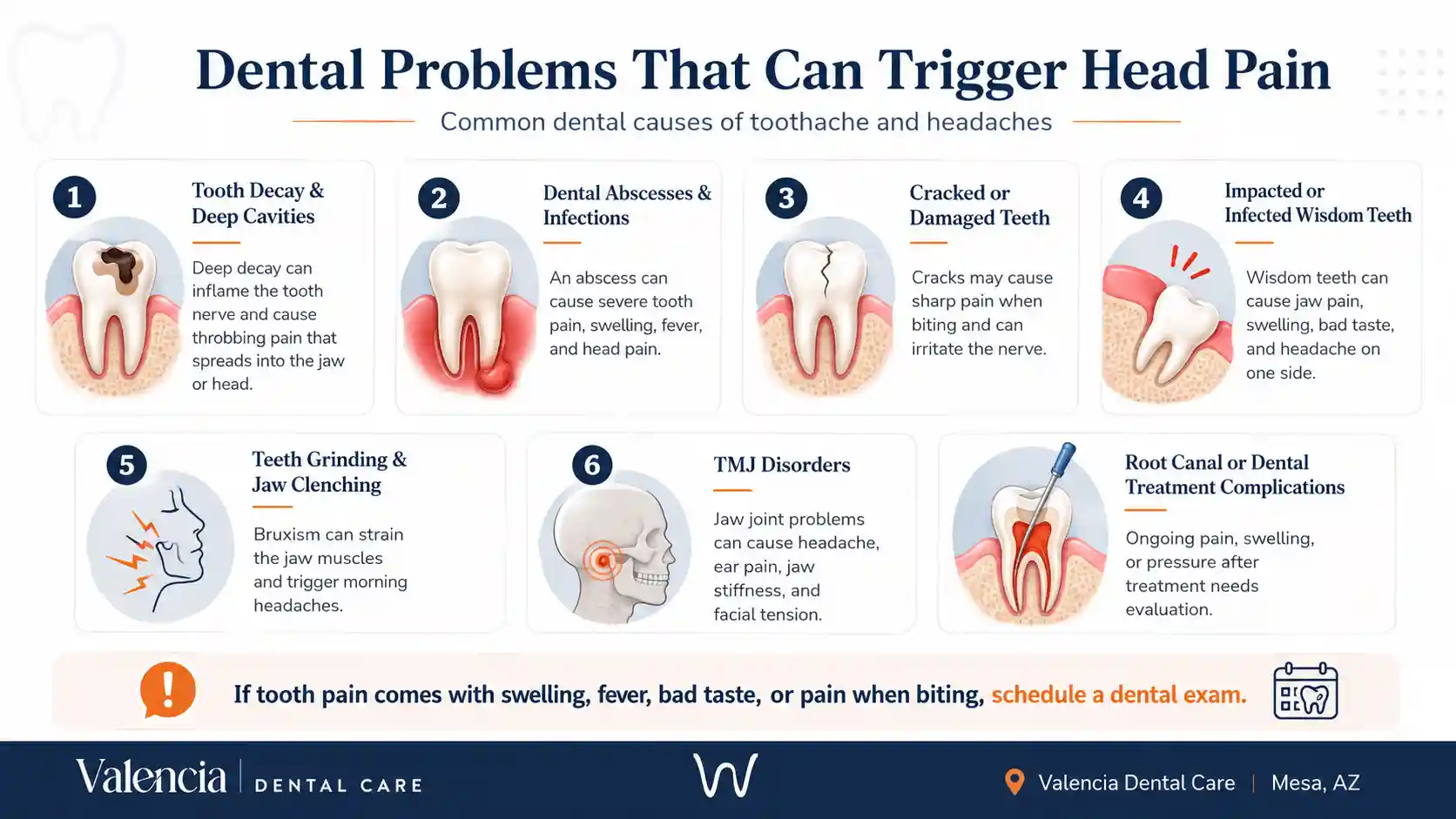
Dental Problems That Can Trigger Head Pain
Several dental conditions can cause toothache and head pain together. Some develop slowly, while others require urgent treatment.
Tooth Decay and Deep Cavities
Early tooth decay may cause no symptoms. As decay reaches deeper layers, the tooth may become sensitive to sweet, cold, or hot foods. If bacteria reach the pulp inside the tooth, inflammation can become intense. The pain may throb, occur without a clear trigger, or continue after hot or cold contact ends.
Deep cavities may also create referred pain. You might feel discomfort across one side of the jaw or head without being able to identify the affected tooth. A filling may treat smaller cavities. Deeper damage may require root canal treatment or removal of the tooth.
Dental Abscesses and Tooth Infections
A dental abscess is a pocket of infection that may form near a tooth root or in the gums. It can develop after untreated decay, gum disease, or a cracked tooth allows bacteria to enter deeper tissues.
Common symptoms include:
- Persistent or throbbing tooth pain
- Gum or facial swelling
- Redness
- Fever
- A bad taste in the mouth
- Pain when chewing
- Sensitivity to temperature
An untreated abscess can spread into the jaw and surrounding tissues. Treatment may involve draining the infection, root canal treatment, gum treatment, tooth removal, or antibiotics when clinically necessary. Painkillers may reduce the symptoms temporarily. They do not remove the infected tissue or drain an abscess.
Cracked or Damaged Teeth
A tooth can crack after trauma, biting hard food, grinding, or weakening around a large filling. Small cracks are not always visible. They may cause pain when you bite and release pressure. Temperature sensitivity may also appear and disappear.
A crack can irritate the nerve inside the tooth. It may also allow bacteria to enter, leading to inflammation or infection. Treatment depends on the crack’s location and depth. Options may include bonding, a crown, root canal treatment, or extraction.
Impacted or Infected Wisdom Teeth
A wisdom tooth may become trapped under the gum or emerge only partly. Food and bacteria can collect around the gum covering a partially erupted tooth.
This may cause:
- Pain at the back of the jaw
- Swollen or bleeding gums
- Difficulty opening the mouth
- A bad taste
- Ear or throat discomfort
- Head pain on the affected side
An infected wisdom tooth needs dental care. Cleaning, medication, gum treatment, or tooth removal may be recommended based on its position.
Teeth Grinding and Jaw Clenching
Bruxism means grinding, clenching, or tightly holding the teeth together. It may happen while awake or during sleep. Many people do not know they grind their teeth until a dentist notices wear or a partner hears grinding sounds.
Common signs include:
- Morning headaches
- Tired or painful jaw muscles
- Flattened or chipped teeth
- Tooth sensitivity
- Tightness near the temples
- Pain when chewing
- Jaw clicking or stiffness
Treatment depends on the cause and damage. A dentist may recommend behaviour changes, stress management, treatment for sleep-related concerns, or a custom oral appliance. A night guard may protect the teeth. It does not automatically treat every cause of bruxism.
Temporomandibular Joint Disorders
Temporomandibular disorders, often called TMDs, affect the jaw joints, chewing muscles, or both. The National Institute of Dental and Craniofacial Research recognizes headaches associated with TMD as one category of these disorders. TMD symptoms may also include jaw pain, facial pain, neck pain, stiffness, and restricted movement.
TMD pain may feel like a toothache even when the teeth are healthy. It can also occur alongside an actual dental problem. Diagnosis is important because unnecessary dental treatment will not resolve pain coming from the joint or muscles.
Root Canal or Dental Treatment Complications
Mild soreness after dental treatment may be temporary. Persistent, returning, or worsening pain needs evaluation. A tooth treated with a root canal can sometimes become painful months or years later. This may happen if the tooth did not heal fully, developed a new infection, cracked, or lost its protective restoration.
Contact a dentist or endodontist if you develop:
- Severe pressure lasting more than a few days
- Visible swelling
- Returning toothache symptoms
- Pain when biting
- A loose filling or crown
- A bite that feels uneven
These symptoms do not always mean the root canal failed. A dentist must examine the tooth and surrounding structures.
Can a Tooth Infection Cause Severe Head Pain?
Yes, a tooth infection can cause severe head pain, especially when inflammation irritates nearby nerves or spreads into surrounding tissues. The pain may feel deep, throbbing, constant, or difficult to locate. It can travel from the affected tooth toward the jaw, ear, temple, eye, or neck.
Severe pain alone does not reveal how far an infection has spread. Swelling, fever, weakness, difficulty opening the mouth, and problems with breathing or swallowing are more concerning. These symptoms may indicate that the infection requires urgent dental or medical treatment.
Signs an Infection May Be Spreading
A spreading dental infection may cause facial or jaw swelling, red gums, fever, pus, or a bad taste in the mouth. The pain may become strong enough to disturb sleep or worsen when you bite. Some people also develop swollen glands, jaw stiffness, or symptoms that do not improve after taking pain medicine.
Contact a dentist promptly when these symptoms occur. Go to an emergency department if swelling reaches the eye or neck or makes breathing, swallowing, or speaking difficult. Waiting for the pain to settle can allow the infection to become more serious.
Can a Tooth Infection Cause Dizziness or Ear Pain?
Dental pain may spread toward the ear because the teeth, jaw, and ear are close together and share connected nerve pathways. A painful tooth or jaw joint disorder may therefore feel like an earache. Temporomandibular disorders can also cause ringing in the ears, pressure, perceived hearing changes, or dizziness in some people.
However, dizziness has many possible causes, including inner-ear conditions, dehydration, migraine, medication side effects, and blood pressure changes. Do not automatically assume that dizziness comes from a tooth. Seek medical care when it is severe, persistent, or accompanied by weakness, fainting, confusion, vision changes, chest pain, or difficulty speaking.
Rare but Serious Complications of Dental Infections
Serious complications from dental infections are uncommon, but they can develop when bacteria spread into the face, neck, bloodstream, or tissues near the brain. This is why increasing swelling, fever, and changes around the eyes should never be treated as ordinary toothache symptoms.
Cavernous sinus thrombosis is one rare emergency linked to infections in the face or head. Warning signs may include a rapidly worsening headache, fever, swelling or bulging around the eyes, vision changes, difficulty moving the eyes, confusion, or seizures. These symptoms require immediate emergency treatment.
Most toothaches never lead to this complication. The purpose of recognizing these signs is not to create fear. It is to help patients understand when dental pain has moved beyond something that can wait for a routine appointment.
Toothache Headache vs. Sinus Headache
Sinus pressure and dental pain can feel very similar because the roots of the upper back teeth sit close to the maxillary sinuses. When the sinus lining becomes inflamed, pressure may be felt in several upper molars. An infection in an upper tooth may also irritate the nearby sinus area.
The location of the pain alone may not be enough to identify the cause. Triggers such as biting, temperature sensitivity, congestion, and facial pressure often provide more useful clues. A dental examination may still be necessary when the symptoms overlap.
Signs the Pain May Be Coming From a Tooth
A dental cause is more likely when one tooth hurts more than the others or the pain becomes stronger during biting and chewing. Hot, cold, sweet foods, or pressure may trigger discomfort. You may also notice visible tooth damage, a broken filling, swelling beside one tooth, drainage, or a bad taste.
Dental pain may continue even when you do not have congestion or other cold symptoms. It can also wake you during the night or remain after a hot or cold trigger has been removed. Recent dental trauma or a cracked tooth may provide another clue that the pain is coming from the mouth.
Signs the Pain May Be Related to Your Sinuses
A sinus problem is more likely when several upper back teeth ache together rather than one specific tooth. You may also have a blocked or runny nose, thick mucus, reduced sense of smell, or pressure around the cheeks, forehead, and eyes.
Sinus pain may become stronger when you bend forward and often begins after a cold or respiratory infection. Pressure may affect both sides of the upper jaw. Sinusitis can also cause headache, facial tenderness, ear pressure, and general discomfort across the face.
A dentist can check for decay, cracks, gum problems, and infection. When the teeth appear healthy, a medical evaluation may be needed to investigate sinusitis or another non-dental cause.
Can Tooth Pain Trigger a Migraine?
Tooth pain can act as a physical stressor and may worsen an existing headache disorder. Jaw clenching, teeth grinding, and temporomandibular disorders may also occur alongside migraine symptoms. However, a migraine is not simply a more severe form of dental headache.
Migraine often causes throbbing or pulsing pain and may include nausea or sensitivity to light, sound, and movement. A tooth-related headache is more likely to change when you bite, chew, move your jaw, or consume hot and cold foods. These differences can help guide the evaluation, although symptoms sometimes overlap.
Light sensitivity does not mean that a tooth infection has spread to the head. It may point toward migraine or another headache condition. People with recurring headaches should not assume that every episode comes from their teeth.
Non-dental nerve conditions can also feel like tooth pain. Trigeminal neuralgia, for example, may cause sudden facial pain that is felt in the teeth, gums, or jaw even when no dental damage is present. A normal dental examination does not mean the pain is imaginary.
How to Relieve Toothache and Head Pain
The most effective way to relieve tooth and head pain is to treat the source. Home care may make you more comfortable while you arrange an appointment, but it cannot repair decay, seal a crack, remove infected tissue, or correct an impacted wisdom tooth.
Relief that lasts only while pain medicine is working should not be mistaken for healing. Persistent or recurring symptoms usually mean that the underlying condition still needs professional attention.
Temporary At-Home Pain Relief
An over-the-counter pain reliever may reduce discomfort when it is safe for you. Follow the package instructions and ask a pharmacist or healthcare professional about medication interactions, allergies, pregnancy, or medical conditions that could make certain products unsuitable.
A gentle warm saltwater rinse may help clean the mouth and calm irritated tissue. Choose soft foods, chew on the opposite side, and avoid items that are very hot, cold, sugary, or hard. Continue brushing carefully with a soft-bristle toothbrush so plaque does not build up around the painful area.
A cold compress placed outside the face may help with swelling. Do not place aspirin directly against the tooth or gum because it can burn and damage the tissue. You should also avoid using leftover antibiotics, since they are not appropriate for every toothache and cannot replace dental treatment.
Dental Treatments That Address the Cause
Treatment depends on what is causing the pain. A smaller cavity may be repaired with a filling, while a weakened or cracked tooth may need a crown. Root canal treatment may be recommended when the pulp inside the tooth is badly inflamed or infected.
An abscess may need to be drained, while gum disease may require professional periodontal treatment. A tooth that cannot be restored may need removal. Impacted or infected wisdom teeth may also require cleaning, medication, or extraction depending on their position and condition.
Jaw-related pain is usually treated conservatively at first. Soft foods, reduced clenching, heat or cold therapy, and gentle jaw exercises may help. A custom oral appliance may be considered for selected patients who grind their teeth, although it is not the correct treatment for every type of jaw pain.
Why Treating Only the Headache May Not Work
Pain medicine can reduce inflammation and block pain signals, but it does not remove decay, repair a damaged tooth, or eliminate infected tissue. The discomfort may return as soon as the medicine wears off, while the underlying dental problem continues to progress.
Repeatedly treating dental pain as a migraine or tension headache can delay the correct diagnosis. The reverse is also true. Fillings, root canals, or extractions will not relieve pain caused by migraine, sinusitis, trigeminal neuralgia, or another medical condition.
Accurate diagnosis is therefore more important than guessing based only on where the pain is felt. The source may be several inches away from the area that hurts most.
When Tooth and Head Pain Is a Dental Emergency
Arrange urgent dental care when tooth pain becomes severe, continues for more than two days, returns after treatment, or becomes worse when you bite. Facial swelling, fever, pus, a foul taste, difficulty opening the mouth, or pain that does not improve with appropriate medication also requires prompt assessment.
A broken or knocked-out tooth should be evaluated quickly. Swelling or worsening pain after recent dental work may also need attention, especially when it appears alongside fever or drainage.
Seek emergency medical care immediately for:
- Difficulty breathing, swallowing, or speaking
- Rapidly increasing swelling in the mouth, face, eye, or neck
- Vision changes, confusion, fainting, weakness, or seizures
- A severe worsening headache with fever or neck stiffness
Do not wait for a routine dental appointment when breathing, swallowing, vision, or neurological function is affected.
How to Prevent Toothaches From Causing Head Pain
Consistent oral care lowers the risk of cavities, gum disease, dental abscesses, and avoidable tooth damage. Brush twice daily with fluoride toothpaste and clean between the teeth each day. Limiting frequent sugary foods and drinks can also reduce the acid attacks that lead to decay.
Regular dental examinations allow small problems to be identified before they reach the tooth nerve. Cavities, damaged fillings, loose crowns, cracks, and gum inflammation are usually easier to treat before they begin causing constant pain or infection.
Protect your teeth during contact sports and avoid chewing ice or other very hard objects. Seek care after dental injuries, even when the tooth does not hurt immediately. Cracks can remain hidden and may become painful later.
Speak with a dentist if you often wake with headaches, tired jaw muscles, or tooth sensitivity. These symptoms may indicate nighttime grinding or clenching. Recurring swelling, pain, and sensitivity should also be investigated rather than managed repeatedly with home remedies. Early treatment is usually simpler and more predictable than waiting until pain spreads into the jaw, ear, face, or head.
Conclusion
A toothache can cause head pain when inflammation, infection, or pressure irritates the nerves connecting the teeth, jaw, face, and head. The pain may spread toward the temple, forehead, ear, cheek, neck, or behind the eye. Deep cavities, dental abscesses, cracked teeth, wisdom tooth infections, teeth grinding, and jaw joint disorders are among the most common causes.
The pattern of your symptoms can offer useful clues. Pain that worsens when biting or reacts to hot and cold foods often points to a dental problem. Pressure across several upper teeth with nasal congestion may be related to sinusitis. Light sensitivity, nausea, or recurring one-sided head pain may suggest a migraine instead.
Pain relievers, saltwater rinses, soft foods, and cold compresses may provide temporary relief. However, they cannot repair decay, remove an infection, or treat a cracked tooth. Arrange a dental examination if the pain persists, returns, or becomes stronger. Seek emergency care for rapidly increasing swelling, fever, vision changes, or difficulty breathing or swallowing.
Get Relief From Tooth and Head Pain in Mesa, AZ
If tooth pain is spreading to your head, jaw, ear, or temple, do not wait for it to get worse. Valencia Dental Care can examine the source of your discomfort and recommend the right treatment for lasting relief. Visit our dental team at 1635 N Greenfield Rd, Suite 119, Mesa, AZ 85205, or book an appointment today to have your tooth and head pain properly evaluated.
Frequently Asked Questions
How Long Does a Headache Caused by a Toothache Last?
A tooth-related headache may continue until the dental cause is treated. Pain medicine may reduce it temporarily, but symptoms can return. Mild irritation may settle sooner, while deep decay, a crack, an abscess, or an inflamed tooth nerve usually requires dental care.
Will Tooth-Related Head Pain Go Away on Its Own?
It depends on the cause. Temporary muscle tension may improve with rest and reduced clenching. Pain from decay, infection, or a cracked tooth usually does not resolve permanently without treatment. See a dentist when tooth pain lasts longer than two days or keeps returning.
Can One Cavity Cause a Headache?
Yes. One deep cavity can inflame the nerve inside a tooth and produce referred pain in the jaw, temple, ear, or head. Small cavities may cause no pain, so a headache usually suggests that irritation has reached deeper tooth structures or caused muscle tension.
Can an Abscessed Tooth Cause Head Pain Without Severe Tooth Pain?
Yes. The pain from an abscess can spread or become difficult to locate. In some cases, pressure may reduce if the abscess begins draining, even though the infection remains. Swelling, fever, a bad taste, or gum drainage requires prompt dental care.
Can Toothache Cause Pain Behind the Eye?
Upper tooth pain may spread toward the cheek, temple, or area around the eye. Sinusitis can also cause upper tooth pain and pressure around the eyes. Severe eye pain, swelling, vision changes, or a worsening headache requires urgent medical assessment.
Can Children Get Headaches From Dental Problems?
Yes. Children can develop head or facial pain from cavities, dental infections, grinding, jaw tension, or erupting teeth. A child with facial swelling, fever, trouble swallowing, reduced drinking, or worsening illness needs urgent professional assessment.
Can an Old Root Canal Cause Headaches?
A root-treated tooth can rarely become painful again because of a new infection, a crack, leakage, or incomplete healing. It may produce referred head or facial pain. Pain does not automatically mean the root canal failed, so an examination and dental imaging are needed.
When Should I See a Dentist for Toothache and Head Pain?
See a dentist when symptoms last longer than two days, become stronger, disturb sleep, return repeatedly, or worsen during biting. Seek earlier care for swelling, fever, gum redness, drainage, a bad taste, dental trauma, or pain that does not improve with appropriate medication.
SEO Title: Can Toothache Cause Head Pain? Causes and Relief
Meta Description: Yes, a toothache can cause head pain through shared nerves, infection, or jaw tension. Learn the warning signs and when to see a dentist.