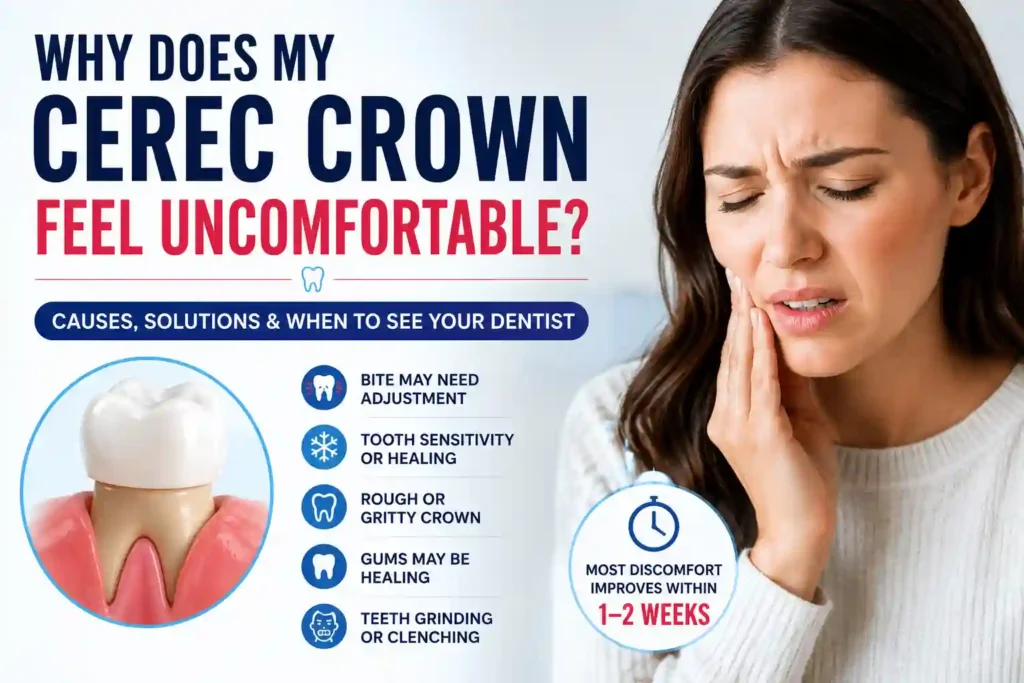






Many patients worry when a new CEREC crown feels uncomfortable, rough, gritty, or different from their natural teeth. In most cases, mild discomfort, pressure, or sensitivity is completely normal for the first few days as your tooth, gums, and bite adjust to the new restoration. However, if your CEREC crown feels too high, causes pain when biting, remains rough, or becomes increasingly uncomfortable, it may indicate a bite issue, poor fit, nerve irritation, or another problem that needs professional attention.
Some people searching for CEREC crown complaints are experiencing chewing discomfort, temperature sensitivity, or a crown that simply doesn’t feel “right.” Others wonder, “Why does my crown feel rough?” or “Why does my new crown feel gritty?” These symptoms can have several causes, ranging from normal healing to an adjustment that your dentist can often correct in just a few minutes.
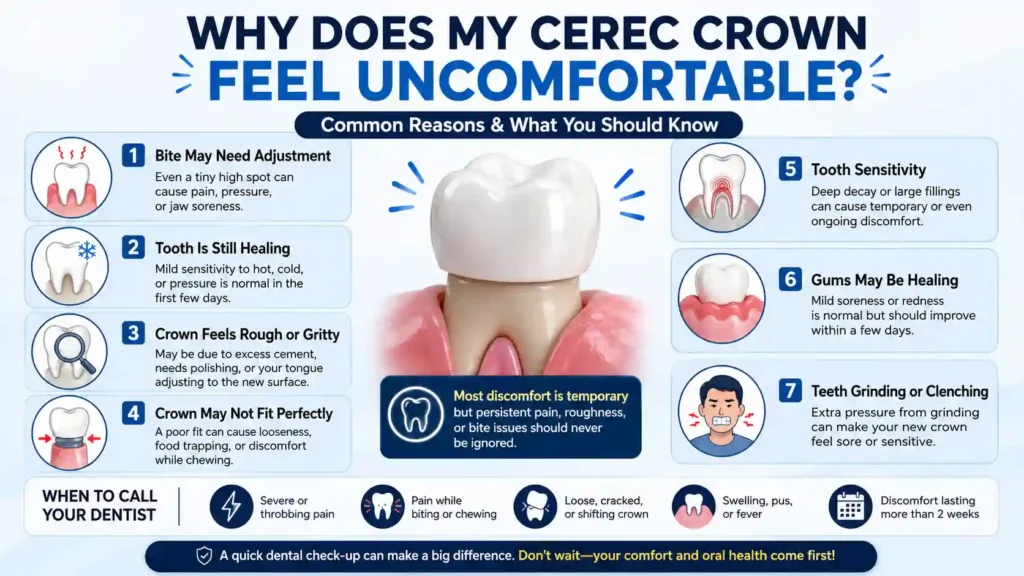
In this guide, you’ll learn the most common reasons a CEREC crown feels uncomfortable, which symptoms are considered normal, when discomfort becomes a warning sign, and the treatment options that can restore a comfortable, natural bite.
Before We Continue: A Real Patient Scenario
Many patients experience uncertainty after receiving a same-day CEREC crown. Here’s an example that reflects one of the most common concerns dentists hear.
Patient Question
“I recently had a same-day CEREC crown placed after breaking one of my old crowns. My new crown feels thicker than my other teeth and doesn’t seem to fit correctly. My dentist adjusted it once, but it still doesn’t feel natural. I’m worried I made the wrong choice with a CEREC crown. Can it still be fixed, or will I need a completely new crown?”
This concern is more common than many people realize.
A properly designed CEREC crown should blend naturally with your surrounding teeth. While it may feel slightly different for the first few days, it shouldn’t continue to feel bulky, interfere with your bite, or cause ongoing discomfort.
Several factors can contribute to this type of problem, including a bite that needs further adjustment, a crown that requires additional polishing, slight differences in the way your mouth adapts to the new restoration, or issues affecting the tooth underneath the crown. Fortunately, many of these problems can be corrected without replacing the entire restoration.
The most important step is scheduling a follow-up appointment rather than hoping the discomfort will eventually disappear on its own.
What is CEREC Technology?
CEREC (Chairside Economical Restoration of Esthetic Ceramics) is a digital dental system that allows dentists to design, create, and place custom ceramic crowns in a single visit. Instead of taking traditional impressions and waiting several weeks for a dental laboratory to fabricate your crown, CEREC uses digital scanning and computer-aided design and manufacturing (CAD/CAM) technology to produce a restoration while you remain in the office.
The process generally includes:
A digital scan of the prepared tooth.
Computer software that designs a custom crown.
An in-office milling machine that shapes the ceramic restoration.
Final polishing, fitting, and bonding during the same appointment.
Because the crown is designed specifically for your tooth, most patients enjoy excellent comfort, a natural appearance, and long-lasting durability. However, like any dental restoration, minor adjustments may occasionally be needed after placement to achieve the ideal fit and bite.
Common CEREC Crown Complaints
Many patients experience temporary changes after receiving a same-day crown. Most concerns improve with time, while others require a simple dental adjustment.
Here are some of the most common CEREC crown complaints patients report:
| Complaint | Usually Normal? | Should You Call Your Dentist? |
|---|---|---|
| Mild sensitivity | Yes | If it lasts more than 2–3 weeks |
| Crown feels slightly different | Yes | If it never begins to feel natural |
| Slight gum soreness | Yes | If swelling or bleeding increases |
| Crown feels too high | Usually No | Yes |
| Pain when chewing | Usually No | Yes |
| Rough or gritty crown | Sometimes | If polishing doesn’t improve it |
| Loose crown | No | Yes |
| Sharp or throbbing pain | No | Yes |
| Food constantly gets trapped | Usually No | Yes |
Why Does My CEREC Crown Feel Uncomfortable?
Several factors can cause a CEREC crown to feel different after placement. Some are part of the normal adjustment process, while others require professional evaluation. Understanding these causes can help you recognize when to monitor your symptoms and when to schedule a follow-up appointment.
1. Your Bite May Need a Minor Adjustment
One of the most common reasons a CEREC crown feels uncomfortable is that it’s slightly higher than the surrounding teeth. Even a tiny difference in height can change how your teeth come together when you bite.
You may notice:
- The crowned tooth touches first.
- Pain while chewing.
- Jaw soreness after eating.
- A feeling that your bite isn’t balanced.
- Increased pressure on one side of your mouth.
Fortunately, this is usually one of the easiest issues to correct. Your dentist can identify high spots using bite-marking paper and make small adjustments so your teeth meet evenly. In many cases, the appointment takes only a few minutes and provides immediate relief.
2. Your Tooth Is Still Healing
Even though the crown itself cannot feel pain, the tooth underneath remains alive unless it has received root canal treatment. During the preparation process, your dentist removes damaged tooth structure to create space for the crown, which can temporarily irritate the nerve inside the tooth.
As a result, it’s common to experience:
- Mild sensitivity to cold drinks.
- Brief discomfort with hot foods.
- Tenderness when chewing harder foods.
- Occasional sensitivity while brushing.
These symptoms usually improve as the tooth settles. However, if the pain becomes more intense, lasts longer than expected, or starts waking you up at night, it’s important to schedule a dental evaluation to rule out nerve inflammation or other underlying problems.
3. Your CEREC Crown May Feel Rough or Gritty
Many patients search online because their new crown feels gritty or they’re wondering, “Why does my crown feel rough?” This sensation is often harmless, but it can also indicate that your restoration needs a simple finishing adjustment.
A CEREC crown may feel rough because:
- The ceramic surface needs additional polishing.
- Small amounts of bonding cement remain on the crown.
- Your tongue is adjusting to the texture of a new restoration.
- Minor surface irregularities are noticeable after placement.
In many cases, a quick polishing appointment can smooth the surface and make the crown feel much more natural. However, if the roughness is accompanied by pain, sensitivity, or difficulty chewing, your dentist should evaluate the crown to ensure it fits correctly and functions as intended.
4. The Crown May Not Fit as Precisely as It Should
A properly fitted CEREC crown should sit securely over the prepared tooth and blend naturally with your surrounding teeth. If the fit isn’t ideal, the crown may feel bulky, unstable, or uncomfortable during everyday activities like chewing and speaking.
Signs of a poor-fitting crown include:
- The crown feels loose or shifts slightly.
- Food repeatedly gets trapped around the crown.
- You notice discomfort every time you chew.
- The crown feels wider or bulkier than nearby teeth.
- Floss catches or frays around the restoration.
A poor fit doesn’t always mean the crown needs to be replaced. In many cases, your dentist can determine whether a bite adjustment, polishing, or recementing will resolve the issue. If the crown isn’t sealing the tooth properly, however, replacement may be the best long-term solution.
5. The Tooth Underneath May Be Sensitive
Even when the crown fits perfectly, the tooth underneath may still be healing.
If the tooth’s nerve becomes irritated during treatment, you may notice temporary sensitivity to temperature or pressure. This is especially common if the tooth had:
- A deep cavity.
- A large filling.
- A crack before treatment.
- Extensive preparation before crown placement.
Most sensitivity gradually improves over the first few weeks.
However, persistent or worsening pain could indicate inflammation inside the tooth. In some cases, root canal treatment may become necessary if the nerve cannot recover naturally.
Symptoms that deserve prompt evaluation include:
- Sharp pain that lingers after hot or cold foods.
- Pain that wakes you up at night.
- Throbbing discomfort.
- Swelling around the tooth.
6. Your Gums May Still Be Healing
The gums surrounding a newly placed CEREC crown may feel tender for a short period, particularly if they were gently moved during the preparation or bonding process.
You might notice:
- Mild soreness.
- Slight redness.
- Minor bleeding while brushing.
- Tenderness when flossing.
These symptoms usually improve as the tissue heals.
Keeping the area clean with gentle brushing and daily flossing helps reduce inflammation and supports healthy healing.
If gum discomfort becomes worse instead of better, or if swelling, pus, or persistent bleeding develops, contact your dentist to rule out infection or excess cement around the crown.
7. Teeth Grinding Can Make a New Crown Feel Uncomfortable
Many people don’t realize they grind or clench their teeth until after receiving a new dental restoration.
If you grind your teeth while sleeping, your new crown may feel sore because it’s absorbing extra pressure every night.
Common signs of teeth grinding include:
- Morning jaw soreness.
- Headaches after waking up.
- Worn-down teeth.
- Jaw clicking.
- Facial muscle fatigue.
Your dentist may recommend a custom night guard to protect both your CEREC crown and your natural teeth from excessive force.
Can a CEREC Crown Be Adjusted?
Yes. Many CEREC crowns can be adjusted without replacing the restoration. This is one of the biggest misconceptions patients have. If the crown is healthy and structurally sound, your dentist may recommend:
Bite Adjustment
Small areas of the crown are reshaped so your teeth come together evenly.
Polishing
If the ceramic feels rough against your tongue, polishing often restores a smooth finish.
Removing Excess Cement
Residual bonding material around the crown can create irritation or a gritty sensation. Removing it often improves comfort immediately.
Recementing
If the crown becomes loose but remains undamaged, your dentist may be able to clean and recement it.
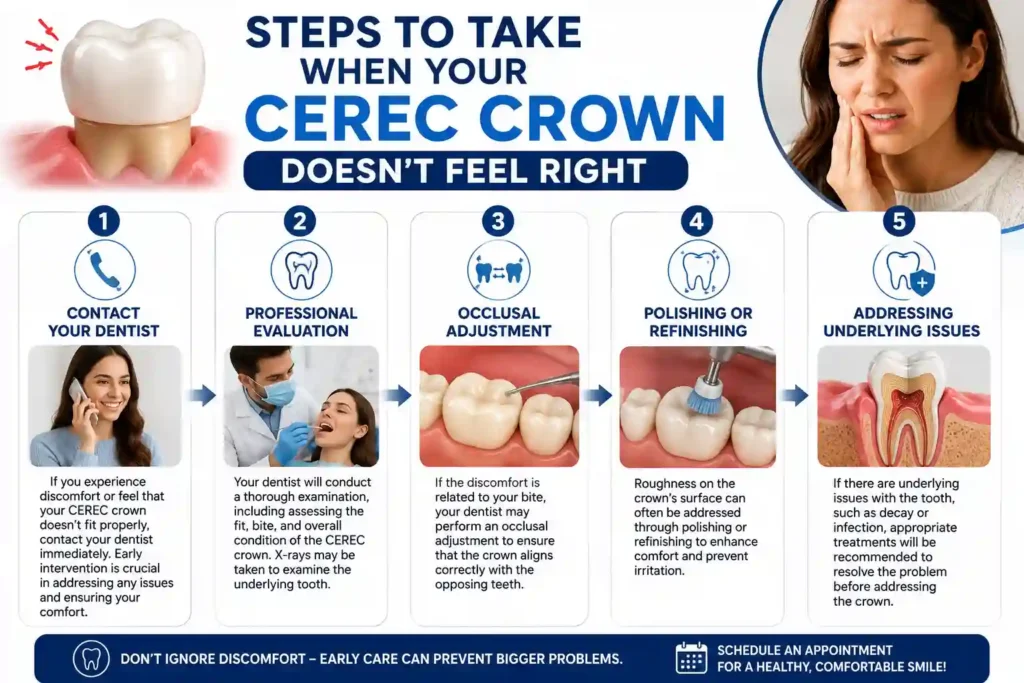
Steps to Take When Your CEREC Crown Doesn’t Feel Right:
-
Contact Your Dentist:
If you experience discomfort or feel that your CEREC crown doesn’t fit properly, contact your dentist immediately. Early intervention is crucial in addressing any issues and ensuring your comfort.
-
Professional Evaluation:
Your dentist will conduct a thorough examination, including assessing the fit, bite, and overall condition of the CEREC crown. X-rays may be taken to examine the underlying tooth.
-
Occlusal Adjustment:
If the discomfort is related to your bite, your dentist may perform an occlusal adjustment to ensure that the crown aligns correctly with the opposing teeth.
-
Polishing or Refinishing:
Roughness on the crown’s surface can often be addressed through polishing or refinishing to enhance comfort and prevent irritation.
-
Addressing Underlying Issues:
If there are underlying issues with the tooth, such as decay or infection, appropriate treatments will be recommended to resolve the problem before addressing the crown.
Preventing Future Discomfort:
Regular Check-ups:
Attend regular dental check-ups to monitor the condition of your CEREC crown and address any emerging issues promptly.
Good Oral Hygiene:
Maintain excellent oral hygiene to prevent decay around the crown. Regular brushing, flossing, and dental cleanings are crucial for the health of your teeth and restorations.
Communication with Your Dentist:
Openly communicate any concerns or changes in how your CEREC crown feels during and after the adjustment process. Your dentist can make further refinements as needed.
Conclusion
If your CEREC crown feels uncomfortable, don’t assume it’s something you simply have to live with. Mild sensitivity, slight pressure, or temporary discomfort is common after placement and usually improves within a few days. However, if your crown feels rough, gritty, too high, painful when biting, or the discomfort continues to worsen, it could point to issues such as an uneven bite, poor crown fit, nerve irritation, or damage that should be evaluated by your dentist.
Most CEREC crown problems are straightforward to diagnose and often require only a simple bite adjustment or minor polishing to restore comfort. The sooner the underlying cause is identified, the easier it is to prevent further discomfort or complications. If your crown still doesn’t feel natural after the initial healing period, schedule a dental examination so your dentist can ensure your restoration fits comfortably, functions properly, and protects your tooth for years to come.
Frequently Asked Questions
Is it normal for a CEREC crown to feel uncomfortable?
Yes. Mild discomfort, pressure, or sensitivity is common during the first few days after placement. These symptoms usually improve as your tooth, gums, and bite adapt to the new crown. If discomfort becomes worse or continues for several weeks, contact your dentist.
Why does my CEREC crown feel rough?
A rough crown may result from minor surface irregularities, excess dental cement, or the need for additional polishing. In many cases, a short follow-up visit can correct the problem.
Why does my new crown feel gritty?
A gritty feeling often occurs because your tongue is adjusting to the new restoration or because small amounts of bonding material remain around the crown. Your dentist can determine the exact cause during an examination.
How long does it take to get used to a CEREC crown?
Most patients begin adjusting within a few days, and the crown usually feels natural within two to four weeks. Healing time varies depending on the condition of the treated tooth and whether additional adjustments are needed.
Can a bad CEREC crown be fixed?
Often, yes. Many CEREC crown problems can be corrected with bite adjustments, polishing, or recementing. If the crown is damaged or doesn’t fit properly, replacement may be recommended.
Why does my CEREC crown hurt when I bite down?
Pain while biting is commonly caused by a crown that’s slightly too high, an uneven bite, or irritation of the tooth underneath. Because several conditions can cause this symptom, it’s best to schedule a dental evaluation rather than trying to diagnose the problem yourself.
Should I be worried if my crown still feels different?
Not necessarily. Many patients notice their crown for the first week or two simply because it’s new. However, if the crown never begins to feel comfortable or continues interfering with chewing, your dentist should examine it.
Can I eat normally after getting a CEREC crown?
Most patients can return to normal eating shortly after the numbness wears off, but it’s often helpful to avoid very hard or sticky foods for the first day or two while your mouth adjusts.