

Tooth enamel cannot grow back once it is lost. Unlike other tissues in the body, enamel has no living cells, so there is no way for your body to regenerate or replace it after it wears away. It exists to cover and protect the softer layers underneath, and once it is gone, that protection is gone with it.
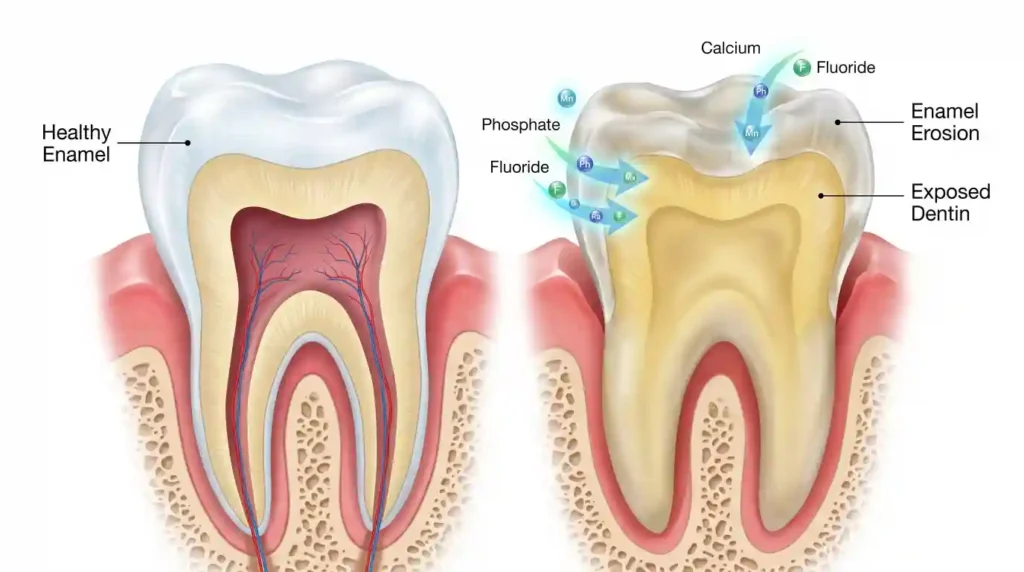
That said, early enamel damage is not always a lost cause. Before enamel physically erodes away, it can sometimes be strengthened through a process called remineralization, where minerals like calcium and phosphate redeposit into weakened spots and help stop early decay before it turns into a cavity. Even though enamel is the hardest substance the human body makes, everyday things like acid, bacteria, and plaque slowly wear it down over time.
The good news is there is a lot you can do to protect the enamel you still have and slow down further loss. If you are in Mesa, Arizona, and starting to notice sensitivity, discoloration, or rough spots on your teeth, Valencia Dental Care can help you figure out exactly where you stand and what steps make sense next.
What Is Tooth Enamel?
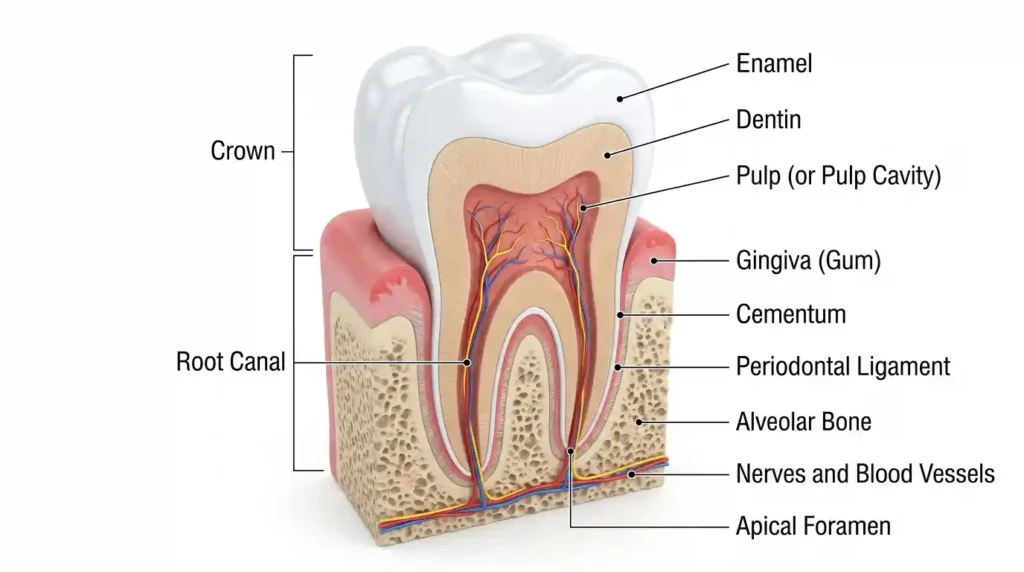
Tooth enamel is the hard outer shell that covers the visible part of each tooth. It is the hardest substance your body produces and is made almost entirely of a mineral called hydroxyapatite. Every time you bite, chew, or drink something hot or cold, enamel absorbs that force and protects the softer layers underneath.
The most important thing to understand is that enamel is not living tissue and cannot heal itself. Once it wears away, it is gone permanently. It also gives teeth their white appearance, and as it thins, the yellowish dentin underneath starts to show through.
What Is Enamel Made Of?
Tooth enamel is the hard outer layer that covers the crown of each tooth. It is the hardest substance in the human body, even harder than bone. Enamel is mostly made of minerals that make it strong and protect your teeth. This mineral structure is what gives enamel its remarkable hardness and its ability to withstand years of chewing, biting, and temperature changes.
Despite its strength, enamel has one major weakness. It is not living tissue. It contains no cells that can regenerate or repair themselves the way skin or bone can. Once it wears away, your body has no natural mechanism to replace it from scratch.
Can Tooth Enamel Grow Back?
No tooth enamel cannot grow back once it is lost. Enamel is the hard outer layer of your teeth. Unlike skin or bone, it contains no living cells, so your body cannot regenerate or replace enamel after it has been worn away, eroded by acids, or damaged by decay.
However, early enamel damage can sometimes be repaired to a degree through remineralization. Calcium and phosphate (with fluoride help) can redeposit into weakened enamel, strengthening it and helping reverse early decay before cavities form.
Can Damaged Tooth Enamel Repair Itself?
Damaged tooth enamel cannot fully repair itself once it has been physically lost because enamel contains no living cells. Unlike bone or skin, your body cannot regenerate new enamel after it has been worn away, chipped, or eroded.
However, if the damage is limited to early mineral loss (demineralization), enamel can be strengthened through a process called remineralization. Fluoride, good oral hygiene, and minerals such as calcium and phosphate can help restore some of the lost minerals but they cannot regrow lost enamel.
What Causes Tooth Enamel Loss?
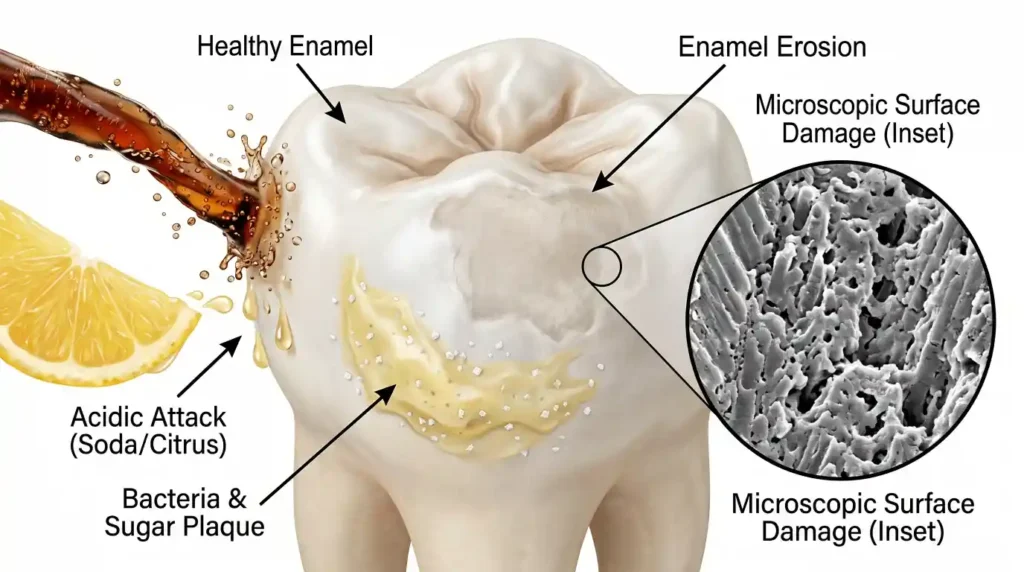
Tooth enamel loss is often caused by frequent exposure to acids that wear away the tooth’s protective outer layer. Common sources include sugary and acidic foods and drinks such as soda, citrus fruits, sports drinks, and frequent snacking. Acid reflux and certain medical conditions can also expose teeth to stomach acids, increasing enamel breakdown .
Other causes include poor oral hygiene, teeth grinding (bruxism), aggressive brushing with a hard-bristled toothbrush, and dry mouth, which reduces the protective effects of saliva. Over time, these factors can weaken enamel, leading to sensitivity, discoloration, and a higher risk of cavities.
Signs Your Tooth Enamel May Be Wearing Away
Signs your tooth enamel may be wearing away include tooth sensitivity, yellowing teeth, rough or uneven surfaces, increased cavities, and cracks or chips in the teeth.
Tooth Sensitivity
Sensitivity to hot, cold, sweet, or acidic foods and drinks is often the first sign that enamel is thinning. As the protective layer wears away, the dentin underneath becomes more exposed and responsive to temperature and pressure changes.
Yellowing Teeth
As enamel thins, the naturally yellow dentin beneath it becomes more visible. Teeth that were once white can gradually take on a yellow or gray tint despite regular brushing. This is different from surface staining and cannot be fixed with whitening toothpaste alone.
Rough or Uneven Tooth Surfaces
Healthy enamel is smooth. As it erodes, tooth surfaces can feel rough, pitted, or uneven to the tongue. The edges of teeth may look slightly jagged or translucent, especially at the tips of the front teeth.
Increased Risk of Cavities
Weakened enamel provides less protection against bacteria. If you are suddenly getting more cavities despite good oral hygiene, thinning enamel may be a contributing factor.
Cracks, Chips, and Tooth Pain
In more advanced cases, weakened enamel is more prone to physical damage. Teeth may chip more easily, develop small cracks, or ache with persistent pain that does not go away on its own.
How to Strengthen and Repair Tooth Enamel Naturally
You can help strengthen tooth enamel naturally by maintaining good oral hygiene and using fluoride toothpaste, which helps protect and remineralize weakened enamel. Brushing twice a day, flossing, and drinking plenty of water also support saliva production, which naturally repairs early enamel damage.
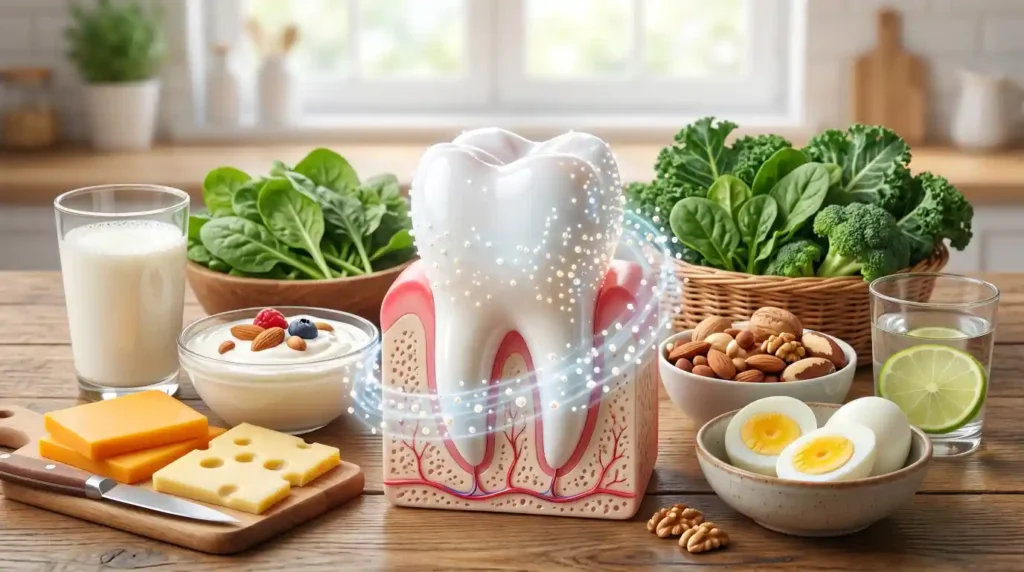
Eating a balanced diet rich in calcium, phosphate, and vitamins also helps keep enamel strong. Foods like dairy products, leafy greens, nuts, eggs, and crunchy fruits and vegetables support remineralization, while reducing sugary and acidic foods helps prevent further enamel erosion.
Foods That Help Support Enamel Remineralization
Dairy products like milk, cheese, and yogurt are rich in calcium and phosphate, which help strengthen tooth enamel. Leafy green vegetables such as spinach and kale also support dental health by providing important minerals and increasing saliva production.
Foods like fish, eggs, chicken, nuts, and crunchy fruits and vegetables help with enamel support by supplying nutrients and naturally cleaning teeth. Sugar-free xylitol gum can also reduce acid in the mouth and promote remineralization by increasing saliva flow.
What to Avoid if You Want Stronger Enamel
Sugary foods and drinks, along with sports and energy drinks, can damage tooth enamel because they increase acid in the mouth. Frequent intake of these items exposes teeth to constant acid attacks, which weakens enamel over time.
Citrus fruits are also highly acidic and can contribute to enamel erosion if eaten too often. Brushing immediately after acidic foods can harm enamel, and tobacco products further increase damage by reducing saliva and weakening oral health.
Professional Treatments for Enamel Damage
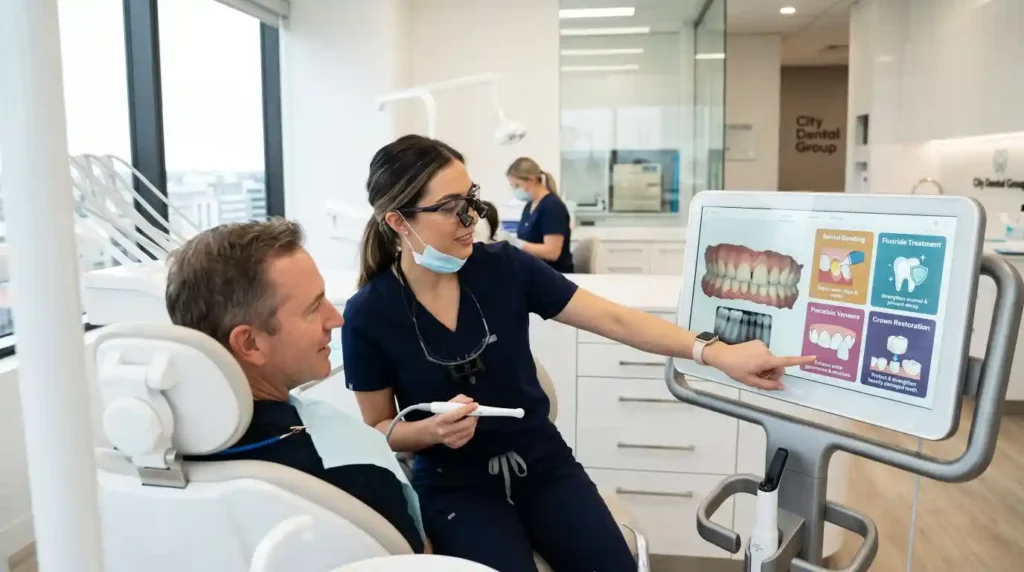
Dentists can protect and restore weakened enamel using treatments like fluoride applications, bonding, fillings, veneers, or crowns depending on the level of damage.
Fluoride Treatments
Professional fluoride treatments applied in a dental office deliver a much higher concentration of fluoride than home toothpastes. These treatments can significantly strengthen early-stage enamel damage and are often recommended for patients at high risk of erosion or decay.
Dental Bonding
For teeth where enamel has worn away enough to cause sensitivity or cosmetic concerns, dental bonding uses a tooth-colored resin to cover and protect the exposed area. It is a relatively affordable and quick procedure that can restore both function and appearance.
Veneers
When enamel erosion has affected the appearance of multiple front teeth, porcelain veneers can be placed over the damaged surfaces. Veneers do not restore lost enamel but they do protect what remains and give teeth a healthy, natural appearance.
Dental Crowns
For teeth with severe enamel loss that has compromised their structural integrity, a dental crown covers the entire tooth and protects it from further damage. Crowns are typically the last resort before more invasive treatment becomes necessary.
How to Prevent Further Enamel Loss
You can prevent further enamel loss by maintaining good oral hygiene, avoiding acidic and sugary foods, and using fluoride-based dental care products.
Maintain a Consistent Oral Hygiene Routine
Brushing twice a day with a fluoride or hydroxyapatite toothpaste, flossing daily, and using a fluoride mouthwash creates a consistent environment of remineralization and protection. Gentle daily care beats occasional aggressive brushing every time.
Schedule Regular Dental Checkups
A dentist can identify early signs of enamel erosion that you would never notice on your own. Early detection means early intervention, which almost always means simpler and less expensive treatment. Twice-yearly checkups give your dental team the opportunity to catch problems before they progress.
Manage Teeth Grinding
If you grind your teeth at night, talk to your dentist about a custom night guard. This is one of the most impactful things you can do to protect your enamel from mechanical wear that no toothpaste can prevent.
Address Acid Reflux and Dry Mouth
If you have chronic acid reflux, working with your doctor to manage it protects your teeth as much as it protects your digestive health. If you have dry mouth caused by medication or other conditions, your dentist can recommend saliva substitutes or other solutions to keep your mouth protected.
Common Myths About Tooth Enamel
There are many common misconceptions about tooth enamel that often lead to confusion about how it actually works and how it can be protected.
Myth: Tooth Enamel Grows Back Completely
This is the most common misconception. Enamel cannot regrow. Remineralization strengthens and partially repairs early damage, but it does not replace enamel that has been physically worn away. There is no product currently available that can fully rebuild lost enamel from scratch.
Myth: Whitening Toothpaste Repairs Enamel
Whitening toothpastes work by using mild abrasives or bleaching agents to remove surface stains. They do not repair enamel. In fact, some highly abrasive whitening toothpastes can contribute to enamel wear if used too aggressively over a long period.
Myth: Home Remedies Can Regrow Enamel
Oil pulling, lemon juice, baking soda, and activated charcoal are all popular home remedies for teeth. None of them can regrow enamel. Some of them, particularly lemon juice and activated charcoal, are actually acidic or abrasive enough to cause additional enamel damage if used regularly.
Myth: Sensitive Teeth Always Mean Enamel Loss
Tooth sensitivity has several possible causes including gum recession, a cracked tooth, or a cavity. Sensitivity alone does not confirm enamel loss. Only a dental examination can determine the actual cause and the right treatment.
Protect the Enamel You Still Have
You can’t get enamel back once it’s gone, but you can absolutely slow down how fast it wears away, and that’s where a little professional guidance goes a long way. The team at Valencia Dental Care in Mesa, AZ can take a real look at your teeth, catch early enamel loss before it turns into sensitivity or cavities, and walk you through exactly what’s actually helping versus what’s just marketing.
Whether you’re already noticing some sensitivity or simply want to stay ahead of it, Contact us today and give your smile the head start it deserves.
Conclusion
Tooth enamel cannot grow back because it has no living cells to regenerate it. Once it is lost, it cannot be naturally replaced by any home remedy or product. However, early enamel damage can be strengthened through remineralization using fluoride or nano-hydroxyapatite, along with good oral hygiene, a healthy diet, and regular dental care.
Frequently Asked Questions
Can tooth enamel grow back naturally?
Enamel cannot grow back because the cells that produce it during tooth development are no longer present once the tooth erupts. However, early-stage enamel damage can be partially strengthened through remineralization using fluoride, hydroxyapatite, and good oral hygiene habits.
Can fluoride rebuild tooth enamel?
Fluoride supports remineralization by helping calcium and phosphate minerals redeposit into weakened enamel and by converting it into a more acid-resistant form called fluorapatite. It cannot rebuild enamel that has been completely lost, but it is the most clinically proven tool for strengthening early enamel damage.
Can enamel erosion be reversed?
Very early-stage enamel softening or demineralization can be reversed with consistent use of fluoride toothpaste, good diet choices, and regular dental care. Once enamel has been visibly worn away, it cannot be reversed and requires professional treatment to protect what remains.
How do I know if my enamel is damaged?
Common signs include tooth sensitivity to hot, cold, or sweet foods, yellowing or transparency at the tips of teeth, rough or uneven surfaces, and an increase in cavities. A dentist can confirm enamel damage through examination and X-rays.
What is the fastest way to strengthen enamel?
Using a fluoride toothpaste twice daily without rinsing immediately after, drinking water regularly, avoiding acidic foods and drinks, and seeing your dentist for professional fluoride treatments are the fastest and most evidence-backed approaches to strengthening weakened enamel.
Can hydroxyapatite regrow enamel?
Nano-hydroxyapatite toothpaste can fill microscopic pores and weak spots in enamel and has been shown in clinical trials to perform comparably to fluoride in supporting remineralization. It does not regrow enamel from scratch but can meaningfully strengthen early damage.
Can dentists restore lost enamel?
Dentists can protect and restore teeth affected by enamel loss using several treatments including professional fluoride applications, dental bonding, veneers, and crowns. The right option depends on how much enamel has been lost and where the damage is located.