
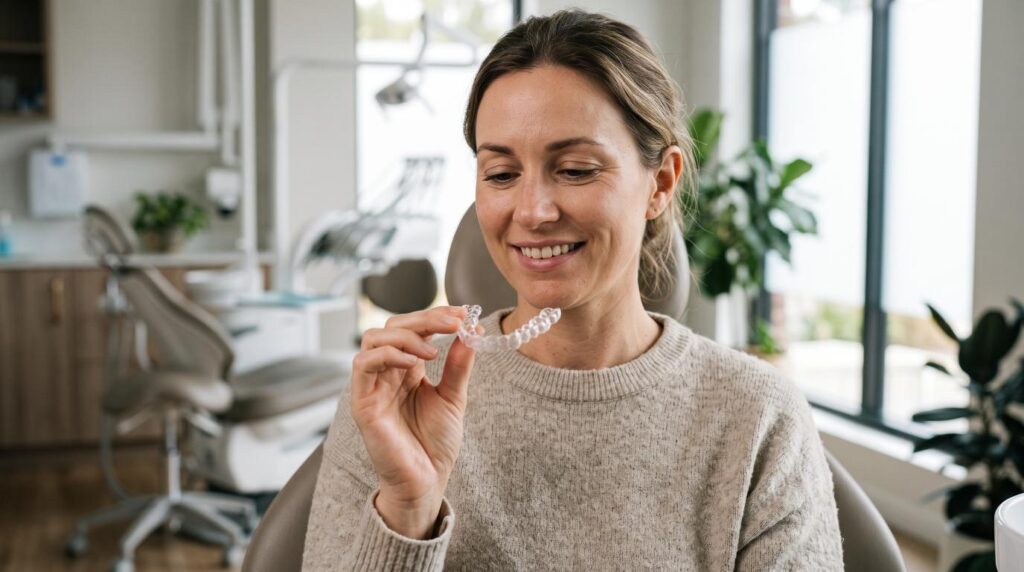

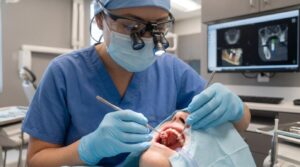



Clear aligners are custom-made, transparent plastic trays that gradually straighten teeth by applying gentle pressure. Each tray moves certain teeth a small amount at a time. Clear aligners for teeth can correct crooked teeth, gaps, and some bite problems, depending on how much movement is needed. At Valencia Dental Care in Mesa, AZ, patients can have their teeth and bite examined to find out whether Invisalign is a suitable option. Treatment time and cost depend on the type and complexity of the alignment problem. Before choosing clear aligners, it helps to understand how they work, their benefits and limitations, how much treatment may cost, and what is needed to maintain the results.
What Are Clear Aligners for Teeth?
Clear aligners for teeth are custom-made orthodontic trays that gradually move teeth into better positions. They fit closely over the upper and lower teeth and are designed to correct specific alignment problems.
Treatment involves wearing a series of trays, with each one making a small adjustment to the position of certain teeth. For example, someone with overlapping front teeth may receive aligners designed to gradually create space and straighten them.
Unlike retainers, which mainly hold teeth in place, aligners actively move teeth during treatment. A dentist or orthodontist plans these movements based on the patient’s teeth, bite, and treatment goals.
What Are Clear Aligners Made Of?
Clear aligners are made from medical-grade thermoplastic materials that are transparent, flexible, and strong enough to guide tooth movement. Common materials include thermoplastic polyurethane (TPU) and polyethylene terephthalate glycol (PETG), although the exact plastic varies between manufacturers.
Some manufacturers use several plastic layers to combine flexibility with strength. These materials allow the trays to fit closely around teeth while maintaining the pressure needed for gradual movement. Their thickness and flexibility can also affect comfort, fit, and performance.
How Clear Aligners Differ From Traditional Braces
Clear aligners use removable plastic trays to straighten teeth, while traditional braces use brackets attached to the teeth and connected by orthodontic wires. Both apply pressure to move teeth, but the appliances work differently.
Patients remove aligners before eating, brushing, and flossing, while braces stay attached throughout treatment. Aligners also have a less noticeable appearance because they do not use visible brackets or wires. However, clear aligners require consistent daily wear. Braces remain fixed to the teeth, so patients do not need to remember to put them back in after meals.
How Do Clear Aligners Move Teeth?
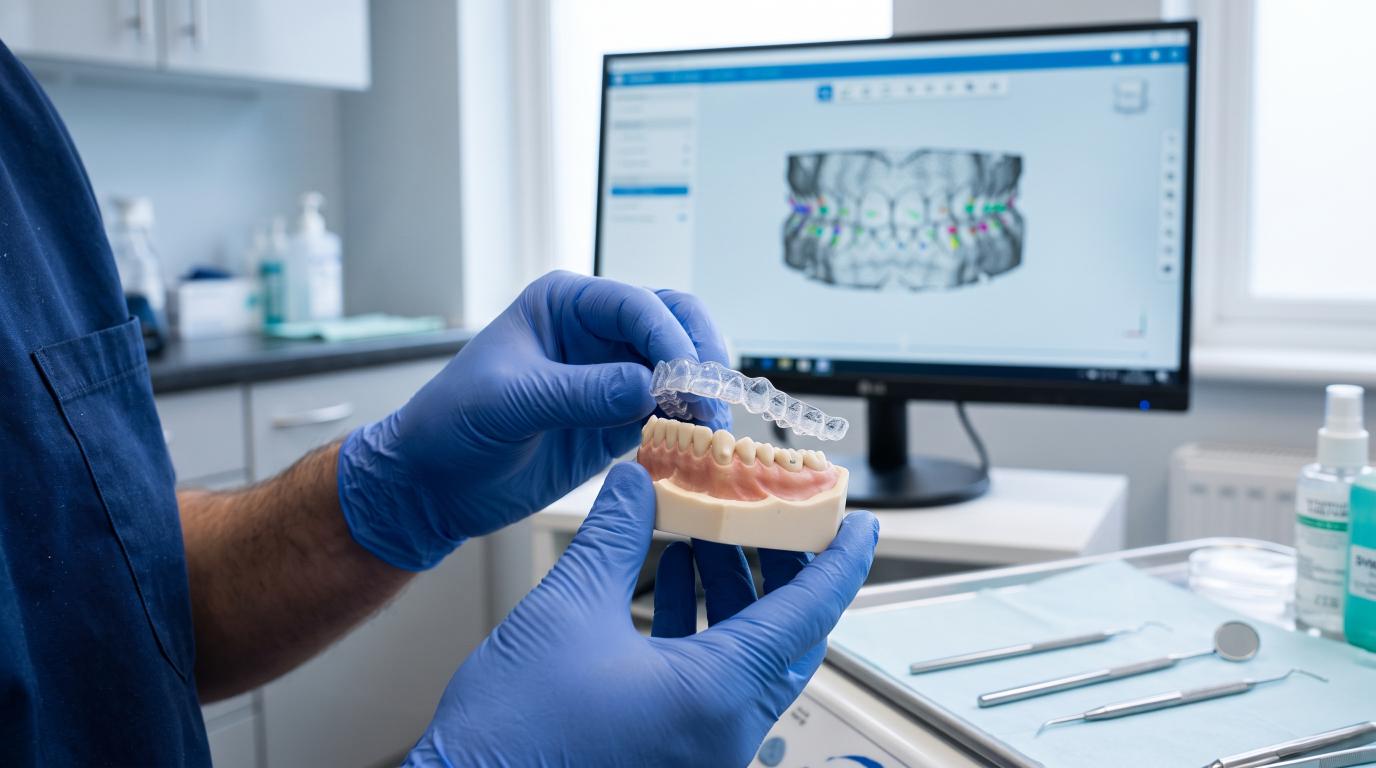
Clear aligners move teeth by applying controlled pressure that makes the bone and tissues around the roots change gradually. This process is called bone remodeling. Bone is removed on one side of a tooth’s root and formed on the other, so the tooth shifts without changing its structure. A dentist plans the direction and amount of movement for each tooth, and the aligner series guides those movements in stages.
How Digital Scans and Treatment Planning Work
Digital scans create a detailed 3D model of your teeth. A handheld scanner captures their shape and position, and photographs and X-rays add information about the bite and roots. Planning software lets the dentist map the movements and preview the final alignment. The dentist approves the plan only after checking that it suits your dental condition.
How Each Aligner Applies Controlled Pressure
Each aligner is shaped slightly differently from your current tooth positions. When the tray fits over your teeth, it creates force in the direction of the planned movement. As the teeth respond, the tray fits more closely, and you switch to the next one on schedule. Switching too early can interfere with treatment because the teeth have not finished the previous movement.
How Aligner Material and Design Affect Tooth Movement
The material, thickness, and design of an aligner affect how it transfers pressure to the teeth. A tray must be flexible enough to be comfortable but firm enough to keep the intended force during wear. The shape of the edges and how closely the plastic fits each tooth also influence movement. A 2021 review by Putrino examined how aligner materials, attachment designs, and other features influence treatment performance.
Why Attachments and Interproximal Reduction Are Used
Attachments are small, tooth-colored shapes bonded to teeth to give the aligner extra grip, especially for difficult rotations. Interproximal reduction (IPR) removes a measured amount of enamel between teeth to create space for crowding. Neither is needed for every patient, and the evidence on how much they help is mixed. A 2025 systematic review of rotational movements in adults found that both were widely used, but their effectiveness was inconsistent.
What Dental Problems Can Clear Aligners Correct?
Clear aligners can correct many mild to moderate orthodontic problems, including crooked teeth, crowding, gaps, and some bite issues such as overbite, underbite, crossbite, and open bite. Results depend on how far the teeth must move and whether removable trays can control that movement.
Large rotations, vertical movements, and root changes are harder to achieve, and gaps caused by missing teeth or gum disease may need extra treatment. Severe crowding or major jaw differences may need braces or a combined approach. An examination is the only way to know which problems aligners can handle in your case.
Who Is a Good Candidate for Clear Aligners?
A good candidate has healthy teeth and gums and can wear the trays as prescribed. Both adults and teenagers can qualify, since age alone does not decide eligibility. The dentist also considers gum health, previous dental work, jaw development, and how much correction is needed.
Untreated cavities, active gum disease, or bone loss should be treated first. Crowns, bridges, and implants need extra planning, and implants cannot be moved like natural teeth. Teens must be responsible enough to wear the trays daily, remove them for meals, and avoid losing them.
What Are the Benefits and Limitations of Clear Aligners?
Clear aligners offer a less noticeable appearance, removable trays, and easier access for daily oral hygiene. However, they require consistent wear and may not provide enough control for every orthodontic problem.
Their main advantage is flexibility during daily activities. Their main limitation is that treatment depends on following the prescribed schedule and attending progress checks.
Appearance and Everyday Convenience
Clear aligners are difficult to notice because they are made from transparent plastic that fits closely over the teeth. Many adults and teenagers prefer this appearance when attending school, working, or meeting people. The trays can also be removed for meals and cleaning. However, tooth-colored attachments may still be visible, and removing the trays frequently can interfere with the required wear time.
Removability and Oral Hygiene
Removable aligners allow patients to brush and floss their teeth without working around brackets and wires. This makes it easier to clean between teeth and along the gumline during orthodontic treatment. However, oral hygiene remains essential because food and plaque can become trapped beneath the trays. Patients should clean their teeth before putting aligners back in after eating.
Discomfort, Speech Changes, and Other Possible Drawbacks
Clear aligners can cause temporary soreness, pressure, or mild speech changes, particularly when starting treatment or changing trays. Some patients notice a slight lisp while their tongue adjusts to the plastic. Others experience irritation where an aligner edge touches the gums. These symptoms usually improve as patients adjust, but sharp pain, swelling, bleeding, or persistent discomfort should be assessed by a dentist.
What Does the Clinical Evidence Say About Clear Aligners?
Clinical research shows that clear aligners can improve tooth alignment in selected orthodontic cases, but their effectiveness varies by the type of movement required. Studies also show that predicted tooth positions do not always match the final results. The quality of treatment planning, case difficulty, and patient cooperation can affect outcomes. This means digital treatment simulations should be viewed as planned goals rather than guaranteed results.
How Predictable Are Clear Aligner Results?
Clear aligner results are more predictable for certain tooth movements than others. Movements involving difficult rotations, vertical positioning, or root control may be harder to complete accurately. Predictability also depends on how closely the trays fit and whether teeth respond as expected. A dentist monitors progress by comparing actual tooth positions with the treatment plan and checking whether adjustments are needed.
What Research Says About Treatment Effectiveness
Research supports clear aligner treatment for selected mild to moderate orthodontic problems, although evidence is not equally strong for every movement.
A 2020 review by Robertson examined 7 studies comparing clear aligner effectiveness and treatment outcomes. The researchers found low-to-moderate certainty for particular tooth movements and reported that some mild to moderate cases achieved results comparable to fixed braces. They also found that additional aligners may be necessary to complete planned movements.
Clear Aligners vs. Braces, Which Is Better?
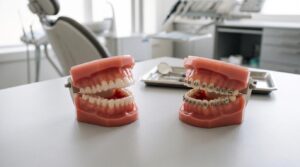 Clear aligners may be better for patients who want less visible treatment and can consistently wear removable trays. Traditional braces may be better for complex tooth movements or patients who prefer an appliance that stays attached. Neither treatment is automatically more effective for everyone. The right choice depends on the alignment problem, treatment goals, and the patient’s ability to follow instructions.
|
Factor |
Clear Aligners |
Traditional Braces |
|
Appearance |
Transparent trays that are less noticeable | Metal or ceramic brackets with wires |
| Eating | Removed before meals |
Remain attached, with some food restrictions |
|
Oral hygiene |
Removed for brushing and flossing | Extra cleaning around brackets and wires |
| Wear requirements | Must follow prescribed daily hours |
Stay attached throughout treatment |
|
Complex tooth movements |
May require additional techniques | May provide better control in difficult cases |
| Treatment cost | Depends on complexity and included services |
Depends on complexity and included services |
Effectiveness for Different Orthodontic Problems
Both braces and aligners can correct many orthodontic problems, but their ability to control particular tooth movements differs. Clear aligners may work well for selected spacing and crowding problems. Braces can offer greater control for certain complex rotations, bite corrections, and root movements. The dentist should compare the movements required rather than choosing treatment based only on appearance.
Appearance, Eating, and Daily Oral Hygiene
Clear aligners allow patients to remove their trays before meals and clean their teeth normally. Braces remain attached, so patients must avoid foods that could damage brackets or wires. Aligner wearers must also keep their trays clean and store them safely. These daily differences can influence which treatment feels easier to manage.
When Traditional Braces May Be the Better Choice
Traditional braces may be more suitable when teeth require difficult movements or the patient cannot consistently wear removable aligners. Fixed appliances provide continued force without the patient having to remove and replace them throughout the day. For a more detailed comparison, read our Invisalign versus braces guide.
What Is the Clear Aligner Treatment Process?
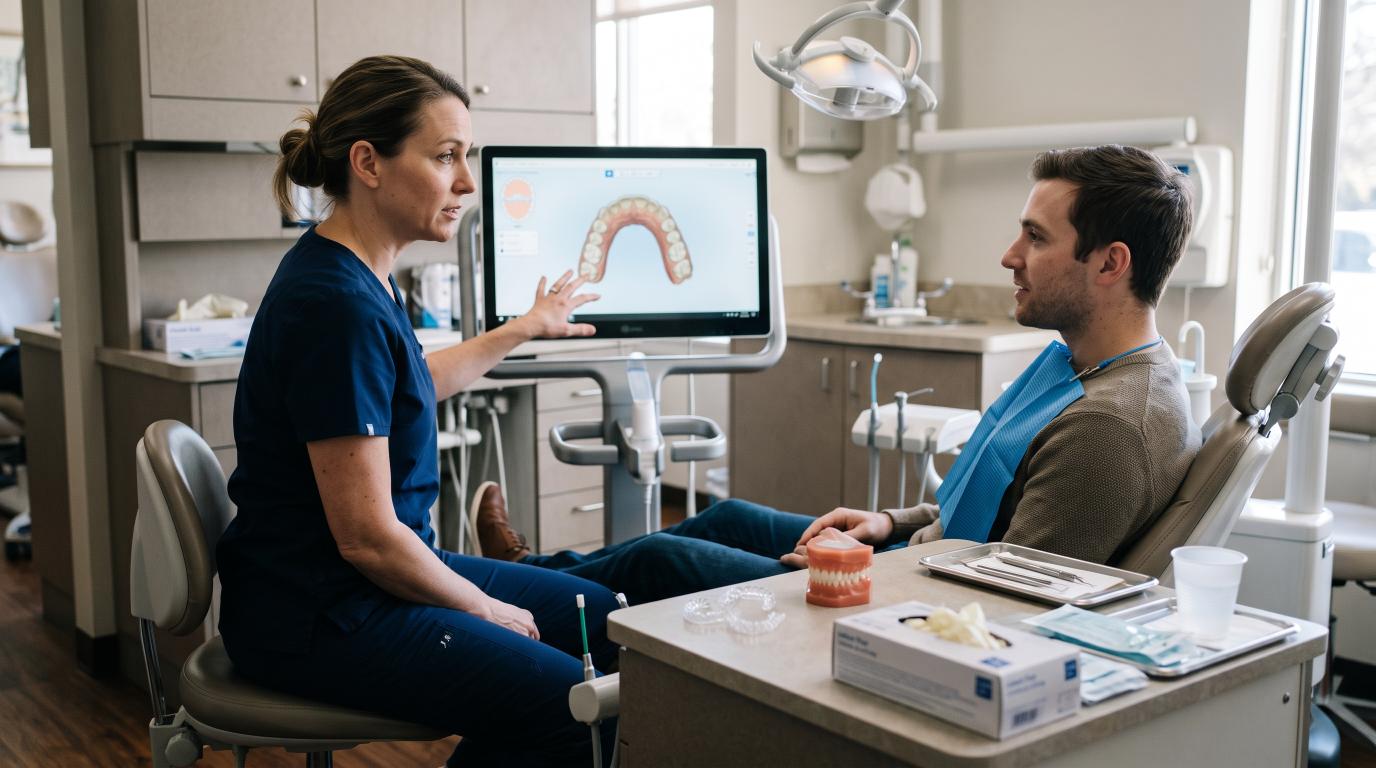
Clear aligner treatment usually involves an orthodontic examination, digital planning, wearing a series of custom trays, and follow-up appointments. Refinement aligners may be needed before treatment is complete. The dentist first identifies which teeth need to move and how the bite should change. The treatment plan then guides the design of the trays. Patients receive instructions for wearing each set and attend appointments to check whether the planned movements are happening.
Step 1: Orthodontic Examination and Digital Scans
The dentist examines the patient’s teeth, gums, and bite to determine whether aligners are appropriate. Digital scans or impressions record tooth positions, while photographs and X-rays may provide information about the roots and surrounding bone. The dentist also reviews medical and dental history to identify any conditions that could affect treatment.
Step 2: Customized Treatment Planning and Aligner Fabrication
The dentist develops a treatment plan showing which teeth need to move and the order of those movements. The approved plan is used to manufacture a series of custom aligners. Each tray represents another stage in the planned correction. The dentist also determines whether attachments, elastics, or additional procedures are necessary.
Step 3: Wearing Aligners and Attending Follow-Up Visits
Patients begin wearing their prescribed trays and change to new sets according to the dentist’s instructions. During follow-up visits, the dentist examines tray fit, tooth movement, and changes in the bite. If an aligner does not fit properly or a tooth is not moving as expected, the dentist may adjust the schedule or treatment plan.
Step 4: Refinements and Additional Aligner Sets
Refinement aligners are additional trays used when certain teeth have not reached their planned positions. The dentist takes updated scans or impressions and develops another series to make the remaining corrections. Refinements are not required for every patient, but they are a recognized part of aligner treatment. Ask whether additional sets are included in the original estimate.
How Long Does Clear Aligner Treatment Take?
Clear aligner treatment can take several months to more than a year, depending on how complex the alignment problem is. Minor spacing may need only a few months, while major crowding or bite changes can take a year or longer. A 2024 systematic review found no significant difference in treatment time between aligners and braces for mild to moderate crowding.
It also noted that patient and treatment factors affect duration. Missed wear time, lost trays, and teeth that do not move as planned can delay progress and lead to refinement trays. Aligners are generally worn at least 20 hours a day, or as your dentist directs, so leaving them out too long can slow treatment. Your dentist can give a realistic estimate after examining your teeth and preparing a treatment plan.
How Much Do Clear Aligners for Teeth Cost?
The cost of clear aligners for teeth depends on the amount of correction needed, the treatment system, and the services included in the dental provider’s plan. Simple alignment cases generally require fewer treatment stages than cases involving major crowding or bite correction. More difficult treatment may involve additional appointments, attachments, or refinement aligners. Instead of comparing starting prices alone, patients should request a written estimate explaining the complete treatment and any possible additional charges.
What Affects the Total Treatment Cost?
The total cost is influenced by treatment complexity, the number of aligners, provider fees, and the length of professional supervision. Some plans include digital scans, attachments, refinement trays, and retainers, while others charge separately for certain services. Patients should also ask about replacement aligners, missed appointments, and possible costs if treatment extends beyond the original estimate.
Does Dental Insurance Cover Clear Aligners?
Some dental insurance plans cover part of clear aligner treatment when orthodontic benefits are included. Coverage depends on the individual policy. Certain plans have age restrictions, waiting periods, coverage limits, or exclusions for adult orthodontics. Before beginning treatment, ask your insurance provider whether aligners qualify, how much coverage remains, and what portion you must pay.
Payment Plans and Financing Options
Payment plans can make clear aligner treatment easier to manage by spreading the cost over several payments. Some dental providers offer installment arrangements or third-party financing, depending on eligibility. Before agreeing, review the down payment, monthly payment, interest rate, financing fees, and total repayment amount. A lower monthly payment does not necessarily mean a lower overall cost.
What Are the Different Clear Aligner Brands and Treatment Options?
Several clear aligner systems are available, including Invisalign and ClearCorrect. Both are dentist-supervised and use digital planning and custom removable trays, but they differ in materials and planning tools. Choose based on your orthodontic needs and the clinician’s experience. Ask who evaluates your bite, who handles problems if the trays stop fitting, and whether refinements and retainers are included in the cost.
At-home aligner companies often rely on remote assessments or impressions taken by the patient. The FDA states that it has not authorized clear aligners sold directly to consumers without a prescription and supervision by a dentist or orthodontist. Remote monitoring can support treatment but should not replace in-person exams.
How to Wear, Clean, and Care for Clear Aligners

Clear aligners should be worn according to the prescribed schedule, removed before meals, and cleaned regularly with products suitable for the aligner material. Proper care helps prevent damage, unpleasant odors, discoloration, and fitting problems. Patients should also keep their teeth clean before reinserting the trays. A consistent daily routine makes it easier to maintain oral hygiene without losing important wear time.
Eating and Drinking While Wearing Aligners
Clear aligners should be removed before eating because chewing can damage or distort the plastic. Plain water is generally safe to drink while wearing them. Hot drinks may warp the trays, while sugary or acidic beverages can become trapped against the teeth. After meals, brush your teeth when possible before putting the aligners back in. If brushing is not immediately possible, rinse your mouth and follow your dentist’s guidance.
How to Clean Aligners Without Damaging Them
Clean aligners with cool or lukewarm water and the cleaning method recommended by the manufacturer or dentist. A soft brush or approved cleaning product can help remove buildup without scratching the trays. Avoid boiling water, abrasive toothpaste, bleach, and harsh household cleaners because they may damage the material. Store the trays in their protective case whenever they are not being worn.
What to Do If an Aligner Is Lost, Cracked, or Does Not Fit
Contact your dentist if an aligner is missing, cracked, unusually loose, or no longer fits correctly. The dentist may recommend a replacement tray, an adjustment to your schedule, or an examination to identify why the fit changed. Do not force a damaged tray into place or move to the next aligner without professional instructions.
What Happens After Clear Aligner Treatment?
After clear aligner treatment, patients usually need retainers to keep their teeth in their corrected positions. Teeth can shift naturally after orthodontic treatment, even when the original alignment was successful. Retainers help maintain the result while the bone and surrounding tissues adapt to the new tooth positions. The dentist will recommend a retainer type and wearing schedule based on the patient’s treatment history and risk of future movement.
Why Retainers Are Needed to Maintain Tooth Position
Retainers hold teeth in their corrected positions after the active movement phase ends. Without continued support, teeth may gradually move because the surrounding tissues are still adapting and natural tooth movement continues throughout life. Retainers may be removable plastic trays or fixed wires attached behind selected teeth. Your dentist will explain the recommended wearing schedule and cleaning instructions.
What Happens If You Stop Wearing Your Retainer?
Stopping retainer use can allow teeth to shift toward their previous positions or develop new alignment problems. Even small changes may cause the retainer to feel tight or stop fitting correctly. If teeth have moved, contact your dentist rather than forcing the old retainer into place. Depending on the amount of movement, you may need a replacement retainer or additional orthodontic treatment.
Conclusion
Clear aligners for teeth can straighten crowded teeth, close gaps, and improve selected bite problems without fixed metal brackets. Their removable design makes eating and oral hygiene easier, but treatment requires consistent wear and professional monitoring.
The right treatment depends on dental health, case complexity, expected tooth movements, and overall cost. Not every alignment problem can be corrected with removable trays alone. A dental examination helps determine whether clear aligners are suitable and what kind of treatment plan can provide a stable result.
Schedule a Clear Aligner Consultation
If crooked teeth, crowding, or gaps are affecting your smile, find out whether Invisalign treatment is suitable for your needs. Valencia Dental Care in Mesa, AZ offers Invisalign consultations to help patients understand their alignment concerns and available treatment options. During your visit, the dentist can examine your teeth and bite, discuss the movements required, and explain what treatment may involve.
You can also ask about expected treatment time, follow-up appointments, insurance benefits, payment options, and the total estimated cost before making a decision. Call (480) 219-1933 or schedule your Invisalign consultation to discuss your teeth-straightening options.
Frequently Asked Questions
Can Clear Aligners Fix Teeth That Shifted After Braces?
Yes. Clear aligners for teeth can correct some cases of shifting after previous orthodontic treatment. The dentist must examine how much movement has occurred and determine whether another course of aligners is appropriate.
Can You Drink Hot Beverages While Wearing Clear Aligners?
No. Hot coffee or tea may distort the plastic and affect how the trays fit. Remove your aligners before drinking hot beverages and clean your teeth before putting them back in.
What Happens If You Do Not Wear Aligners for the Recommended Time?
Your teeth may not follow the planned movements, which can delay treatment or prevent later trays from fitting correctly. Contact your dentist if you frequently miss the prescribed wear time.
Can You Wear Clear Aligners If You Have Crowns or Fillings?
Yes, many people with crowns or fillings can use aligners. However, the dentist must check the condition and location of existing restorations. Dental implants need special planning because they cannot move like natural teeth.
Can You Switch to the Next Aligner Earlier Than Scheduled?
No, unless your dentist specifically approves the change. Switching trays early may apply pressure before the teeth have completed the previous movement, affecting fit and treatment progress.
What Should You Do If Your Clear Aligners Stop Fitting?
Contact your dentist for an assessment. A poor fit may result from missed wear time, damaged trays, or teeth not moving as planned. Do not force the aligner or skip ahead without instructions.