





If you are wondering if Invisalign is better than braces, the answer depends on your teeth and treatment needs. Invisalign may be better if you want a less noticeable, removable option that makes eating, brushing, and flossing easier. Traditional braces may be better when more complex tooth movement or greater control is needed.
At Valencia Dental Care in Mesa, AZ, patients can compare Invisalign and braces based on their tooth alignment, bite, treatment goals, and daily routine. Invisalign uses removable clear aligners, while braces use brackets and wires that stay attached throughout treatment.
Neither option is better for everyone. Invisalign can offer advantages in appearance, food choices, and cleaning, but it requires consistent daily wear. Braces do not depend on remembering to wear an appliance and may be more suitable for certain complex cases. Cost, comfort, treatment time, maintenance, and the type of correction needed should all be considered before choosing.
How Invisalign and Braces Straighten Teeth
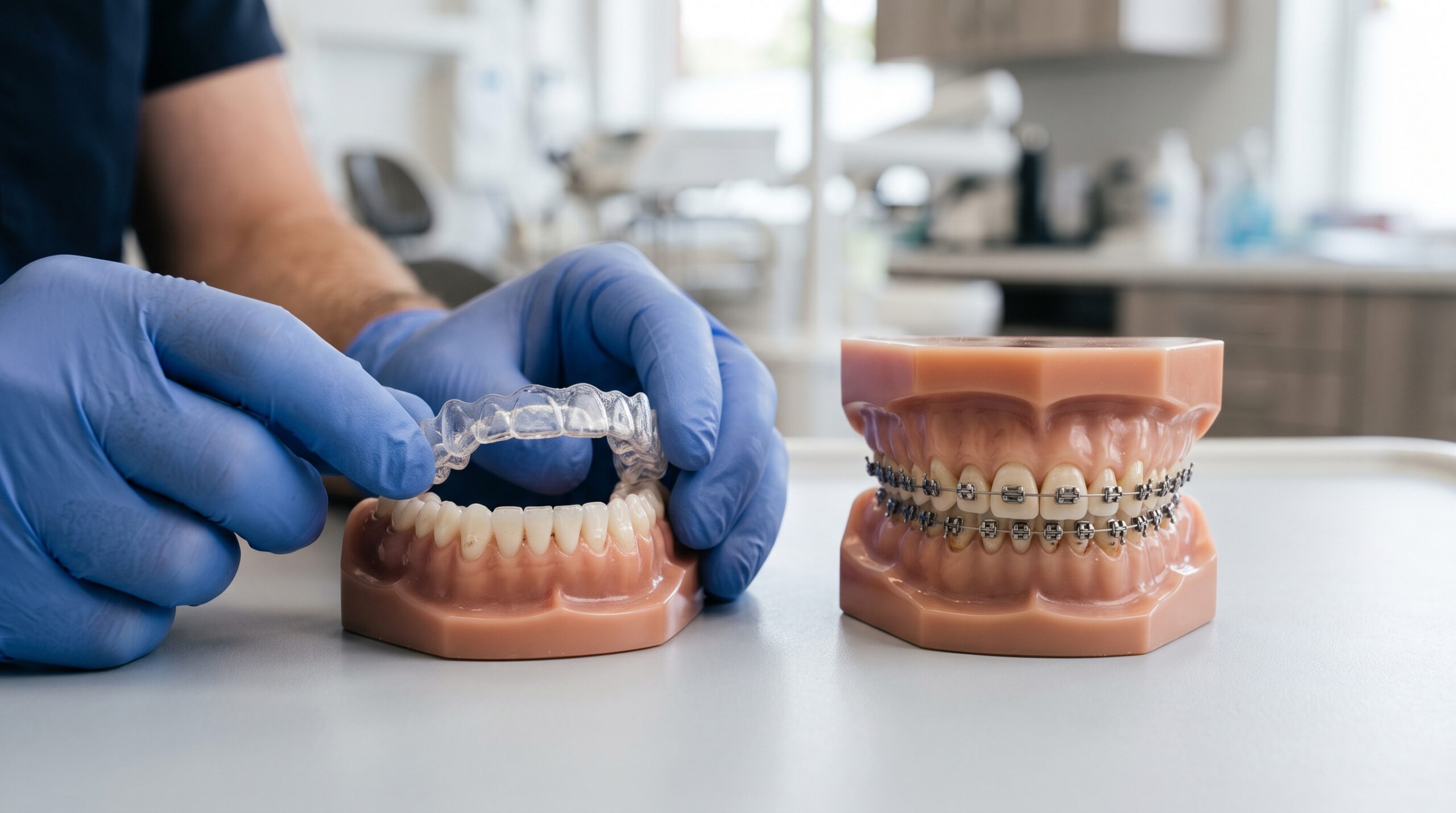
Invisalign uses a series of clear plastic aligners made to fit over the teeth. Each set is shaped a little differently. As you move through the sets, gentle pressure guides the teeth toward their planned positions.
The aligners are removable, but they need to be worn for most of the day. They are normally removed for eating, drinking anything other than water, brushing, and flossing. Your exact wear schedule depends on the treatment plan given by your dental provider.
Traditional braces work differently. Small brackets are attached to the teeth and connected with an orthodontic wire. The wire applies controlled pressure that moves the teeth over time. During follow-up visits, parts of the braces may be adjusted as the teeth change position.
The biggest everyday difference is simple. Invisalign comes in and out. Braces stay attached to the teeth until treatment is finished.
Invisalign vs. Braces: Appearance and Visibility
Invisalign and braces look very different during treatment. For people who want a less noticeable option, appearance can be an important part of the decision.
| Feature | Invisalign | Traditional Braces |
| Visibility | Clear aligners are less noticeable on the teeth | Metal brackets and wires are more visible |
| Design | Uses clear removable trays | Uses fixed brackets and wires |
| Attachments | Small tooth-colored attachments may be needed on some teeth | Brackets remain attached throughout treatment |
| Less visible alternative | Invisalign itself is designed to look discreet | Ceramic or clear braces may look less noticeable than metal braces |
| Removal | Aligners can be removed for eating and cleaning | Braces stay attached until treatment is complete |
Invisalign may appeal to adults and teens who want their orthodontic treatment to be less noticeable. However, appearance should not be the only factor when choosing between Invisalign and braces. The type of tooth movement needed and the overall treatment plan are also important.
Which Option Is Easier to Live With Every Day?

Your daily routine can feel different depending on whether you choose removable aligners or fixed braces.
Eating and Drinking
One major convenience of Invisalign is that you can take the aligners out before eating. This means you do not usually have the same food restrictions that come with braces. After eating, you should clean your teeth before putting the aligners back in whenever possible.
Food and sugar trapped between the teeth and aligners can create oral health problems. With braces, you need to be more careful about certain foods. Hard, sticky, and very chewy foods can damage brackets or bend wires. Foods such as hard candy, sticky caramel, and ice may cause problems during treatment.
Brushing and Flossing
Invisalign can make normal brushing and flossing easier because the aligners can be removed. You can brush the surfaces of your teeth without brackets or wires getting in the way. That does not mean oral care becomes less important.
Your teeth and aligners both need regular cleaning. Fixed braces take more time to clean around. Food and plaque can collect near brackets, under wires, and between teeth. A regular toothbrush, floss threader, interdental brush, or other cleaning tool may be needed to reach these areas.
An article involving patients using Invisalign and fixed appliances found better gum health among the Invisalign group during treatment. Easier access for brushing was considered an important factor.
Wearing Invisalign or Braces
Invisalign only works as planned when the aligners are worn consistently. Taking them out for long periods can slow progress or cause the next set of aligners to fit poorly. This means Invisalign requires daily responsibility.
You have to remember to put the aligners back in after eating and cleaning your teeth. Braces remove that part of the routine because they stay attached. You cannot forget to wear them.
A comparison involving aligners and fixed appliances found similar levels of patient cooperation during the first year. However, removable aligners still require the patient to follow the prescribed daily wear schedule.
What Invisalign and Braces Feel Like
Both Invisalign and braces move teeth by applying pressure. Because the teeth are moving, some soreness or sensitivity can happen with either option. Invisalign aligners are smooth and do not have metal brackets or wires. Some patients find this easier on the cheeks and lips. You may still notice pressure when you begin wearing a new set of aligners.
The feeling often comes from the aligner pushing the teeth toward their next positions. Braces can also cause pressure after they are placed or adjusted. Brackets and wires may rub against the inside of the cheeks or lips, especially during the early part of treatment. Orthodontic wax can sometimes help protect an irritated area.
A loose bracket or poking wire can also cause discomfort and may require an appointment. Comfort is personal. One person may adjust to aligners quickly, while another may not mind braces at all. Your tooth sensitivity and the movements being made can also affect how treatment feels.
Which Works Better for Different Orthodontic Problems?
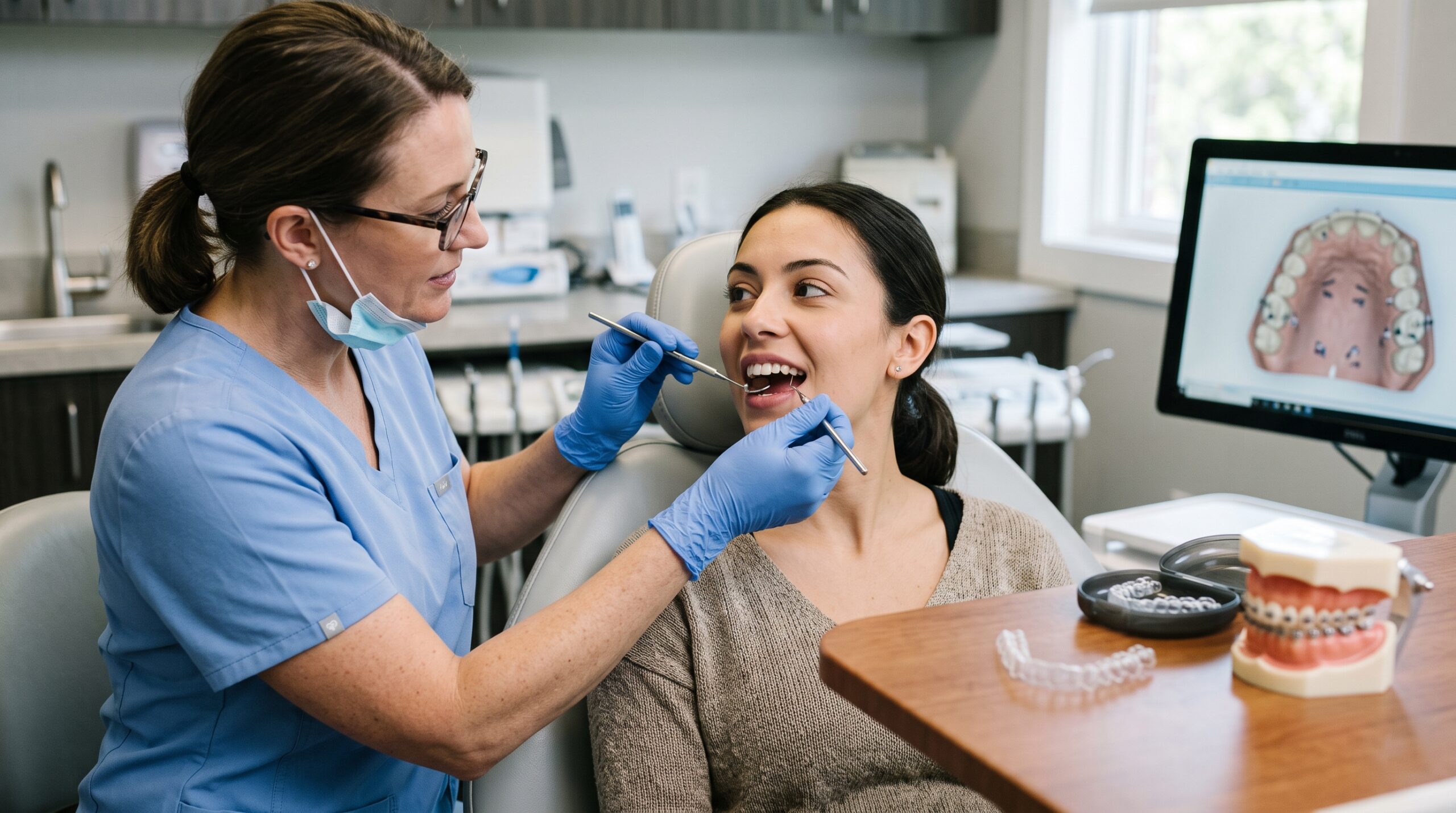
The better option depends on the type of tooth movement needed and how complex the case is. Invisalign can work well for many alignment problems, while braces may be better suited for movements that need more control.
Invisalign for Crowding, Gaps, and Some Bite Problems
Invisalign can treat many cases involving crowded teeth, gaps, and certain bite problems. Modern aligners may also use small attachments to help guide specific tooth movements. For mild to moderate alignment problems, clear aligners can offer a removable treatment option that is also less noticeable.
Braces for Complex Cases
Traditional braces can give a dental provider continuous control over tooth movement. They may be useful for larger rotations, difficult tooth positions, major bite correction, or other movements that need closer control. An earlier clinical comparison found that fixed appliances performed better in some areas involving difficult tooth relationships and final biting contacts.
Read the American Journal of Orthodontics and Dentofacial Orthopedics article. Invisalign may still be suitable for some more involved cases. Clear-aligner treatment has changed over time, so the final choice should depend on the movements your teeth need.
Invisalign vs. Braces: Treatment Time
There is no universal treatment time for Invisalign or braces. A person with minor spacing may need much less treatment than someone with crowding and a major bite problem. The amount of tooth movement, age, treatment goals, missed appointments, broken appliances, and other factors can all affect the schedule.
Invisalign also depends heavily on wear time. If you frequently leave the aligners out for long periods, the teeth may not follow the planned movement. That can lead to delays or the need for additional aligners.
It is also incorrect to assume Invisalign is always faster. A 2022 randomized clinical trial involving relatively simple Class I cases found that the braces group finished treatment about 0.4 years earlier than the aligner group. The aligner patients sometimes required additional sets of trays to complete planned movements.
This result should not be used as a treatment-time estimate for every patient. Your own timeline depends on your teeth and treatment plan.
Who Is a Good Candidate for Invisalign?
Invisalign can be a good option for people who want a removable and less noticeable way to straighten their teeth. It may suit someone who is willing to wear the aligners as instructed each day. Removing them too often can interfere with progress, so responsibility is important.
People who want to continue eating their usual foods may also like the removable design. Since the aligners come out during meals, there are fewer appliance-related food restrictions. Invisalign can be used for many cases involving crowding, spacing, and tooth alignment. Certain bite problems can also be treated with clear aligners.
However, the teeth and bite need to be examined first. Some cases may require movements that can be handled more predictably with braces or another approach.
Who May Benefit From Traditional Braces?
Traditional braces remain an important orthodontic option. They may be useful when teeth require precise control throughout treatment. Because the brackets remain attached, the appliance can continue working without the patient having to remember to put it back in.
Braces can also be considered for complex crowding, difficult tooth rotations, certain bite problems, and cases that require several types of tooth movement. They may be practical for someone who does not want the responsibility of removing, cleaning, storing, and replacing aligners throughout each day.
Traditional metal braces are not the only fixed option. Some patients may be able to choose ceramic or clear brackets that are less noticeable. The suitable type depends on your teeth, treatment goals, and the options available for your case.
Invisalign vs. Braces: Cost and Payment Considerations
The cost of orthodontic treatment is another common concern, but comparing Invisalign and braces only by an advertised starting price can be misleading. The final cost may depend on how complicated the case is, how long treatment lasts, the type of appliance being used, and what is included in the treatment plan.
For Invisalign, the number of aligners and whether additional aligners are needed can affect treatment. With braces, the type of brackets and complexity of the tooth movement may affect the total fee.
Dental or orthodontic benefits may cover part of treatment in some insurance plans. Coverage differs between plans, so patients should confirm their benefits before starting. Payment arrangements may also vary by dental practice. The most useful comparison is the complete treatment cost for your specific case, not a general price found online.
Invisalign vs. Braces: Maintenance and Follow-Up Care
Both Invisalign and braces need regular care during treatment. Keeping the appliance clean and attending follow-up visits can help treatment stay on track.
Caring for Invisalign Aligners
Invisalign aligners should be kept clean and stored safely when they are out of your mouth. Avoid wrapping them in a tissue or leaving them where they can be lost, damaged, or thrown away. Your teeth should also be cleaned before the aligners go back in whenever possible.
Caring for Braces
With braces, you need to clean carefully around the brackets and wires. Missing these areas can allow plaque and food to build up. Good brushing and flossing habits are especially important because brackets can make some areas harder to reach.
Follow-Up Appointments
You should continue regular dental care during either type of orthodontic treatment. Follow-up appointments are also important because they allow your progress to be checked and your treatment plan to be adjusted when needed.
Retainers After Treatment
Treatment does not end the day braces come off or you finish your last aligner. Teeth can shift after orthodontic treatment. Retainers help hold them in their new positions. A comparison that followed Invisalign and braces patients after treatment found changes in alignment over time, which helps show why retention should be taken seriously.
How to Choose Between Invisalign and Braces

When comparing Invisalign and braces, think about the factors that can affect both your treatment and your daily routine.
- Appearance: Invisalign may suit people who want a less noticeable appliance.
- Daily habits: Invisalign needs to be removed and replaced throughout the day, while braces stay attached.
- Eating: Invisalign can be removed for meals, while braces may require avoiding some hard and sticky foods.
- Cleaning: Aligners allow normal access for brushing and flossing. Braces require extra cleaning around brackets and wires.
- Treatment needs: Some tooth movements may be handled more predictably with braces, while many mild to moderate cases can be treated with clear aligners.
- Daily responsibility: Invisalign requires consistent wear. Braces do not depend on remembering to put the appliance back in.
- Professional guidance: A dental examination can show which options are suitable for your teeth and bite.
The right question is not simply whether Invisalign is better than braces. The better question is which option can safely and predictably achieve your treatment goals while fitting your daily routine.
Conclusion
So, is Invisalign better than braces? Invisalign may be the better fit if you want a removable, less noticeable option with fewer food restrictions and easier brushing and flossing. Braces may be more appropriate when your teeth require more complex or carefully controlled movement. Invisalign also requires you to wear the aligners consistently each day, while braces remain attached and continue working without that responsibility.
Treatment time, comfort, cost, and results can vary with either option. The best choice depends on your teeth, bite, treatment complexity, and daily habits. A dental examination can determine whether Invisalign, braces, or another approach is suitable for the movements your teeth need.
Compare Invisalign and Braces in Mesa
If you are still deciding if Invisalign is better than braces for your needs, Valencia Dental Care in Mesa, AZ can help you compare your options. Discuss your tooth alignment, bite, treatment goals, and daily routine to understand which approach may be suitable for your case. Call (480) 219-1933 or book an appointment with Valencia Dental Care to learn more about Invisalign and braces.
Frequently Asked Questions
Is Invisalign better than braces for adults?
Invisalign may appeal to adults who want a less noticeable and removable treatment. Braces may be preferred when more complex tooth movement is required. The better option depends on the person’s bite, tooth positions, lifestyle, and treatment plan.
Is Invisalign faster than braces?
Treatment time depends on the type and amount of tooth movement needed. Invisalign also requires consistent daily wear. Some cases may finish quickly with aligners, while braces may be faster or more predictable in other situations.
Can Invisalign fix the same problems as braces?
Invisalign can treat many types of crowding, spacing, and bite problems. However, certain complex tooth movements may be easier to control with traditional braces. An examination is needed to determine which treatments can handle your particular case.
Which is more comfortable, Invisalign or braces?
Invisalign does not have metal brackets or wires, which can reduce rubbing against the cheeks and lips. However, aligners can still cause pressure when teeth are moving. Braces may cause soreness after adjustments or irritation from brackets and wires. Comfort varies from person to person.
Is Invisalign more expensive than braces?
It can be, but not in every case. The final price depends on treatment complexity, treatment length, the type of braces or aligners used, and other parts of the treatment plan. Ask for the complete cost of each suitable option instead of comparing only starting prices.
Can I switch from braces to Invisalign during treatment?
Sometimes, but switching is not suitable for every case. Your dental provider would need to check how much movement has already occurred, what corrections remain, and whether aligners can complete the treatment effectively. Changing systems may also affect the treatment plan and cost.
Do I need a retainer after Invisalign or braces?
Teeth can shift after either type of orthodontic treatment. A retainer helps keep them in their new positions. How often and how long you need to wear it depends on the instructions given after treatment.