
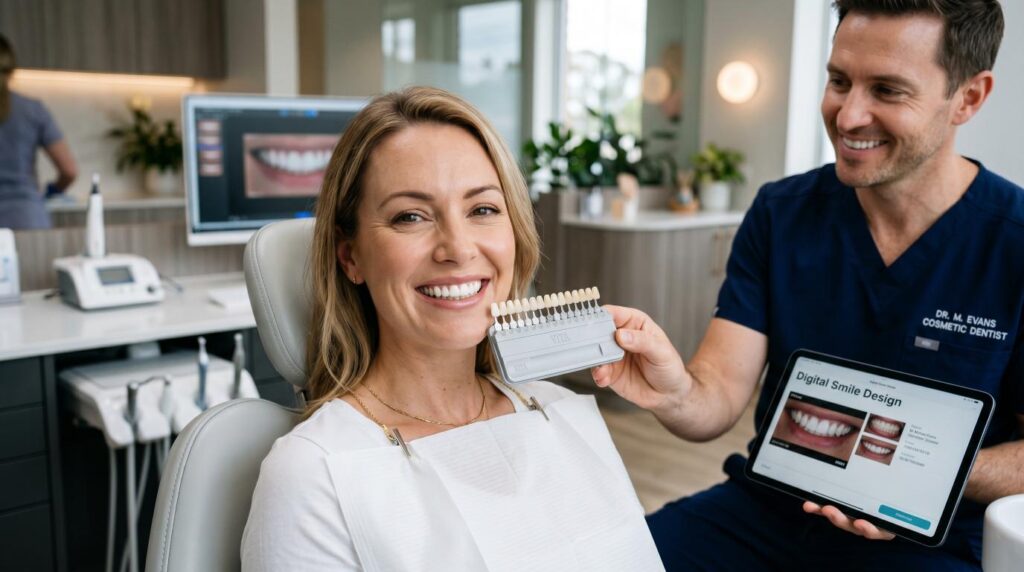

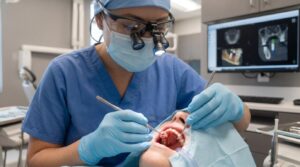



Veneers are a common cosmetic dental treatment that helps improve how teeth look. They are thin, custom-made covers that are shaped to match your natural teeth in size, shape, and colour. Veneers do not fix the tooth itself but only improve how it looks on the outside. You can get one veneer for a single tooth or several veneers to improve your whole smile. In most cases, a small layer of enamel is removed before placing them, which means the treatment cannot be undone.
With good care, veneers can last many years, often more than 10 years. But like natural teeth, they can still get damaged and may need repair or replacement over time. Veneers are often used in cosmetic dentistry to make teeth look whiter, straighter, and more even. This is why they are sometimes called a “smile makeover” or “Hollywood smile.” If you are in Mesa, AZ or the surrounding areas, Valencia Dental Care offers professional porcelain veneer treatments to help you get the smile you have always wanted.
What Are Teeth Veneers?
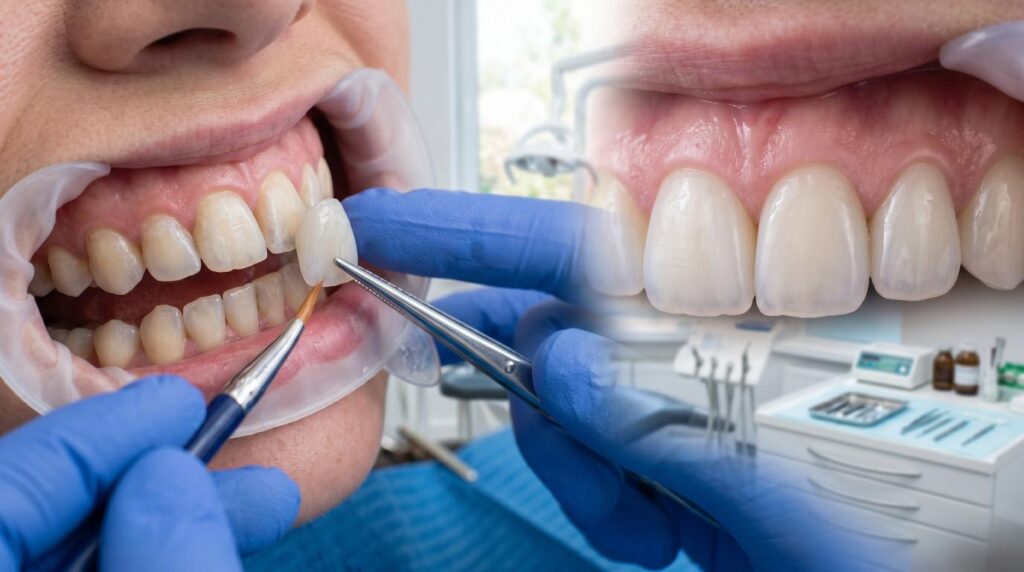
Teeth veneers are thin, custom-made shells placed over the front surface of your teeth. Think of them like a cover that fits perfectly over each tooth, hiding whatever is underneath and giving you a clean, bright, and even-looking smile. They are made from either porcelain or composite resin and are bonded to the front of your natural teeth using strong dental cement.
They are not a full replacement for your tooth. Veneers only cover the visible front part, which means your natural tooth stays mostly intact underneath. That is one of the things that makes them different from dental crowns.
How Do Dental Veneers Work?
Dental veneers work by covering the front surface of your teeth with a thin shell made from porcelain or composite resin. The veneer is bonded directly onto the tooth using a strong dental cement. Once it is in place, it blends in with your surrounding teeth and looks like a natural part of your smile.
The veneer does not replace your tooth or fix any damage inside it. It simply sits on top of the front surface and hides whatever cosmetic issue is underneath, whether that is a stain, a chip, a gap, or an uneven shape.
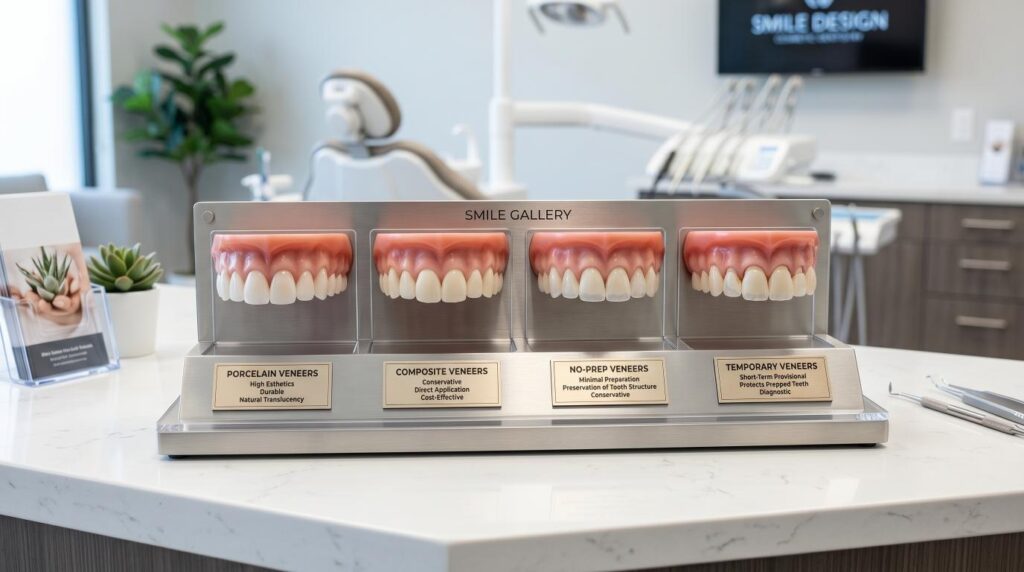
Types of Teeth Veneers
There are different types of teeth veneers, and each one is used to improve your smile in a slightly different way.
Porcelain Veneers
Porcelain veneers are the most popular type and the gold standard in cosmetic dentistry. They are custom-made in a lab, which takes time but results in a veneer that fits precisely. Porcelain also resists staining better than natural enamel, which means your smile stays brighter for longer. Most porcelain veneers last anywhere from 10 to 15 years with proper care, and some last even longer.
Composite Veneers
Composite veneers are a faster and more budget-friendly option. Because the material is applied directly to your teeth by the dentist and shaped in the office, you can often walk out with a new smile in a single appointment. The tradeoff is that composite veneers typically last around five to seven years and are more prone to staining compared to porcelain.
No-Prep or Minimal Prep Veneers
No-prep veneers, sometimes called Lumineers, are an ultra-thin type of veneer that requires little to no removal of your natural enamel before placement. Because the enamel stays mostly intact, this type of veneer is considered reversible, which is a big advantage for people who are not ready for a permanent commitment.
Temporary Veneers
Temporary veneers are exactly what they sound like. They are short-term shells placed over your teeth while you wait for your permanent veneers to come back from the lab, or as a trial run to see how you like the look. These are not a permanent solution and look less natural than traditional veneers, but they can serve as a helpful preview before you commit.
Teeth Veneers for Specific Problems
One of the biggest reasons teeth veneers are so popular in cosmetic dentistry is how versatile they are. They are not a one-size-fits-all solution for one problem. They fix several different cosmetic issues at once.
For people dealing with deep staining that does not respond to whitening treatments, teeth veneers cover the discoloration completely and hold their color for years without fading. For chipped or cracked teeth, veneers add a protective layer over the damage and restore the tooth to its original shape. For small gaps between teeth, veneers can be sized slightly wider to close the space without braces or aligners. For teeth that are uneven, short, or misshapen, veneers bring balance and symmetry to the entire smile.
Benefits of Teeth Veneers
Getting veneers is one of the most popular decisions people make in cosmetic dentistry, and the reasons are pretty clear.
Cosmetic Benefits
Veneers can give you a noticeably whiter and more uniform smile in a way that teeth whitening simply cannot match. They correct color, shape, and size all at once, creating a balanced and symmetrical look that appears natural. Because porcelain mimics the light-reflecting properties of real teeth, a good set of veneers is hard to tell apart from natural teeth.
Functional Benefits
Beyond aesthetics, veneers can actually strengthen a damaged tooth. If a tooth has a chip or crack, the veneer adds a protective layer over the surface, reducing the risk of further damage. They also protect the underlying tooth enamel from exposure, which helps with sensitivity and long-term tooth health.
Psychological Benefits
A smile that you feel good about changes how you carry yourself. Many people who get veneers report feeling more confident in social situations, at work, and in photos. It is hard to put a number on that kind of change, but for a lot of people, it is the most meaningful benefit of the entire procedure.
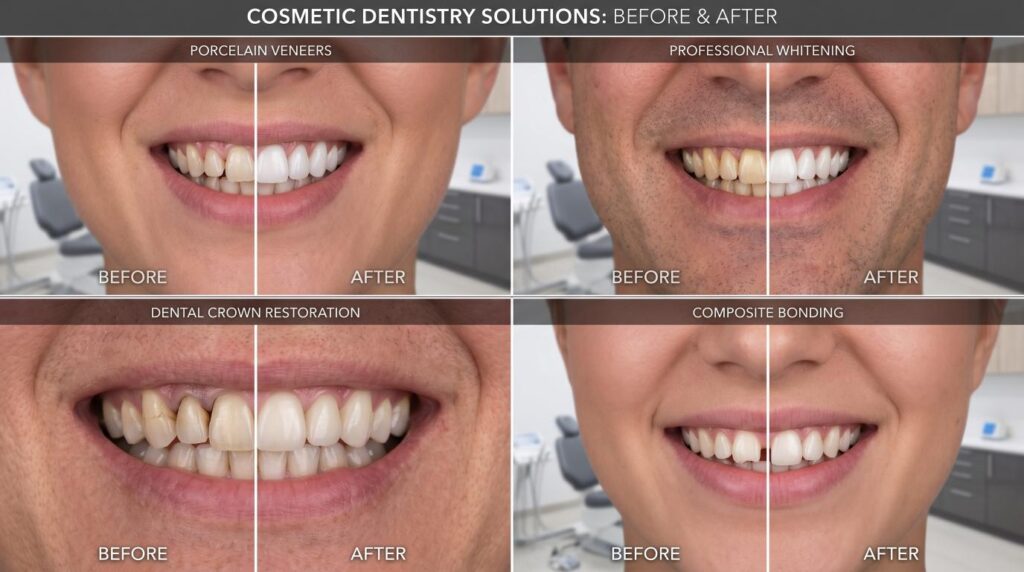
Veneers vs Other Dental Treatments
| Feature | Teeth Veneers | Teeth Whitening | Dental Crowns | Composite Bonding |
|---|---|---|---|---|
| Best For | Chips, stains, gaps, uneven shape | Surface staining only | Severely damaged or decayed teeth | Minor chips and small gaps |
| Lifespan | 10 to 20 years | 1 to 3 years | 10 to 15 years | 5 to 7 years |
| Number of Appointments | 2 to 3 visits | 1 visit | 2 to 3 visits | 1 visit |
| Enamel Removal | Minimal, less than 1mm | None | Significant, full tooth reshaped | Minimal |
| Reversible | No, except no-prep veneers | Yes | No | Yes |
| Stain Resistance | High, especially porcelain | Low, fades over time | High | Moderate |
| Fixes Shape Issues | Yes | No | Yes | Minor only |
| Fixes Color Issues | Yes, permanently | Temporarily | Yes | Yes |
| Cost | Moderate to high | Low | Moderate to high | Low to moderate |
| Natural Appearance | Excellent | Good | Good | Good |
| Best Candidate | Healthy teeth with multiple cosmetic concerns | Healthy teeth with color concerns only | Damaged or weakened teeth | Single minor cosmetic issue |
How Much Do Teeth Veneers Cost?
The cost of teeth veneers varies depending on several factors including the type of veneer, the number of teeth being treated, and the dental practice you choose. Porcelain veneers cost more than composite veneers because they are custom made in a dental lab and designed to last significantly longer. Composite veneers are the more budget-friendly option, but they require replacement sooner and are more prone to staining over time.
The number of teeth you want treated also affects the total. Some patients only need one or two teeth veneers to fix a chip or close a small gap. Others want a full smile makeover covering six to eight visible teeth, which naturally costs more. Your location and the experience level of your cosmetic dentist also play a role in the final price.
How Long Do Veneers Last?
The lifespan of your teeth veneers depends heavily on the material and how well you take care of them. Porcelain veneers typically last between 10 and 20 years. Several factors affect how long your veneers hold up. Grinding your teeth at night, biting into hard foods, or using your teeth to open packaging all put extra stress on veneers and can shorten their life. Smoking and heavy consumption of staining foods and drinks also affect how they look over time, especially composite ones.
Good oral hygiene extends veneer life significantly. Brushing twice a day, flossing daily, and visiting your dentist for regular checkups and professional cleanings go a long way toward keeping your veneers in good shape for as long as possible.
Are You a Good Candidate for Veneers?
The best candidates for teeth veneers are people with generally healthy teeth and gums who want to fix cosmetic issues that affect their smile. Things like mild to moderate staining, small chips, minor gaps, and slightly uneven teeth are exactly what veneers are designed to address.
People who grind their teeth at night, a condition called bruxism, need to think carefully. The pressure from grinding can crack or chip veneers over time. In many cases, wearing a nightguard after getting veneers helps protect them. For large gaps, crowding, or bite issues, orthodontic treatment is often better because it fixes the root problem, not just the appearance.
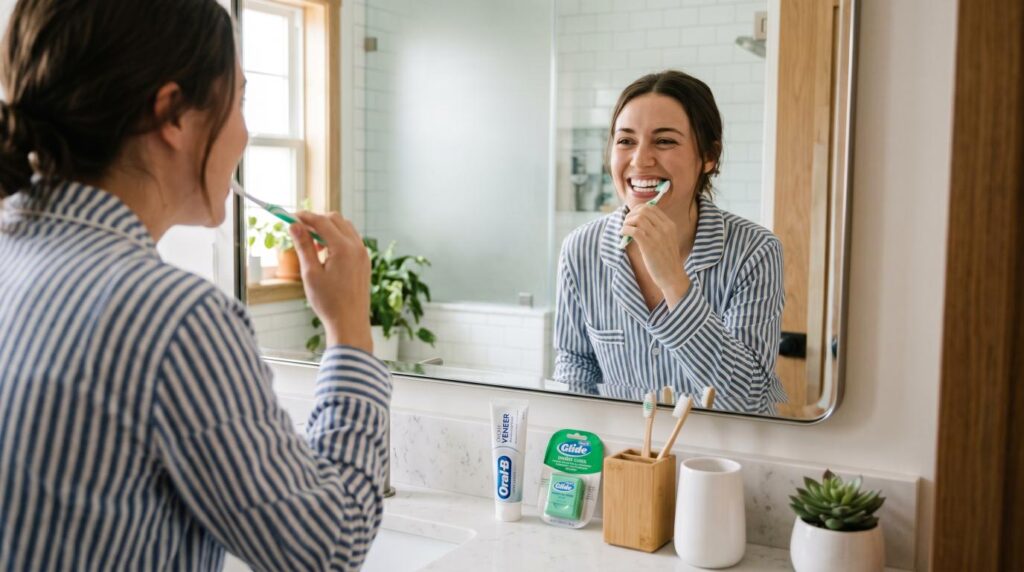
Aftercare and Maintenance
Good aftercare is important to keep your teeth veneers looking clean and natural. With proper maintenance and dental checkups, they can last for many years.
Daily Care Tips
Caring for teeth veneers is not complicated. Brush your teeth twice a day with a non-abrasive fluoride toothpaste. Avoid whitening toothpastes, as they can be too abrasive and wear down the veneer surface over time. Floss daily to keep your gums healthy around the veneer margins. Healthy gums are essential for keeping your veneers looking good long-term.
Foods and Habits to Avoid
Avoid biting directly into very hard foods like whole apples, raw carrots, crusty bread, or ice. Cut harder foods into smaller pieces and chew with your back teeth when possible. Try to minimize dark-staining foods and beverages like coffee, red wine, and berries, especially with composite veneers.
Regular Dental Checkups
Routine visits to your dentist twice a year are more important than ever once you have teeth veneers. Your dentist can spot early signs of wear, check the bonding around each veneer, and make sure your gums are staying healthy. Professional cleanings also keep your veneers bright and remove plaque from areas that daily brushing misses.
Risks and Things to Consider
After getting teeth veneers, some tooth sensitivity to hot and cold is normal and usually fades within a few weeks as your teeth adjust. This sensitivity is more common in people who had more enamel removed during preparation. Since enamel removal is irreversible, it is important to be sure about your decision before moving forward. Once your teeth are prepared for veneers, they will always need to be covered.
There is also a small risk that teeth veneers may not bond evenly or that the color may not match perfectly. Working with an experienced cosmetic dentist greatly reduces these risks. Before committing, ask to see before and after photos of their previous veneer patients to get a realistic idea of what to expect.
Ready to Get Teeth Veneers in Mesa, Gilbert, or San Tan Valley, AZ?
If you have been thinking about teeth veneers and want to know whether they are the right fit for your smile, Valencia Dental Care is here to give you a clear and honest answer. We help patients across Mesa, Gilbert, and San Tan Valley achieve beautiful, natural-looking smiles with custom porcelain teeth veneers designed to match your teeth perfectly.
Whether you want to fix a chip, close a gap, cover deep staining, or completely transform your smile with a smile makeover. Contact us our experienced cosmetic dentistry team will walk you through every step of the process with no pressure and no surprises. Do not spend another day hiding your smile.
Conclusion
For people who have struggled with discolored, chipped, or uneven teeth and feel self-conscious about their smile, veneers can genuinely be life-changing. They deliver results that simpler treatments like whitening or bonding simply cannot match, and they do it quickly.
That said, veneers are not the right choice for everyone. The cost is significant, the process involves permanent changes to your teeth, and they require ongoing care and eventual replacement. If your dental concerns are mainly about tooth color and your teeth are otherwise healthy, whitening may be a smarter first step.
But if you have multiple cosmetic concerns at once, and you want a long-lasting solution that gives you a smile you are proud to show off every day, veneers are absolutely worth considering. Talk to a qualified cosmetic dentist, ask to see their work, and get a full picture of what the process looks like for your specific situation.
Frequently Asked Questions
Do teeth veneers damage your teeth?
Getting teeth veneers involves removing a thin layer of enamel, which does slightly alter the tooth structure. However, when done correctly by a skilled dentist, the procedure is minimally invasive and does not damage the underlying tooth.
Are teeth veneers permanent?
Most types of teeth veneers are considered permanent because they require enamel removal, which cannot be reversed. No-prep veneers are the exception, as they leave the enamel mostly intact.
Do teeth veneers hurt?
The preparation process involves removing enamel, which is done under local anesthesia to prevent discomfort. You may experience some mild sensitivity afterward, but the procedure itself should not be painful.
Can I eat normally with teeth veneers?
Yes, for the most part. You can eat normally, but it is wise to avoid biting into very hard foods or chewing on ice, as these can chip or crack your veneers.
How many veneers do I need?
It depends on your goals. Some people get teeth veneers on just one or two teeth to repair chips or discoloration. For a full smile transformation, most people get veneers on the six to eight teeth that are most visible when they smile.
How much do teeth veneers cost?
The cost of teeth veneers varies depending on the type, the number of teeth being treated, and the dental practice. Porcelain veneers generally cost more than composite veneers because they are custom made in a lab and last significantly longer.
What is the difference between porcelain and composite teeth veneers?
Porcelain veneers are made in a dental lab and bonded to your teeth in a second appointment. They last 10 to 20 years and resist staining better. Composite veneers are applied directly in the office in a single visit and cost less, but they last only five to seven years and stain more easily over time.
Can teeth veneers be whitened?
Once teeth veneers are bonded to your teeth, their color cannot be changed with whitening treatments. If you want whiter teeth, discuss the shade with your dentist before the veneers are created so they match your ideal color from the start.