
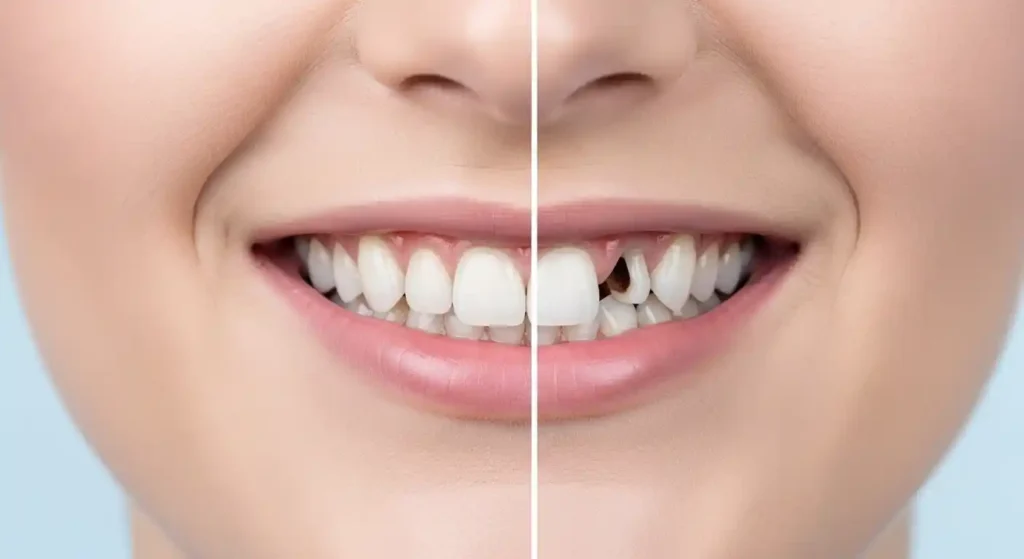




Losing a tooth might not seem like a big deal especially if it’s not visible when you smile. But what most don’t realize is that even a single missing tooth can quietly affect your entire oral health, from how you chew to how your jaw functions over time.
If you don’t replace a missing tooth in Mesa, it can lead to jawbone loss, shifting of nearby teeth, bite problems, changes in facial structure, and an increased risk of decay and gum disease. Replacing a missing tooth early helps preserve your oral health, maintain proper alignment, and prevent long-term complications.
Is It Okay to Not Replace a Missing Tooth?
No, in most cases, leaving a missing tooth untreated leads to problems you may not notice right away but will likely regret over time. It’s common to delay treatment. The gap doesn’t hurt, it may not be visible, and the cost can feel like a reason to wait.
However, these decisions often overlook what’s happening beneath the surface. Your teeth work as a system; each one helps maintain alignment, supports proper chewing, and stimulates the jawbone. When a tooth is missing, nearby teeth begin to shift, and the jawbone in that area starts to shrink.
These changes don’t happen overnight, which is why they’re easy to ignore at first. But over time, the risks increase and can lead to more complex dental issues. The good news is that these problems are largely preventable with timely treatment.
Immediate Effects of a Missing Tooth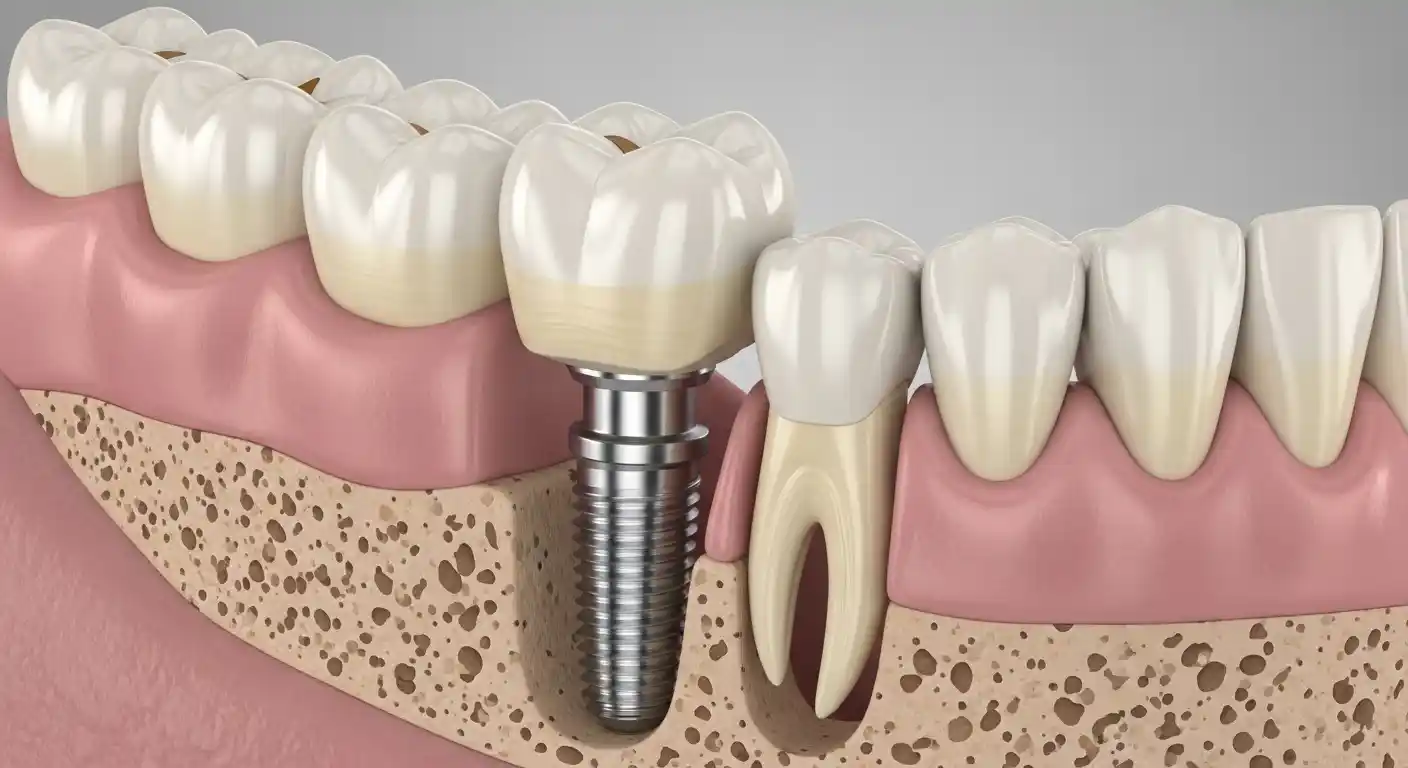
The impact of a missing tooth doesn’t take years to appear; some changes can begin within days or weeks. Even if there’s no pain, your bite and surrounding teeth start adjusting immediately, often in ways you don’t notice at first.
Changes in Your Bite and Pressure
Your bite is a carefully balanced system where upper and lower teeth meet evenly. When a tooth is lost, that balance is disrupted, forcing nearby teeth to take on extra pressure. You may notice chewing feels different or uneven. Over time, this added stress can wear down enamel and put strain on your jaw joints.
Difficulty Chewing Certain Foods
The position of the missing tooth can make certain foods harder to eat, such as crunchy vegetables, tough meats, or chewy bread. Many people unconsciously shift chewing to one side of the mouth. This uneven chewing pattern can overwork muscles and joints on that side, leading to discomfort and imbalance.
Increased Sensitivity in Nearby Teeth
Teeth next to the gap are exposed to forces they weren’t meant to handle alone. As they begin to shift slightly, their roots may become more sensitive. Over time, these teeth can tilt into the empty space, changing how they contact opposing teeth and increasing the risk of sensitivity, wear, and enamel damage.
Long-Term Consequences of Not Replacing a Missing Tooth
This is where the impact of a missing tooth becomes more serious. The longer the gap is left untreated, the more your oral health, function, and appearance can be affected over time.
Jawbone Loss (Bone Resorption)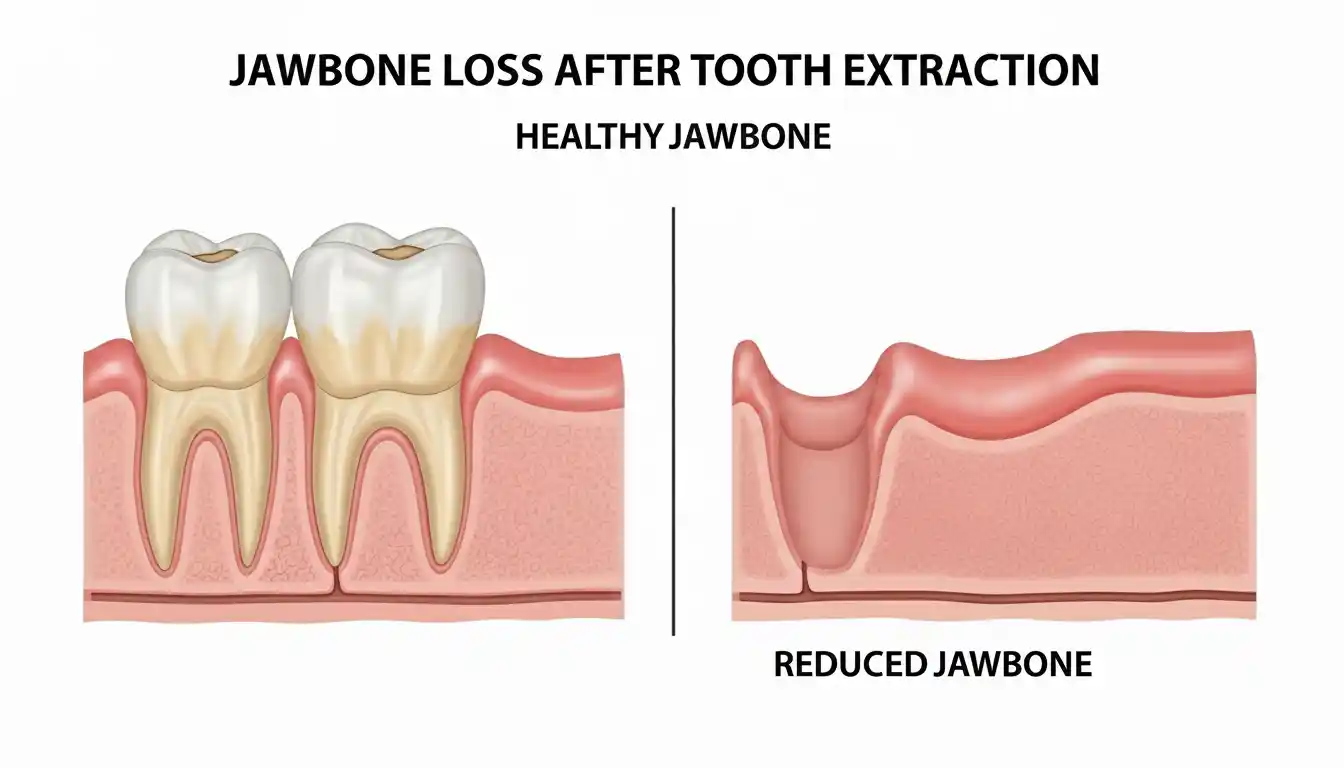
One of the most significant and least visible consequences is jawbone loss. The jawbone relies on stimulation from tooth roots to stay strong and healthy. Every time you bite or chew, pressure is transferred through the root into the bone, signaling the body to maintain it.
When a tooth is lost, that stimulation disappears, and the bone begins to shrink in a process called resorption. This can start within a few months of tooth loss. Over time, the bone in that area can lose both width and height, weakening the foundation for surrounding teeth and future dental treatments.
Teeth Shifting and Misalignment
Teeth naturally rely on each other for support and stability. When a gap is left behind, neighboring teeth gradually drift into the empty space. At the same time, the opposing tooth may begin to move out of position because it no longer has contact.
This slow movement often goes unnoticed until it causes visible misalignment or bite changes, making future correction more complex and costly.
Bite Problems and Jaw Pain (TMJ Issues)
As teeth shift, your bite becomes unbalanced. This puts extra strain on the temporomandibular joint (TMJ), which connects your jaw to your skull. Over time, this can lead to jaw pain, clicking or popping sounds, headaches, and even discomfort around the ears. If left unaddressed, these symptoms can become chronic.
Changes in Facial Structure and Appearance
This surprises many people: missing teeth age your face. Your jawbone doesn’t just support teeth, it gives structure to your lower face. As bone resorbs, the lower third of your face can appear to collapse inward, deepening wrinkles around the mouth, causing the lips to thin, and making your face look older than it is. People who have lost multiple teeth often develop what’s sometimes described as a “sunken” facial appearance. Even a single missing tooth, left long enough, can subtly alter your profile.
Higher Risk of Tooth Decay and Gum Disease
Shifting and tilting teeth create new spaces that are difficult to clean properly. Food and bacteria accumulate in these awkward angles, raising your risk of cavities in the neighboring teeth and increasing the likelihood of gum disease. Ironically, trying to save money by not replacing a missing tooth often leads to far more dental work down the line.
Difficulty Chewing and Poor Nutrition
When chewing becomes uncomfortable, people often unconsciously shift to softer, more processed foods and away from fruits, raw vegetables, and lean proteins. This dietary change can have real nutritional consequences over time, particularly in older adults who are already at risk of nutritional deficiencies.
Speech Problems
Teeth play an important role in pronunciation. Missing front teeth can affect sounds like “s,” “th,” and “f,” sometimes causing lisping or unclear speech. Even back teeth help support proper tongue positioning, so their absence can subtly affect speech clarity as well.
Sinus Issues (for Upper Missing Teeth)
The roots of the upper back teeth sit very close to the maxillary sinuses, the air-filled cavities in your cheekbones. When an upper molar is lost and the bone resorbs, the sinus can expand into the space where the bone used to be. This can complicate dental implant placement significantly, often requiring a sinus lift procedure before an implant can be placed.
What Happens If You Wait Too Long to Replace a Tooth?
Timing matters enormously in tooth replacement, and here’s why.
Bone Loss Makes Treatment More Difficult
Dental implants the gold-standard solution require a minimum volume of healthy bone to anchor into. When bone resorption has already occurred, that foundation may no longer exist. What was once a straightforward implant procedure becomes a more complex, multi-stage treatment.
Need for Additional Procedures (Bone Grafting)
If bone volume is insufficient, patients often need a bone graft before an implant can be placed. A bone graft involves adding bone material to the deficient area and waiting months for it to integrate before the implant process can begin. This adds time, discomfort, and cost all of which could have been avoided with earlier treatment.
Higher Treatment Costs Over Time
Waiting doesn’t save money, it delays spending while the costs compound. The longer a tooth is missing, the more likely you are to need additional procedures like bone grafting, treatment for gum disease in neighboring teeth, or orthodontic correction for shifting. What might have been a single implant becomes a more involved treatment plan.
When Is It Sometimes Okay Not to Replace a Tooth?
To be fair, there are limited situations where not replacing a missing tooth may be acceptable.
Missing Wisdom Teeth
Wisdom teeth, or third molars, serve no essential function for most people and are routinely removed. If a wisdom tooth is missing congenitally (meaning it never developed) or has been extracted without issue, replacement is generally not necessary. These teeth at the very back of the mouth don’t carry structural responsibilities that other teeth do.
Certain Back Teeth Cases
In some situations particularly for older patients in poor health, or when the missing tooth is in an area with minimal functional impact a dentist may agree that leaving the space is acceptable. However, this should be a deliberate decision made with professional guidance, not a default choice made out of avoidance.
A word of caution: Even in these cases, the bone will still resorb. A dentist should monitor the area regularly to ensure neighboring teeth aren’t shifting or experiencing complications.
Best Options to Replace a Missing Tooth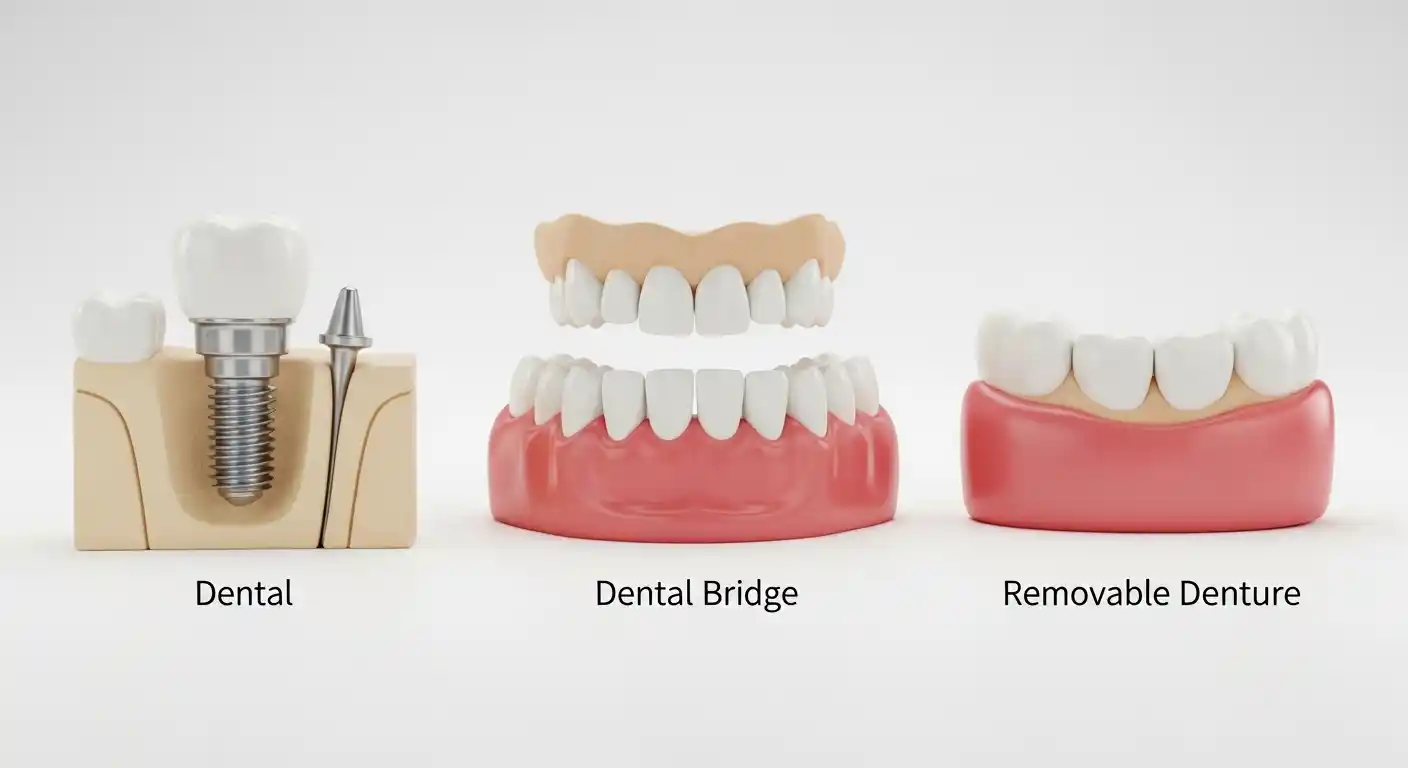
The right solution depends on your health, budget, and the location of the missing tooth. Here are the main options.
Dental Implants
A dental implant is a titanium post surgically placed into the jawbone, where it fuses with the bone over several months. Once integrated, a realistic-looking crown is attached on top. Implants look, feel, and function like natural teeth, and critically they stimulate the jawbone the same way a natural root does, preventing bone loss.
Dental Bridges
A dental bridge fills the gap by anchoring an artificial tooth (or teeth) to the natural teeth on either side of the space. The neighboring teeth are crowned to support the bridge. Bridges are a good option when the adjacent teeth need crowns anyway or when implants aren’t possible. They don’t prevent bone loss in the gap area, but they restore function and appearance effectively.
Dentures
Partial dentures can replace one or several missing teeth and are typically the most affordable upfront option. They’re removable and rest on the gums. Full dentures replace all teeth in an arch. While dentures restore some function and appearance, they don’t stimulate bone and can become loose as the jawbone changes shape over time.
Why Dental Implants Are the Best Long-Term Solution
Of all the replacement options available, dental implants stand apart for several important reasons.
Prevent Bone Loss
Unlike bridges or dentures, a dental implant functions like a natural root. The titanium post integrates with the jawbone and provides the stimulation needed to keep the bone healthy. This is the only tooth replacement option that actively prevents bone resorption making it uniquely valuable for long-term oral and facial health.
Natural Look and Function
Modern implants are virtually indistinguishable from natural teeth in both appearance and function. There are no restrictions on what you can eat, no slipping or clicking, and no special cleaning routine beyond normal brushing and flossing. Most patients report that after healing, they forget the implant is there.
Long-Lasting and Durable
With proper care, dental implants can last decades potentially a lifetime. While bridges may need replacement after 10–15 years, and dentures require periodic adjustments as the jawbone changes, an implant represents a one-time investment that tends to remain stable for the long term. Over a lifetime, many patients find that implants are the most cost-effective option when the ongoing costs of alternatives are factored in.
Don’t Wait Until a Small Problem Becomes a Bigger One
If you’re missing a tooth, the best time to act is now. Early treatment can save you time, money, and prevent long-term damage to your smile. Schedule your consultation with Valencia Dental Care in Mesa today and explore the best tooth replacement options for your needs.
Conclusion
A missing tooth may seem like a minor issue at first, but the effects go far beyond appearance. From bone loss and shifting teeth to bite problems and long-term oral health complications, the risks only increase the longer you wait. What starts as a small gap can quickly turn into a more complex and costly problem.
The good news is that these issues are preventable. Replacing a missing tooth early helps protect your jawbone, maintain proper alignment, and restore full function to your smile. If you’re dealing with a missing tooth, taking action now can save you time, money, and discomfort in the future.
Frequently Asked Questions
How long can you go without replacing a missing tooth?
You can go months or even years without replacing a missing tooth, but problems often begin within weeks. Bone loss can start within the first few months, and teeth may gradually shift out of position, making future treatment more complicated.
Can one missing tooth really cause serious problems?
Yes, even a single missing tooth can affect your entire mouth. It can lead to shifting teeth, bite misalignment, jawbone loss, and increased risk of decay or gum disease over time.
Is it worse to lose a front tooth or a back tooth?
Both can cause problems, but in different ways. Front teeth affect your appearance and speech, while back teeth are essential for chewing and maintaining proper bite alignment. Neither should be ignored.
What is the best option to replace a missing tooth?
Dental implants are considered the best long-term solution because they replace both the root and the visible tooth, helping to prevent bone loss and restore full function. However, bridges and dentures may also be suitable depending on your situation.
Does dental insurance cover tooth replacement?
Coverage varies by plan. Some insurance policies may partially cover procedures like bridges or dentures, while implants are sometimes considered elective. It’s best to check with your provider or your dental office for specific details.