




Your teeth are covered in a biofilm of bacteria that’s rebuilding itself every single moment you’re alive. Right now, as you’re reading this, millions of microorganisms are feasting on leftover food particles in your mouth, secreting acids that slowly eat away at your enamel, and leaving behind stains that yellow your teeth day by day. Within 24 hours of brushing, that bacterial layer becomes so thick it’s visible to the naked eye as plaque. And here’s what really gets you—the average person has between 1,000 to 100,000 bacteria living on each tooth surface at any given moment.
But here’s the good news. You don’t need expensive dental treatments to fight back and get a brighter smile. There are plenty of ways to whiten your teeth right at home, and most of them are cheaper and easier than you’d think. I’m going to walk you through everything that actually works, what’s just hype, and how to do it safely without messing up your teeth.
How Teeth Lose Their Brightness
Let’s start with understanding what’s happening. Your teeth have pores, kind of like your skin does. When you drink coffee, tea, or red wine, those colored liquids seep into the tiny holes in your enamel. Smoking does the same thing, but worse.
Over time, these stains build up. Some of it sits on the surface where you can brush it away. But a lot of it gets deeper into the tooth structure. That’s the stuff that’s harder to remove.
Getting older doesn’t help either. The white outer layer of your teeth that’s your enamel gets thinner as you age. The yellow layer underneath, called dentin, starts showing through more. So even if you take perfect care of your teeth, they might still look more yellow at 40 than they did at 20.
Whitening Toothpaste Really Does Help
Here’s the thing about whitening toothpaste: it won’t give you movie star teeth, but it can make a difference if you’re patient.These toothpastes have mild polishing particles that scrub away surface stains. Think of it like using a gentle scrubbing pad on a dirty pot.
Some brands also include chemicals like hydrogen peroxide or carbamide peroxide. These actually bleach your teeth a bit, not just clean the surface. You won’t see results overnight though. Most people notice a difference after about two to four weeks of daily use.
Don’t go overboard with the scrubbing. Brushing too hard or using whitening toothpaste more than twice a day can wear down your enamel. Once that’s gone, it doesn’t grow back. Just use it like regular toothpaste and give it time to work.
Whitening Strips Are Your Best Option At-Home
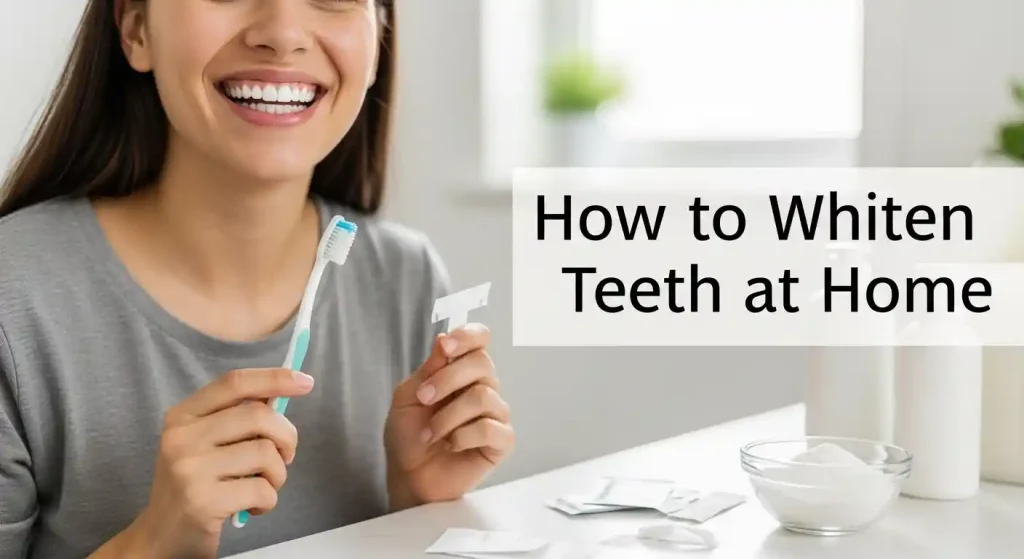
If you want real results at home, whitening strips are probably your top pick. I know someone who used them before her wedding, and the difference was actually pretty noticeable in the photos.
These strips are coated with peroxide gel that bleaches your teeth. You stick them on for around 30 minutes a day, usually for two weeks straight. The peroxide soaks into your enamel and breaks apart the stain molecules. It’s the same basic idea dentists use, just with less concentrated chemicals.
Your teeth might get sensitive. Some people can’t drink cold water without wincing while they’re using strips. If that happens to you, take a break for a day or two. You can also look for strips made for sensitive teeth. They’re gentler but take longer to work.
Make sure you follow the directions exactly. Leaving strips on too long won’t make your teeth whiter faster. It’ll just irritate your gums and crank up the sensitivity.
Baking Soda Works, But Be Careful
You’ve probably heard about brushing with baking soda. It does work for removing surface stains because it’s mildly abrasive. Plus it makes your mouth less acidic, which might help prevent more stains from forming.Here’s how to do it safely. Mix a small amount of baking soda with water to make a paste. Brush gently with it a few times a week, not every day. Then use your regular toothpaste after.
Don’t use it all the time though. Baking soda can scratch your enamel if you’re too aggressive with it. And it doesn’t have fluoride, which your teeth need to stay strong and fight cavities. So it’s more of an occasional boost to your regular routine, not a replacement.
Some people mix baking soda with hydrogen peroxide to make it stronger. That can work, but be extra careful with the peroxide. Too much can burn your gums or make your teeth super sensitive.
Oil Pulling Does It Actually Do Anything?
Oil pulling is this old practice where you swish oil around in your mouth for like 15 to 20 minutes. Usually people use coconut oil. The idea is that it “pulls” bacteria and toxins out of your teeth and gums.
The truth is, there’s not much science backing this up for whitening. Some people swear it makes their teeth look brighter, but it probably just cleans away surface stuff the same way swishing with anything would. You’d get similar results from mouthwash, honestly.
That said, it’s not going to hurt you if you want to try it. Just don’t expect major whitening results. And definitely don’t skip brushing and flossing because you think oil pulling is enough. It’s not.
What About Activated Charcoal?
Activated charcoal toothpaste got really popular on social media a few years back. The black paste looks dramatic, and people claimed it pulled stains right off their teeth.But here’s where it gets tricky. Charcoal is super abrasive. More abrasive than baking soda. If you use it regularly, you might actually scrape away your enamel.
Then your teeth look more yellow because that darker dentin layer shows through. Most dentists don’t recommend it. There’s just not enough evidence that it works, and there’s a real risk you’ll damage your teeth. If you really want to try it, maybe use it once in a while, but I wouldn’t make it part of your daily routine.
The Apple Cider Vinegar Warning
Some websites tell you to rinse with apple cider vinegar to whiten your teeth. Don’t do this. Seriously. Vinegar is super acidic. It will dissolve your enamel over time. You might see some whitening at first because it’s literally eating away the stained outer layer of your teeth, but you’re destroying them in the process.
Once that enamel is gone, you’re stuck with sensitive, cavity-prone teeth that look worse than before. If you do use it for some reason, dilute it heavily with water and rinse your mouth out immediately after. Better yet, just skip it entirely.
Foods That Can Help (Or Hurt)
Crunchy fruits and veggies like apples, carrots, and celery can help clean your teeth a bit. They scrub your teeth while you chew and get your saliva flowing, which washes away stains and bacteria. They won’t bleach your teeth white, but they keep them cleaner between brushings.
Strawberries have malic acid, which might help remove surface stains. Some people mash them up and brush them. It’s probably not going to hurt, but don’t expect magic results.
On the flip side, dark-colored drinks are your teeth’s worst enemy. Coffee, tea, red wine, and cola all stain like crazy. If you can’t give them up—and let’s be honest, who’s giving up coffee—try drinking through a straw so the liquid bypasses your front teeth. Or at least rinse with water after.
LED Whitening Kits Worth the Money?
These kits come with a gel and an LED light that you shine on your teeth. The ads make them look amazing. The light is supposed to activate the whitening gel and make it work better.
But you should know the reality. The gel does the work. The light might speed things up a tiny bit, but you’d get pretty much the same results from gel alone. Some dentists say the lights don’t make enough difference to justify the extra cost.
If you already have one, sure, use it according to the directions. But if you’re deciding what to buy, regular whitening strips will probably give you the same results for less money.
How to Keep Your Teeth White Once You Get There
Getting your teeth whiter is one thing. Keeping them that way is another. The staining stuff doesn’t stop just because you whitened your teeth once. Brush twice a day, every day. Floss at least once. This sounds basic, but most people don’t actually do it consistently. Food and bacteria that sit on your teeth will stain them faster than anything.
Cut back on staining drinks if you can, or at least rinse after drinking them. Same goes for smoking—if you smoke, your teeth will yellow no matter what you do. Quitting is the only real solution there.
Consider using a straw for dark drinks. Touch up with whitening strips every few months if you need to. And see your dentist for regular cleanings. Professional cleanings remove buildup that you can’t get at home, which helps your teeth stay brighter.
When to See a Dentist Instead
Home whitening works pretty well for most people, but there are limits. If your teeth are gray instead of yellow, over-the-counter stuff probably won’t help much. Gray teeth usually means the discoloration is inside the tooth, not on the surface.
If you have a lot of dental work like crowns or veneers, whitening products won’t change their color. You might end up with mismatched teeth. Your natural ones get whiter but the fake ones stay the same shade.
Really stubborn stains might need professional treatment. Dentists use stronger bleaching agents that work faster and go deeper. It costs more, but if home methods aren’t cutting it after a few months, it might be worth the investment.
And if your teeth are super sensitive, talk to your dentist before trying anything. Some people’s teeth just can’t handle whitening products without serious pain.
Start Your Teeth Whitening Routine Now
Ready to brighten your smile? Don’t wait—pick a method that works for you, whether it’s whitening strips, special toothpaste, or a safe home remedy. Start today, be consistent, and watch your teeth get a few shades whiter over the next few weeks. And if you’re ever unsure, book a quick checkup with your dentist—they can guide you and make sure your smile stays healthy while getting brighter. Your brighter, more confident smile is just a few simple steps away!
Conclusion
Whitening your teeth at home is totally doable. You’ve got lots of options, from whitening strips and special toothpaste to natural methods like baking soda. The key is being patient and consistent.
Don’t expect overnight results, and don’t go overboard trying to speed things up. You’ll just hurt your teeth and end up worse off than when you started. Pick a method that fits your budget and stick with it for at least a few weeks.
Your teeth won’t get movie-star white from home treatments, but they’ll definitely get brighter. A few shades lighter makes a bigger difference in your smile than you’d think. Just take care of them, avoid stuff that stains, and touch up when you need to. Your smile will thank you.
Frequently Asked Questions
How long does at-home whitening take to work?
Whitening strips usually show results in about one to two weeks. Whitening toothpaste takes longer, more like two to four weeks of daily use before you’ll notice a difference.
Is it safe to whiten your teeth at home?
Yeah, it’s generally safe if you follow the product directions and don’t overdo it. The main risks are tooth sensitivity and gum irritation, which usually go away when you stop using the product.
Can whitening damage your enamel?
It can happen if you use products too often or too aggressively. Stick to the recommended usage, don’t leave products on longer than directed, and avoid super abrasive methods like charcoal or straight baking soda every day.
Why are my teeth still yellow after whitening?
Some teeth just have thicker dentin layers that show through no matter what. Also, if you’re still drinking lots of coffee or smoking, you’re constantly re-staining them faster than whitening can keep up.
How white should I expect my teeth to get?
Most people can lighten their teeth by a few shades with at-home methods. Don’t expect blindingly white teeth like celebrities have—those usually require professional treatments or veneers.