
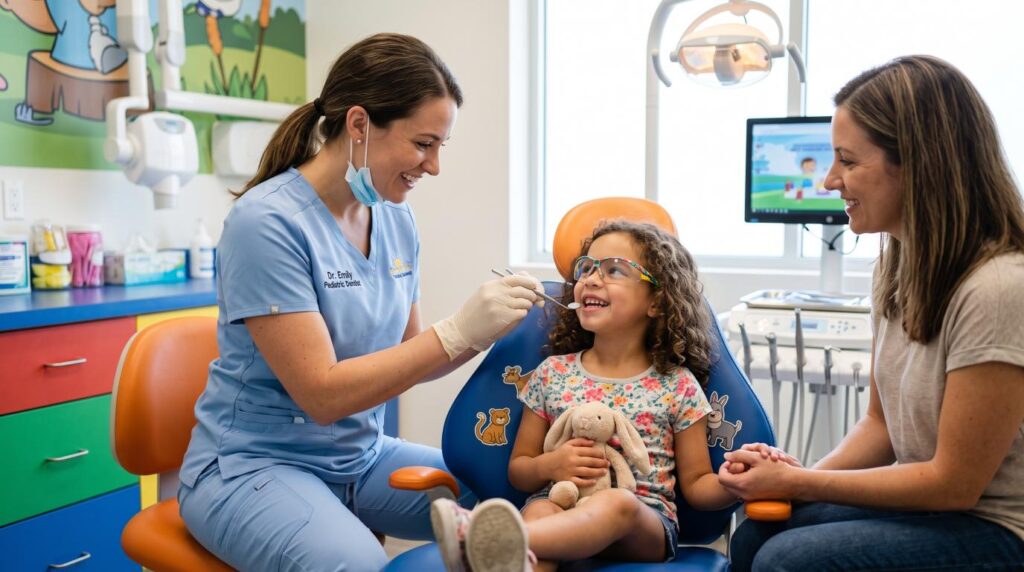




A pediatric dentist, also called a pedodontist, is a dental specialist who treats infants, children, teenagers, and patients with special healthcare needs. After four years of dental school, a pediatric dentist completes a two- to three-year residency that focuses only on children. That training covers child growth, behavior guidance, sedation, dental injuries, and care for children with medical or developmental conditions.
At Valencia Dental Care in Mesa, AZ, parents often ask why a child needs this level of care so early. The answer is how common tooth decay is. The American Academy of Pediatrics addresses this in its parent guide What Is a Pediatric Dentist? on HealthyChildren.org. It states that early childhood cavities are 5 times more common than asthma and 7 times more common than hay fever. A pediatric dentist’s job is to prevent that decay, treat it early, and track growing teeth and jaws.
Your child’s first dental visit should happen when the first tooth appears and no later than the first birthday. Pediatric dentists usually care for patients through the teen years, and most patients move to an adult dentist between 18 and 21. This guide explains how pediatric dentists differ from general dentists, what happens at each visit, how they calm nervous children, when to call about pain or injuries, and how to choose the right dentist for your family.
Pediatric Dentists: Dental Care Built Around Kids
A pediatric dentist is a dentist with extra specialty training who treats patients from infancy through adolescence. Most dental specialties are defined by a procedure or a part of the mouth, such as root canals or gums. Pediatric dentistry is defined by the patient’s age, so it covers prevention, treatment, and growth monitoring for one group. Everyday terms like “kids’ dentist” or “children’s dentist” describe a type of care, not a credential. The credential to look for is “pediatric dentist.”
How Many Years of Training Does a Pediatric Dentist Complete?
A pediatric dentist first finishes four years of dental school and earns a DDS (Doctor of Dental Surgery) or DMD (Doctor of Dental Medicine). Both degrees cover the same training. The dentist then completes a two- to three-year pediatric dentistry residency, usually based in a hospital or dental school.
During residency, pediatric dentists train in:
- child growth and jaw development
- behavior guidance for anxious patients
- sedation and hospital dentistry
- dental trauma
- care for children with special healthcare needs
That is why a pediatric dentist is comfortable treating a medically complex child that a general office might refer elsewhere.
What Board Certification Means for a Pediatric Dentist
Board certification is a separate, voluntary step after residency. A pediatric dentist who passes the written and oral examinations of the American Board of Pediatric Dentistry earns the title of Diplomate. Every board-certified pediatric dentist finished a residency, but not every residency graduate is board certified. That makes it a fair question to ask any practice.
Why Children Need Pediatric Dental Care From an Early Age
Children need a different approach because their mouths are still developing. A child has baby teeth that fall out on a schedule, permanent teeth forming in the bone beneath them, and jaws that are still growing. Removing one baby tooth too early, for example, can let nearby teeth drift into the space a permanent tooth needs. Baby teeth matter even though they fall out. They help children chew, speak clearly, and hold space for adult teeth.
Some baby molars stay in place until about age 12. Cavities also become more common as children grow. The National Center for Health Statistics reported this in NCHS Data Brief No. 307 by Fleming and Afful (2018): 43.1% of U.S. youth aged 2 to 19 had cavities, treated or untreated. The rate rose with age:
|
Age group |
Had cavities (treated or untreated) |
| 2 to 5 |
17.7% |
|
6 to 11 |
45.2% |
| 12 to 19 |
53.5% |
Dental pain also affects learning. A North Carolina study by Jackson and colleagues in the American Journal of Public Health (2011) found that children with poor oral health were nearly three times more likely to miss school because of dental pain. Those pain-related absences were linked to poorer school performance. Absences for routine checkups were not.
Pediatric Dentist Services: What a Children’s Dentist Does
A pediatric dentist prevents dental problems, tracks growth, repairs damaged teeth, and teaches families how to protect growing smiles. The exact care depends on your child’s age, dental history, and cavity risk. Common pediatric dental services include:
- Exams and cleanings: routine checkups and professional cleanings to catch problems early
- Fluoride treatments: varnish that strengthens enamel against decay
- Dental sealants: thin protective coatings on the chewing surfaces of back teeth
- Fillings and crowns: tooth-colored fillings and crowns sized for baby teeth
- Extractions and space maintainers: removing badly damaged teeth and holding space for the adult tooth
- Habit counseling: guidance on thumb-sucking, pacifier use, and nail-biting
- Injury care: treatment for chipped, cracked, loose, or knocked-out teeth
- Growth and bite monitoring: tracking how teeth erupt and how the jaws develop
How Fluoride and Sealants Prevent Cavities in Kids
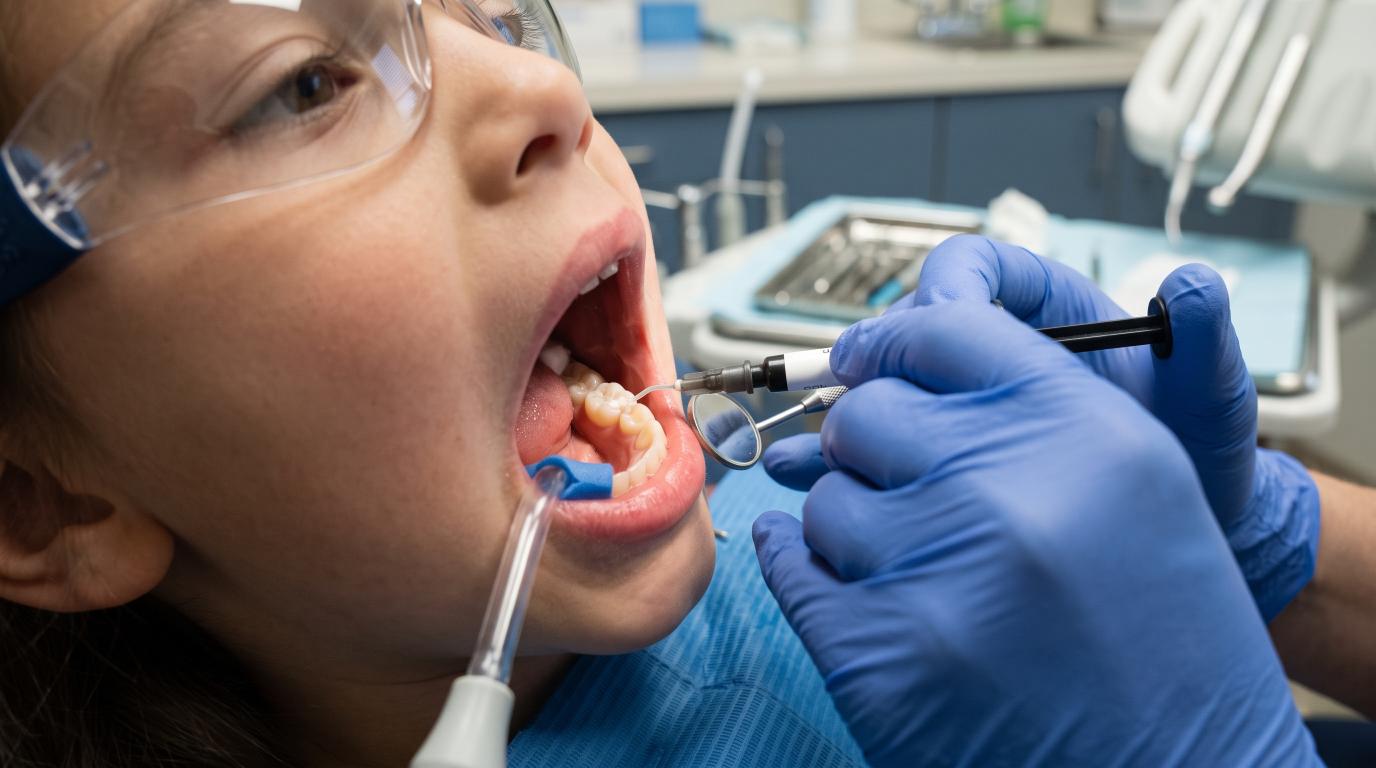
Fluoride is one of the simplest ways to protect young teeth. In its 2021 recommendation statement on preventing dental caries in children younger than 5, the U.S. Preventive Services Task Force recommends applying fluoride varnish to all infants and children. The recommendation starts when the first baby tooth erupts.
Sealants protect the deep grooves of back teeth, where food and bacteria collect. The CDC published a Vital Signs report in its Morbidity and Mortality Weekly Report (October 2016). It found that sealants prevent more than 80% of cavities in permanent molars two years after placement, and those molars are where 9 in 10 cavities occur. The same report found that children without sealants had almost three times more cavities in their first molars.
Home habits finish the job. Young children need a parent’s help brushing twice a day with fluoride toothpaste. Frequent juice, soda, or sticky snacks raise cavity risk, so offering water between meals makes a real difference.
How a Pediatric Dentist Monitors Tooth and Jaw Growth
Baby teeth usually begin arriving around 6 months, and children start losing them around age 6 or 7. At each visit, the dentist checks which teeth have come in or fallen out, how much space is available, and how the upper and lower teeth meet.
The American Association of Orthodontists’ guide to child orthodontics recommends a first orthodontic check-up no later than age 7. By then, the mix of baby and permanent teeth lets problems be spotted early. Most children screened at that age simply continue with monitoring. Those who need early treatment can begin while the jaws are still growing.
Pediatric Dentist vs General Dentist: Key Differences for Parents
Both pediatric and general dentists attend dental school and can care for children. The main difference is the pediatric dentist’s two to three extra years of training focused only on young patients.
|
Pediatric Dentist |
General or Family Dentist |
|
|
Training after dental school |
2–3 year residency focused on children | None required; optional continuing education |
| Patients | Infants to teens, plus many special-needs patients |
All ages, mostly adults |
|
Instruments |
Sized for small mouths and baby teeth | Mainly standard adult sizes |
| Nervous patients | Formal behavior guidance taught in residency |
Depends on the dentist’s experience |
|
Growth and development |
Tracked at every visit | Usually checked when a problem appears |
| Sedation and hospital care | Trained during residency |
Often referred out |
At Valencia Dental Care, our general dentists care for children of all ages. If your child needs more advanced care, such as complex treatment or support for special healthcare needs, we can refer you to a pediatric specialist.
Pediatric Dentist Age Range: From First Tooth to Teens
Pediatric dentists care for patients from the arrival of the first tooth through the teen years, and most patients move to an adult dentist between 18 and 21. A one-year-old, a nine-year-old, and a fifteen-year-old all have very different dental needs, so here is what care typically looks like at each stage.
|
Age |
Typical focus |
| Birth to 12 months |
Gum care, first tooth, first dental visit by age 1 |
|
1 to 3 years |
Fluoride, brushing habits, bottle and pacifier habits |
| 4 to 5 years |
Cavity prevention, brushing help, thumb-sucking and habit counseling |
|
6 to 12 years |
Losing baby teeth, first permanent molars, sealants, orthodontic check by age 7 |
| 13 to 18+ years |
Wisdom teeth, sports mouthguards, orthodontic treatment, move to an adult dentist |
When Should a Child First See a Pediatric Dentist?
The American Academy of Pediatric Dentistry sets this timing in its Periodicity of Examination, Preventive Dental Services, Anticipatory Guidance/Counseling, and Oral Treatment guideline. It recommends the first exam when the first tooth erupts and no later than 12 months of age, with checkups most commonly every six months after that. A tooth can start to decay as soon as it breaks through the gum, so prevention begins with the first tooth, not the first problem. If your child is already two or three and hasn’t been seen yet, that is still a good time to start.
Dental Care for Infants and Toddlers
Parents can wipe a baby’s gums with a soft, damp cloth. Once the first tooth appears, start brushing with a rice-grain-sized smear of fluoride toothpaste. Letting milk, formula, or juice sit on the teeth, especially at bedtime, raises the risk of early childhood cavities. Early visits are a good time to ask about pacifiers and thumb-sucking.
Dental Care for School-Age Children (Ages 6 to 12)
Between ages 6 and 12, your child’s mouth changes more than at any other stage. Baby teeth loosen and fall out while permanent teeth come in, so for several years the mouth holds a mix of both. The first permanent molars usually arrive around age 6, behind the last baby teeth, and parents sometimes mistake them for baby teeth. Because these teeth have to last a lifetime, this is when sealants matter most.
As the cavity rates earlier in this guide show, decay climbs sharply in this age group. Visits at this stage also include checking for crowding, bite problems, and habits like thumb-sucking that could affect how teeth come in. It’s also when the first orthodontic check-up is recommended, and active kids can ask about a custom mouthguard.
Should a Teenager Still See a Pediatric Dentist?
Yes. Pediatric dentistry covers patients through adolescence, and the teen years bring their own concerns:
- Wisdom teeth need to be checked for space.
- Sports raise the risk of dental injuries, so a custom mouthguard is worth discussing.
- Teens make more of their own food and brushing choices.
- Orthodontic treatment often happens in these years.
A dentist who has followed your child since infancy is well placed to handle all of this.
When Do Kids Stop Seeing a Pediatric Dentist?
Most patients move to an adult dentist between ages 18 and 21, but there is no fixed birthday. Common signs of readiness include all permanent teeth in place, wisdom teeth assessed, and a teen who manages their own appointments. Some patients with special healthcare needs stay with a pediatric dentist into adulthood because the training and setting still suit them best.
What to Expect at Your Child’s First Pediatric Dental Visit
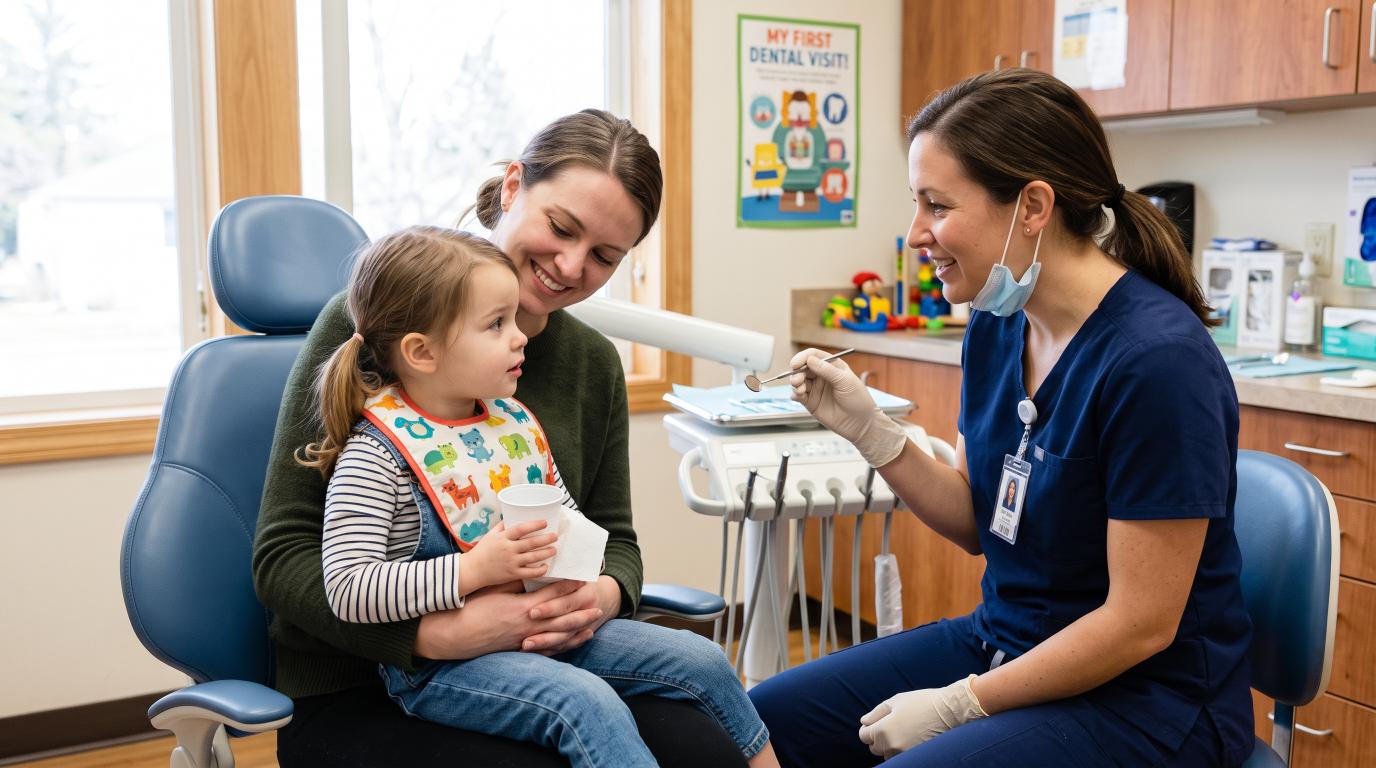
A first visit usually lasts about 30 to 45 minutes, and very young children often sit on a parent’s lap. The dentist reviews your child’s health history and gently examines the teeth, gums, jaws, and bite. If your child is ready, the team cleans the teeth and may apply fluoride. X-rays are taken only when the dentist needs to see between teeth or below the gums.
Bring your child’s medical history, a list of medications, insurance details, and a favorite comfort item for toddlers. Use the visit to ask about checkup frequency, sealants, fluoride, mouthguards, and when to plan an orthodontic check.
How Pediatric Dentists Help Kids With Dental Anxiety
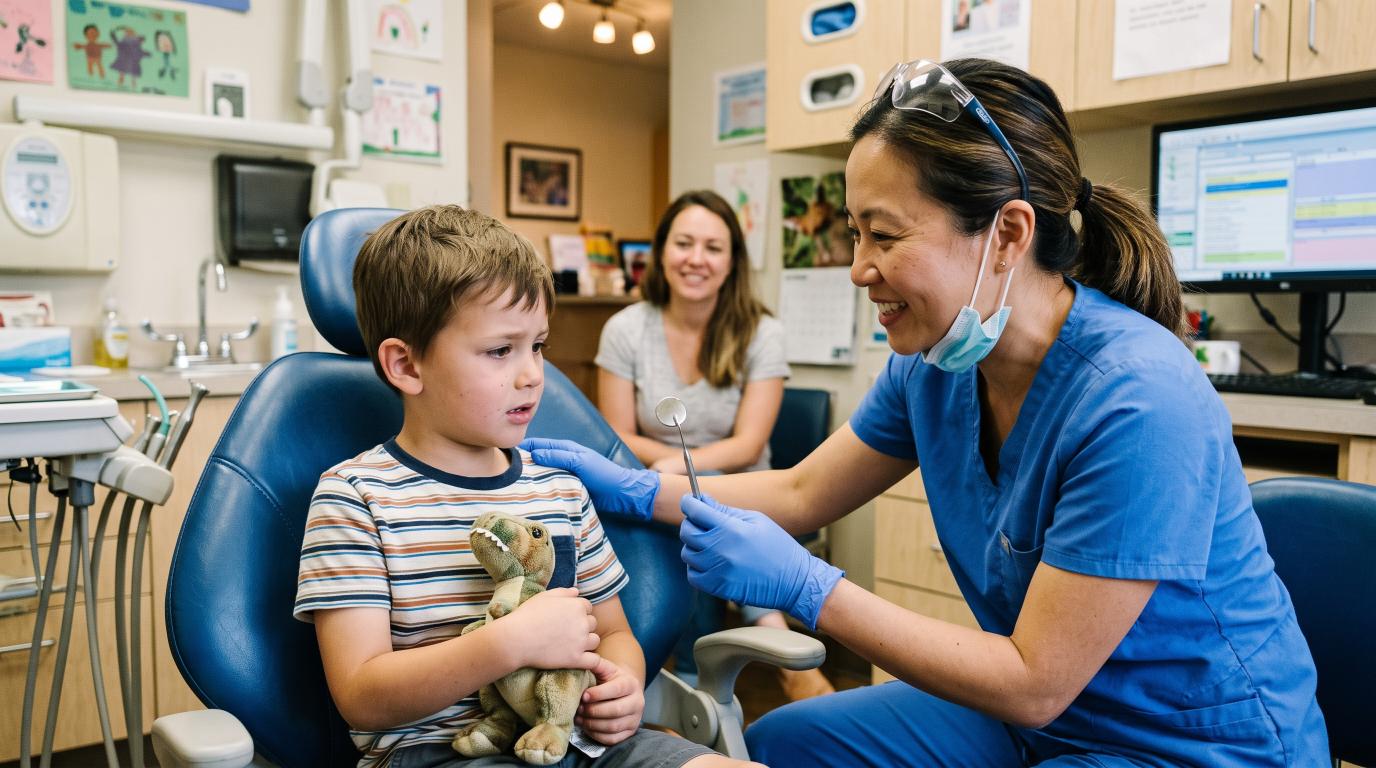
Dental fear is common in young patients. A global meta-analysis by Grisolia and colleagues in the International Journal of Paediatric Dentistry (2021) found that 23.9% of children and adolescents have dental anxiety. Rates were highest in preschoolers at 36.5%, compared with 25.8% in school-age children and 13.3% in adolescents.
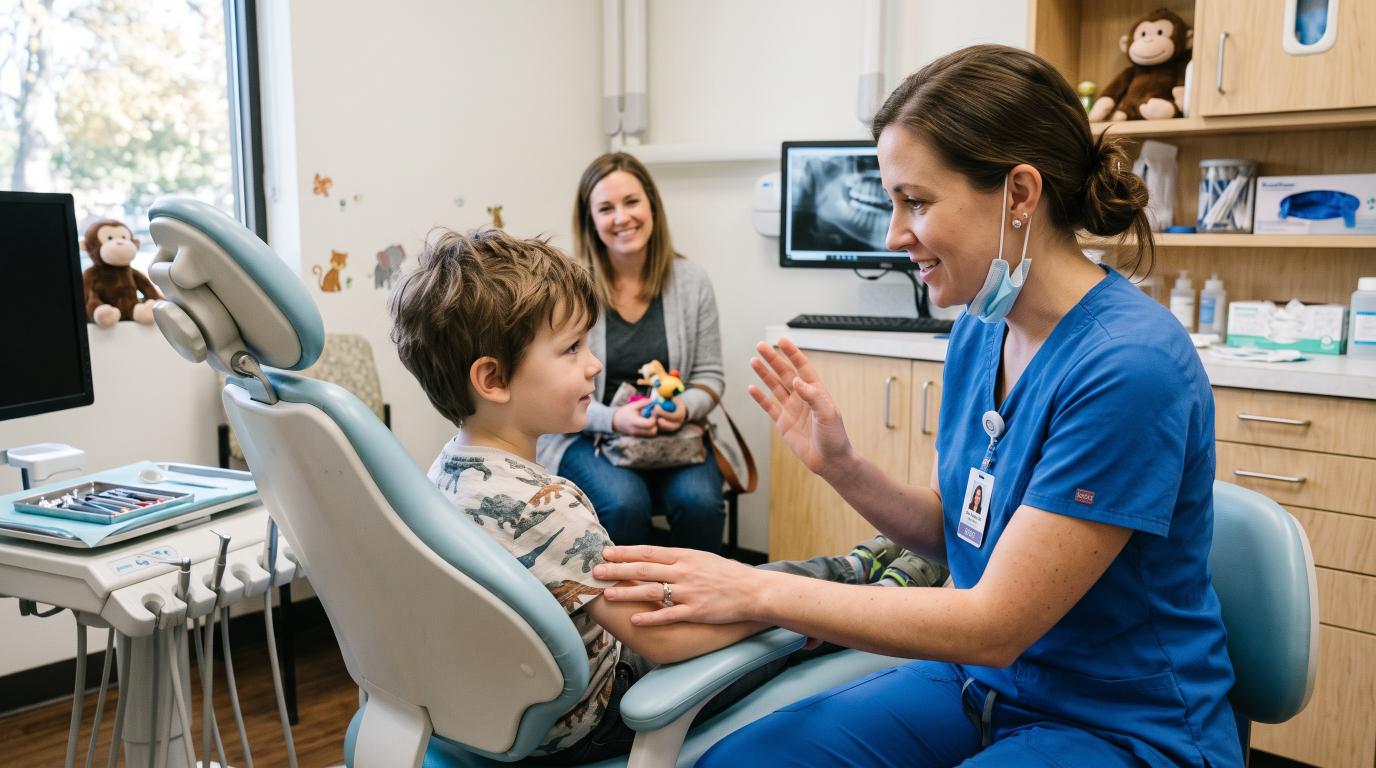
Pediatric dentists use behavior guidance methods learned in residency. The best known is tell-show-do: the dentist explains a step in simple words, shows the tool, and then uses it. Positive praise, distraction, and calm pacing with breaks also help children feel in control. When a child cannot complete needed treatment even with this support, the dentist may discuss nitrous oxide or other sedation options.
Pediatric Dental Care for Children With Special Healthcare Needs
“Special healthcare needs” includes medical, developmental, physical, or behavioral conditions that require changes to routine dental care. Examples include autism, ADHD, heart conditions, cancer treatment, and conditions that affect how teeth form. Care may involve a quieter room, a slower pace, extra visits to build comfort, or coordination with the child’s doctors.
When to Call a Pediatric Dentist About Pain or a Dental Emergency
Call your child’s dentist if you notice:
- tooth pain or sensitivity that won’t go away
- a hole, white spot, or dark spot on a tooth
- swollen, sore, or bleeding gums
- a chipped or cracked tooth
- a tooth that loosens after a fall
- trouble chewing
- concerns about tooth position or jaw growth
Seek care right away for a knocked-out tooth, facial swelling, or severe pain. If a permanent tooth is knocked out:
- Hold it by the crown, not the root.
- Keep it in milk.
- Get to a dentist quickly.
Do not put a knocked-out baby tooth back in, because doing so can damage the adult tooth forming underneath.
How to Choose a Pediatric Dentist in Mesa, AZ
Is your child’s first tooth coming in, or is it time for a checkup? At Valencia Dental Care in Mesa, AZ, we offer gentle, child-friendly dental care for patients of all ages. From a first visit and routine cleanings to fluoride treatments, sealants, and cavity care, our team helps keep growing smiles healthy. We take the time to explain each step to you and your child in simple, friendly terms, so the visit feels calm instead of stressful.
Starting early makes dental visits feel normal for kids, and it helps catch small problems before they become bigger ones. Call us at (480) 219-1933 or book online to schedule your child’s appointment, and give them a healthy, confident start.
Conclusion
So, what is a pediatric dentist? It is a dentist who completed two to three years of specialty training after dental school, focused only on children. Care runs from a baby’s first tooth through the teen years, and some patients with special healthcare needs stay longer. That training lets a pediatric dentist understand how today’s decision about a baby tooth will affect the adult teeth years later. Most children should first see a dentist by age 1 and then return about every six months, adjusted to their cavity risk.
Routine visits focus on growth checks, cleaning, fluoride, sealants for back teeth, early bite screening, and coaching on brushing, diet, and habits. Baby teeth deserve care even though they fall out, because they support chewing, speech, and space for adult teeth. Starting early also helps children see dental visits as calm and normal, which makes every future visit easier.
Schedule Pediatric Dental Care in Mesa, AZ
Is your child’s first tooth coming in, or is a checkup due? Valencia Dental Care in Mesa, AZ offers gentle, child-focused dental care, including first visits, cleanings, fluoride, sealants, cavity treatment, and growth monitoring. Our team explains every step clearly to parents and children alike. Call or book online today to give your child a healthy, confident start.
Frequently Asked Questions
Does Valencia Dental Care treat children?
Yes. Our dentists provide gentle, child-friendly care for patients of all ages, including first visits, cleanings, fluoride, sealants, and cavity treatment. If your child needs specialty pediatric care, we can refer you to a pediatric dentist.
What age is a pediatric dentist for?
Pediatric dentists care for children from infancy through adolescence. Most patients move to an adult dentist between 18 and 21. Patients with special healthcare needs may continue longer.
What is a kids’ dentist called?
A kids’ dentist is called a pediatric dentist, and the older term is pedodontist. “Kids’ dentist” and “children’s dentist” are everyday phrases, not credentials.
What is the difference between a pediatric dentist and a family dentist?
A pediatric dentist treats only children and has two to three years of extra residency training in children’s dentistry. A family dentist treats all ages without required pediatric training.
How often should my child see a pediatric dentist?
Most children have a checkup about every six months. Children at higher risk for cavities may need more frequent visits.
Do pediatric dentists treat baby teeth?
Yes. They fill cavities in baby teeth, place crowns, treat injuries, and remove teeth when needed. After an early extraction, they may place a space maintainer to protect room for the adult tooth.
Can a pediatric dentist treat dental emergencies?
Yes. Pediatric dentists treat toothaches, broken or knocked-out teeth, swelling, and mouth injuries. Call promptly after an injury so the dentist can guide you based on your child’s age and tooth type.
Can a pediatric dentist treat adults?
A pediatric dentist’s license covers all ages, but most limit their practice to children. Adults with special healthcare needs are the most common exception.
Do pediatric dentists see babies before they have teeth?
Yes. An infant oral health visit can cover gum care, feeding habits that affect cavity risk, and what to expect when teeth arrive.