
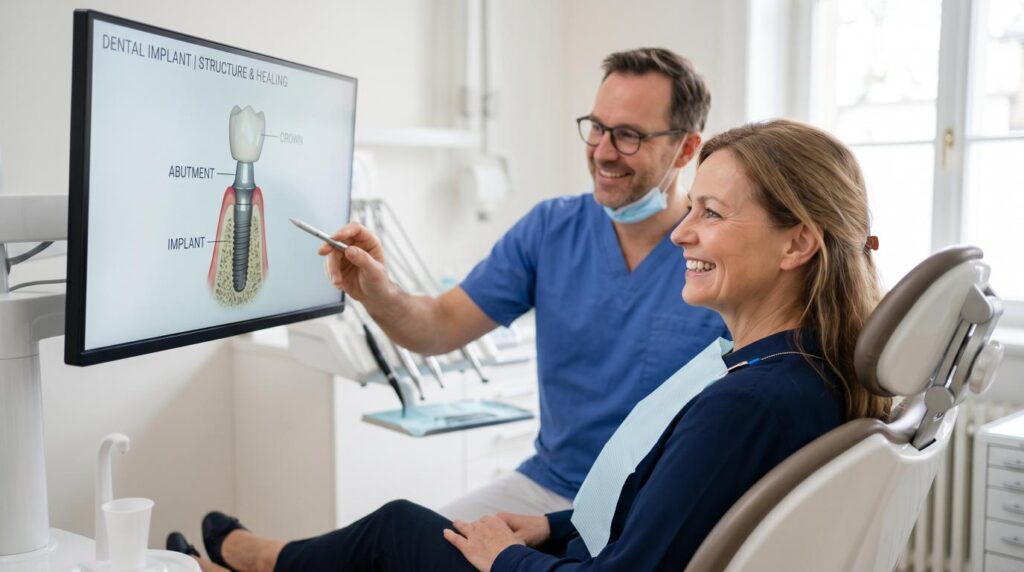


Dental implants are a strong and long-lasting way to replace missing teeth. They can replace one tooth or help support bridges and dentures. The metal implant post can last for many years and sometimes even a lifetime with good care. The crown, which is the visible tooth on top, usually lasts about 10 to 20 years before it may need to be replaced.
Many people choose dental implants because they look natural. They are also one of the longest-lasting tooth replacement options available. However, how long dental implants last depends on things like brushing and flossing habits, overall health, lifestyle choices, and the quality of the dental treatment. For patients in Mesa, Gilbert, and the West Mesa area, getting implants placed by an experienced local dental team makes a real difference in how well they hold up over time.
What Are Dental Implants?
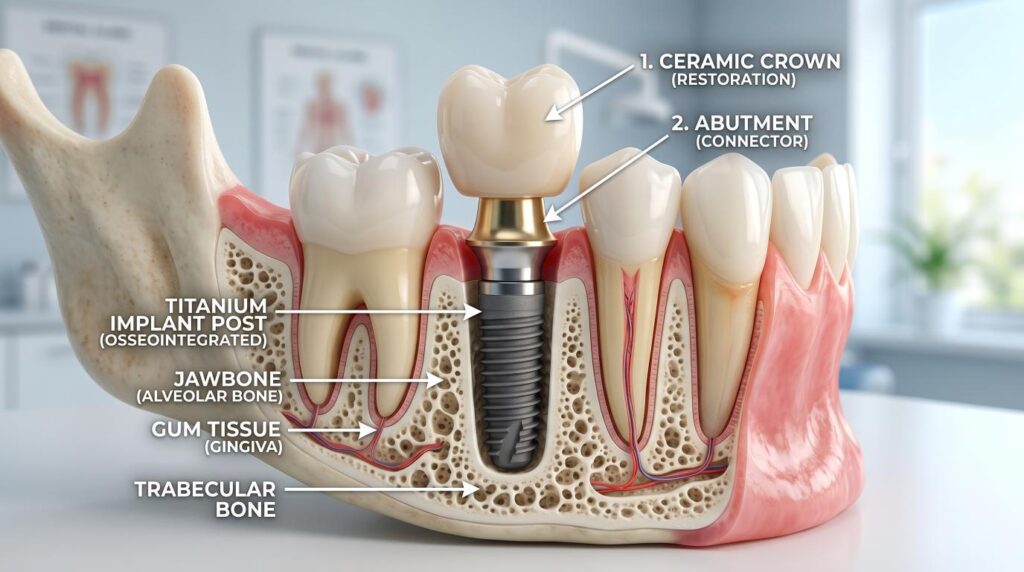
Dental implants are artificial tooth roots made of titanium that are placed into the jawbone to support a replacement tooth. Unlike dentures or bridges, implants fuse directly with the bone, making them one of the most stable and long-lasting tooth replacement options available. They are used when a person loses a tooth due to injury, decay, or gum disease. Once the implant bonds with the jawbone, a custom crown is placed on top to complete the look.
How Long Do Dental Implants Last on Average?
The titanium root that fuses with the jawbone is built to be permanent and can last a lifetime in many cases. The crown on top typically needs replacing after 10 to 15 years due to normal wear. Overall, dental implant lifespan one of the longest lifespans of any tooth replacement option available.
Good oral hygiene, regular dental visits, not smoking, and avoiding teeth grinding all play a big role. People who care for their implants the same way they would natural teeth rarely run into problems and many see them last well beyond the 25 year mark.
Why Dental Implants Last So Long
Dental implants last so long because of the material they are made from. Titanium is biocompatible, meaning the human body does not reject it. Over time the implant fuses directly with the jawbone through a process called osseointegration. This solid foundation is what separates implants from dentures and bridges, which sit on top of the gum or rely on surrounding teeth for support.
As long as the surrounding gum and bone stay healthy, the implant itself has no reason to fail. That is why with basic maintenance like brushing, flossing, and regular dental checkups, most implants stay strong and functional for decades.
What Affects the Lifespan of Dental Implants?
Several factors can affect how long dental implants last, including oral hygiene, lifestyle habits, overall health, and the quality of the implant procedure.
Oral Hygiene Habits
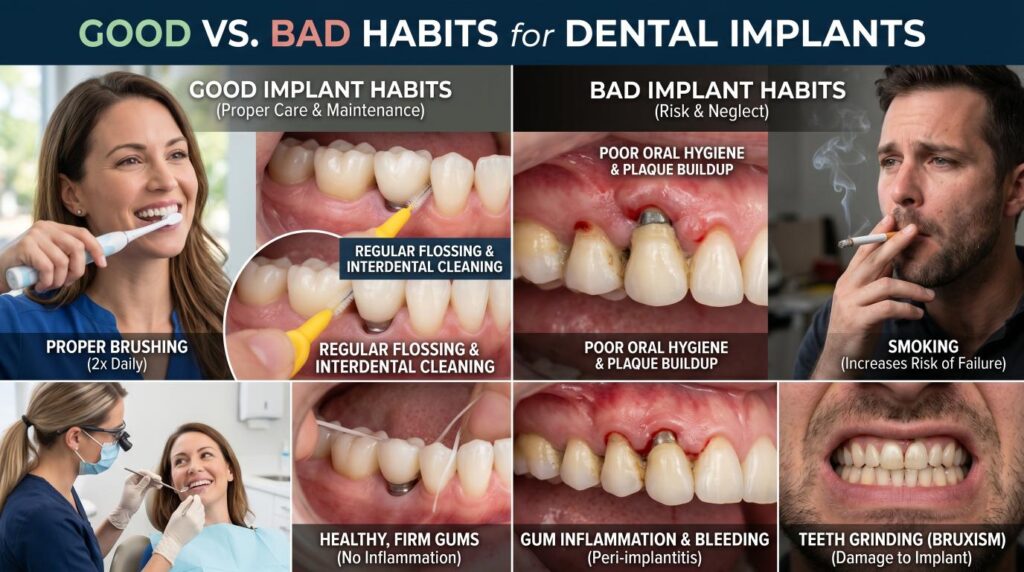
Brushing twice a day and flossing around implants removes the plaque that leads to infection. Peri-implantitis, which is an inflammation of the gum tissue and bone around the implant, affects about 7% of patients within 8 to 10 years of placement. It is almost always tied to inconsistent cleaning. Keeping the area clean is the single most controllable factor in how long your implant lasts.
Smoking and Tobacco Use
Smoking restricts blood flow to the gums and slows healing. Studies have consistently linked tobacco use to higher implant failure rates, both during the initial healing phase and years later. If you smoke, your dentist may still proceed with placement, but your long-term risk is higher. Quitting significantly improves your odds.
Gum Disease and Bone Loss
Healthy gums and adequate bone density are what hold your implant in place. Gum disease that is left untreated attacks the bone supporting the implant just like it attacks the bone around natural teeth. Bone loss weakens the foundation, and if it progresses far enough, the post will lose its secure hold.
Medical Conditions and Medications
Diabetes increases the risk of implant failure because it slows healing and makes the body more prone to infection. Studies show that people with uncontrolled diabetes have a failure hazard ratio more than twice that of healthy patients. Conditions like osteoporosis, autoimmune disorders, and cancer treatments also affect how well the bone integrates with and continues to support the implant.
Quality of Implant Placement
The surgical precision of the initial placement matters a great deal. An implant placed at the wrong angle or depth has a much harder time integrating properly. Accurate placement using 3D imaging and careful planning sets the post up for decades of stability.
How to Make Dental Implants Last Longer
Taking care of dental implants is straightforward. Brushing twice a day, flossing daily, and visiting your dentist every six months keeps the gum tissue healthy and the implant secure. Avoiding hard foods like ice and hard candy protects the crown from unnecessary wear and chipping over time.
Lifestyle habits matter just as much. Smoking weakens the bone that holds the implant in place and is one of the biggest reasons implants fail early. Teeth grinding puts constant pressure on the crown, so a night guard is worth considering if that is an issue. Small consistent habits are what keep implants strong for decades.
Signs a Dental Implant May Be Failing
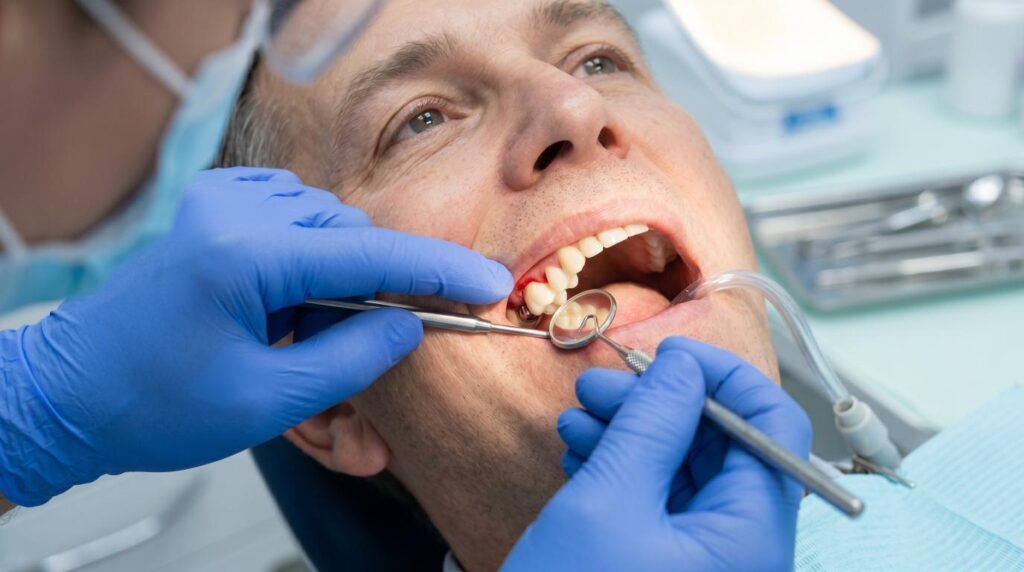
- Pain or discomfort around the implant that does not go away
- Swelling or redness in the gums near the implant site
- The implant feeling loose or shifting when you eat or speak
- Difficulty chewing that was not there before
- Receding gums around the implant
- A strange or bad taste that keeps coming back
- Infection around the implant site (peri-implantitis)
- Numbness or tingling near the implant area
- Visible bone loss or gum pulling away from the base of the implant
Do Dental Implants Ever Need Replacement?
The titanium post that goes into the jawbone rarely needs replacing. What gets replaced most often is the crown on top, which typically lasts 10 to 15 years before normal wear requires a new one. Crown replacement is simple and usually takes one or two appointments without affecting the implant post underneath.
Early implant failure is usually tied to infection or poor osseointegration during the first year. Late failure is most often connected to gum disease or teeth grinding over time. If an implant does fail, most patients can have it removed, the area healed, and a new implant placed successfully.
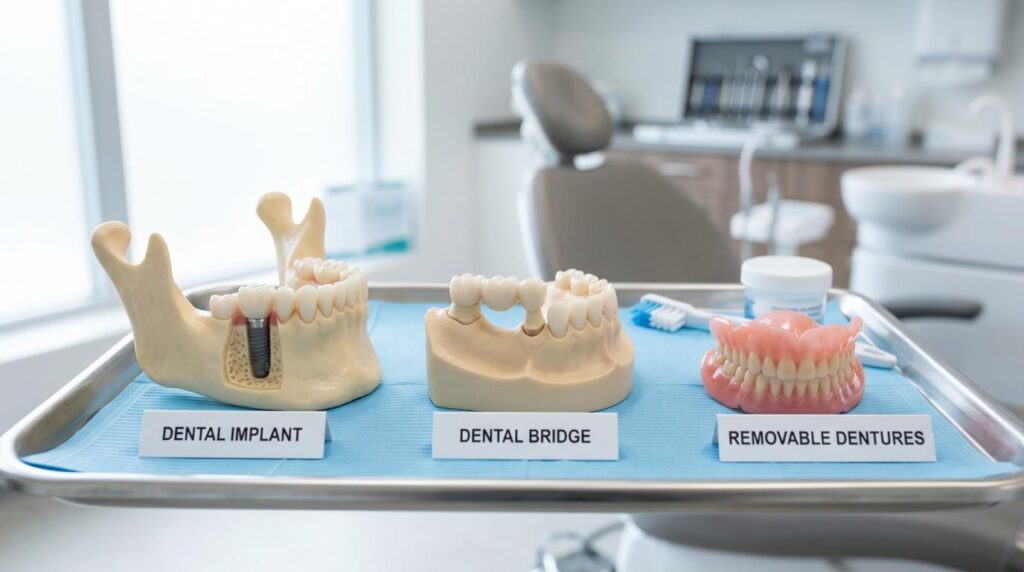
How Dental Implants Compare to Other Tooth Replacement Options
Dental implants are often compared to dentures and bridges because they last longer, feel more natural, and provide stronger support for everyday eating and speaking.
Implants vs Dentures
Dentures are removable, sit on the gums, and typically need replacement every 5 to 8 years. They can slip during eating or speaking and accelerate bone loss in the jaw because they do not stimulate the bone the way a tooth root does. Implants are fixed, function like natural teeth, and actually preserve the jawbone by providing the stimulation that bone needs to stay dense.
Implants vs Dental Bridges
A bridge fills the gap left by a missing tooth but requires the two teeth on either side of the gap to be ground down and capped. That permanently alters healthy teeth. Bridges also average 10 to 15 years before replacement. Implants leave neighboring teeth untouched and consistently outlast bridges.
Long-Term Cost and Durability Comparison
Dental implants usually cost more upfront than bridges or dentures. However, bridges and dentures often need to be replaced more often and may require extra dental work over time. Because implants can last much longer with proper care, they are often seen as a better long-term investment for many patients.
Implants vs Dentures vs Bridges: Full Comparison
|
Feature |
Dental Implants |
Dentures |
Dental Bridges |
|
Average Lifespan |
25 years to lifetime |
5 to 8 years |
10 to 15 years |
|
Crown/Surface Lifespan |
10 to 15 years |
Needs frequent relining |
10 to 15 years |
|
Feel and Function |
Most natural, like real teeth |
Can slip or shift |
Fixed but relies on nearby teeth |
|
Bone Preservation |
Yes, stimulates jawbone |
No, bone loss continues |
No, bone loss continues |
|
Effect on Nearby Teeth |
None, stands alone |
None |
Adjacent teeth must be ground down |
|
Maintenance |
Brush and floss like natural teeth |
Remove and soak daily |
Brush, floss under bridge |
|
Eating Ability |
Full, no restrictions |
Limited, avoid hard foods |
Mostly normal, some restrictions |
|
Appearance |
Most natural looking |
Can look artificial |
Natural looking |
|
Upfront Cost |
Highest |
Lowest |
Moderate |
|
Long-Term Cost |
Lowest over time |
Highest due to replacements |
Moderate |
|
Surgery Required |
Yes |
No |
No |
|
Success Rate |
95 to 98 percent at 10 years |
Varies |
Varies |
|
Best For |
Single or multiple missing teeth, long-term solution |
Full arch replacement on a budget |
One or a few missing teeth with healthy adjacent teeth |
Recovery and Healing Timeline
After dental implant surgery, some swelling, mild pain, and bruising in the first few days is completely normal. Most patients feel back to their routine within a week. The implant then needs time to fuse with the jawbone, which takes anywhere from 3 to 6 months depending on bone health and the individual patient.
Once the implant bonds with the bone, the crown is attached and the process is complete. Full recovery from start to finish typically takes 6 to 12 months. Eating soft foods, avoiding smoking, and following your dentist’s aftercare instructions closely makes the healing process much smoother and faster.
How Long Do All-on-4 Implants Last?
All-on-4 implants use four strategically placed posts to support a full arch of replacement teeth. The titanium posts used in All-on-4 can last just as long as single implants, often 20 to 30 years or more with proper care. The prosthetic arch on top typically lasts 10 to 20 years before it may need to be replaced due to normal wear.
All-on-4 is a popular option for patients who have lost most or all of their teeth and want a permanent, stable solution without individual implants for every tooth. Like standard implants, the key to longevity is daily cleaning, regular checkups, and avoiding habits like grinding that put excess pressure on the prosthetic.
Common Mistakes That Shorten Implant Lifespan
Certain daily habits and poor dental care can reduce how long dental implants last and increase the risk of damage or implant failure.
Poor Oral Hygiene
Skipping brushing or flossing even occasionally allows bacteria to build up around the implant. Over months and years, that bacteria causes the gum inflammation that leads to bone loss. No implant, no matter how well placed, can survive chronic neglect.
Skipping Dental Checkups
Routine X-rays catch bone loss early. Routine cleanings remove buildup in spots your toothbrush cannot reach. Skipping checkups removes the safety net that catches problems before they become expensive.
Smoking During Healing
The healing phase is when the implant is most vulnerable. Smoking during the weeks following surgery is one of the most consistent predictors of early implant failure. It constricts the blood vessels that the healing tissue depends on.
Ignoring Early Signs of Problems
Pain, looseness, swelling, or gum recession around an implant site are warnings. Waiting to see if they go away rarely works in your favor. Early intervention almost always leads to better outcomes than delayed treatment.
Ready for Dental Implants in Mesa, Gilbert, or San Tan Valley, AZ?
Your smile deserves a solution that lasts. Dental implants are one of the most reliable and long-lasting tooth replacement options available, but the key to getting the most out of them starts with choosing the right dental team from day one.
At Valencia Dental Care, our experienced dental team helps patients across Mesa, Gilbert, San Tan Valley, and West Mesa get implants that are placed correctly from day one. Whether you are considering implants for the first time or want to make sure your existing ones are in good shape, we are here to help. Contact us today and take the first step toward a smile that is built to last.
Conclusion
Dental implants are one of the most durable tooth replacement options available. The titanium post can last 25 years or more, often for a patient’s entire lifetime. The crown may need replacement at some point, but that is a predictable maintenance step, not a failure of the system.
What determines how long your implants last is largely in your hands. Daily cleaning, regular checkups, avoiding tobacco, and addressing problems early are the habits that keep implants strong for decades. If you are considering implants or want to make sure yours are in good shape, talk to an experienced implant dentist for a proper evaluation.
Frequently Asked Questions
Can dental implants last forever?
The titanium post can last a lifetime for many patients. The crown on top typically needs replacement after 10 to 15 years. With proper maintenance, the implant system as a whole can function for several decades without needing a full replacement.
How often do dental implants fail?
Studies show a success rate of 95 to 98% at 10 years. Failure is not common but does happen. Early failures within the first year are usually tied to infection or poor bone integration. Later failures are most often linked to gum disease or mechanical stress.
Do dental implants need special cleaning?
No special tools are required, but technique matters. A soft-bristle brush, regular floss or an interdental brush, and a non-abrasive toothpaste are all you need. Some dentists recommend a water flosser as an addition for cleaning around the base of the crown.
How long do implant crowns last?
Most crowns last 10 to 15 years. With excellent hygiene and avoiding habits like grinding or chewing ice, some patients get closer to 20 years. Back teeth crowns tend to wear faster because they handle more chewing force.
Are dental implants stronger than natural teeth?
The implant post itself is made of titanium, which is extremely strong. The crown, however, is porcelain or ceramic, which can chip under heavy force. Natural tooth enamel is also very strong, but natural teeth can crack too. Implants are comparable to natural teeth in function and durability, but they are not indestructible.