





Yes, yellow teeth go white again. In most cases, yellow teeth can be whitened—but success depends entirely on what caused the yellowing. Surface stains from coffee, tea, or smoking respond well to both home and professional treatments. Deep discoloration from medications or genetics is tougher but still treatable with professional procedures like veneers or in-clinic whitening.
If your teeth are yellow, there’s a solution. This guide shows you exactly which treatments work for your specific type of staining.
Can Yellow Teeth Actually Become White Again?
Yes, yellow teeth can become white again, but how well whitening works depends on what caused the discoloration.
Not all yellow teeth are created equal. Surface stains, also called extrinsic stains, only affect the outer layer of your teeth. These are caused by things like coffee, tea, red wine, and smoking. The good news is that surface stains usually respond really well to whitening treatments.
Internal discoloration, known as intrinsic stains, goes deeper. These affect the inner structure of your tooth and are much harder to treat with regular whitening products. This type of yellowing might be caused by certain medications, tooth injury, or too much fluoride during childhood.
Most people dealing with yellow teeth have a combination of both types. The surface stains might respond well to whitening toothpaste or strips, while deeper discoloration might need professional treatments.
Why Do Teeth Turn Yellow in the First Place?
Understanding what caused your teeth to yellow helps you choose the most effective treatment. Teeth yellowing is incredibly common and one of the most frequent cosmetic concerns people have.
Everyday Habits That Cause Yellow Teeth
Coffee and Tea: Both contain compounds called tannins that stick to tooth enamel. Even one cup a day adds up over months and years. Black tea is actually one of the worst offenders.
Smoking and Tobacco: This is one of the worst things for tooth discoloration. Nicotine and tar create brown and yellow stains that penetrate deep into the enamel. Smokers often find that regular whitening treatments don’t work as well because the staining is so stubborn.
Poor Brushing: When you don’t brush properly, plaque builds up on your teeth. This sticky film looks yellowish. Over time, plaque hardens into tartar, which has a yellow or brown color and can only be removed by a dentist.
Aging: As you get older, your enamel naturally wears down and gets thinner. Since enamel is white and the dentin underneath is yellow, when enamel thins out, more yellow shows through. This is why you might notice your teeth looking more yellow after age 30.
Medical and Genetic Causes
Medications: Certain antibiotics, particularly tetracycline, can cause permanent tooth discoloration if taken during childhood. Antihistamines and blood pressure medications can also cause yellowing.
Trauma: If you’ve been hit in the mouth, that tooth might look darker than others. Internal bleeding can cause the tooth to turn grayish or brown from inside.
Genetics: Some people have naturally thicker, whiter enamel. Others inherited thinner enamel or yellower dentin. Your natural tooth color isn’t something you did wrong.
Signs Your Teeth Can Be Whitened
You’re likely to get great results if you have yellow or light brown surface stains from coffee, tea, wine, or smoking. Age-related yellowing also responds fairly well to whitening.
However, if your teeth have a gray or purple tone, whitening often doesn’t work well. Severe medication staining and fluorosis with brown spots are also stubborn. And here’s something important: if you have crowns, veneers, or fillings on front teeth, those won’t whiten at all. Whitening only works on natural tooth enamel.
How to Get Rid of Yellow Teeth at Home
Home whitening methods are popular because they’re affordable and convenient. However, not all DIY treatments are safe or effective—some can actually damage your teeth permanently.
Whitening Toothpaste – Does It Really Work?
Yes, it works, but I have realistic expectations. These toothpastes contain mild abrasives that scrub away surface stains. Whitening toothpaste can lighten your teeth by about one shade over several weeks of consistent use.
It works best for removing light surface stains from coffee or tea. To get results, use it consistently twice a day for at least two to four weeks. Look for products with the ADA Seal of Acceptance.
Baking Soda and Hydrogen Peroxide (Is It Safe?)
This combination can remove some surface stains, but overusing it can damage your enamel. Baking soda is more abrasive than regular toothpaste. If you use it every day, you’re essentially sanding down your enamel. Once enamel is gone, it doesn’t grow back, and the yellow dentin underneath shows through even more.
If you try this method, use it very sparingly, maybe once or twice a week at most. Honestly, you’re better off buying toothpaste that already contains these ingredients in safe amounts.
Oil Pulling, Activated Charcoal, and Other DIY Methods
Oil pulling involves swishing coconut oil in your mouth for 10-20 minutes. While it might have some oral health benefits, there’s very limited scientific evidence that it actually whitens teeth.
Activated charcoal is extremely abrasive. While it might remove some surface stains, it’s scrubbing away your enamel in the process. Most dentists strongly advise against using it regularly.
Strawberries, lemon juice, and apple cider vinegar are all too acidic and can erode your enamel. Any slight whitening effect you see isn’t worth the enamel damage.
Important: Talk with your dentist before trying any DIY whitening method. Some popular remedies can permanently damage your teeth. A dental professional can guide you to safe, effective options that won’t harm your enamel.
Professional Teeth Whitening Options
Professional whitening delivers faster, more dramatic results than anything you can buy at the drugstore. These treatments use stronger bleaching agents under dental supervision, making them both more effective and safer for your teeth.
In-Clinic Teeth Whitening
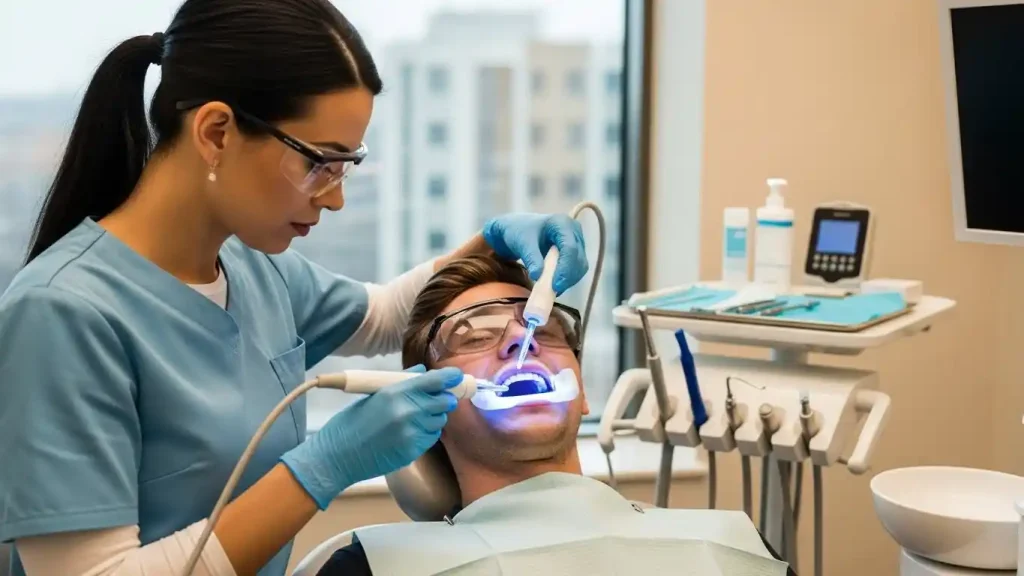
This is the fastest way to whiten your teeth. Your dentist applies professional-strength bleaching gel with much higher concentration than drugstore products. The whole appointment takes 60-90 minutes.
Many people see their teeth lighten by several shades in just one visit. The downside? This is the most expensive whitening option and you might experience temporary sensitivity. It’s best for people who want maximum results quickly or have an important event coming up.
Take-Home Whitening Kits from a Dentist
Your dentist creates custom-fitted trays and provides professional-grade whitening gel. You wear the trays for 30 minutes to a few hours daily for one to two weeks.
The custom fit keeps gel exactly where it needs to be, preventing gum irritation. This is more affordable than in-office treatment and gives professional-quality results with more gradual, natural-looking whitening.
Over-the-Counter Whitening Products
Whitening strips, LED kits, and whitening pens are the most affordable option. They’re easy to use but have weaker concentrations, so results take longer—usually 2-4 weeks of daily use.
The one-size-fits-all fit might not cover all teeth evenly, especially if you have crooked teeth. Most people lighten by one to three shades with consistent use.
What If Whitening Doesn’t Work?
Not all tooth discoloration responds to bleaching treatments. If you’ve tried whitening without success, or if you have deep intrinsic staining, cosmetic dentistry offers effective alternatives that cover the discoloration instead of removing it.
Dental Bonding
Your dentist applies tooth-colored resin material to cover stained teeth. It’s shaped and polished to match your natural teeth. This works great for individual stained teeth and is one of the most affordable cosmetic dental procedures. Bonding lasts 3-10 years before needing replacement.
Veneers for Permanent Discoloration
Veneers are thin porcelain shells bonded to your front teeth. They’re custom-made and give you a completely transformed smile. Veneers are recommended for severe staining that doesn’t respond to bleaching, like deep tetracycline stains.
How to Maintain White Teeth After Whitening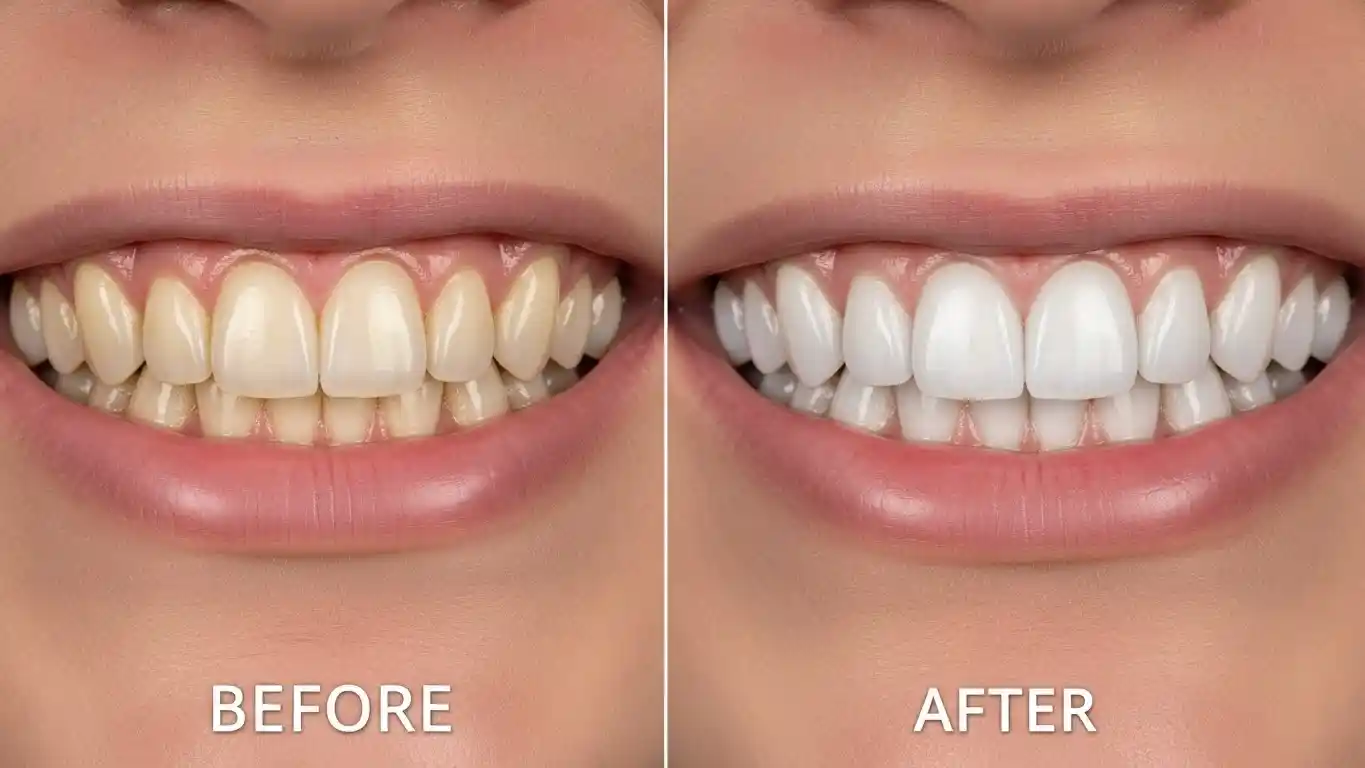
Whitening results aren’t permanent—your teeth will retain over time without proper care. The good news is that maintaining your bright smile is much easier and cheaper than repeating the whitening process from scratch.
Foods and Drinks to Avoid
Coffee, black tea, red wine, dark sodas, tomato sauce, balsamic vinegar, dark berries, soy sauce, and curry all stain teeth. You don’t have to eliminate them completely, just be mindful.
Rinse your mouth with water right after consuming staining foods. Try drinking through a straw when possible. Don’t brush immediately after acidic foods—wait 30 minutes.
Daily Oral Care Tips
Brush twice a day for two full minutes. Use whitening toothpaste 2-3 times per week as maintenance. Floss daily. Rinse with water after meals. Consider an electric toothbrush for better plaque removal. Schedule dental cleanings every six months. And don’t smoke.
How Often Should You Whiten?
Professional in-office whitening typically doesn’t need repeating for 1-2 years. At-home treatments can be touched up every 4-6 months. Whitening toothpaste can be used regularly for maintenance.
Don’t over-whiten. Too much whitening damages enamel, increases sensitivity, and makes teeth more prone to staining.
Are Natural Remedies Safe for Yellow Teeth?
Natural doesn’t always mean safe when it comes to teeth whitening. Many popular DIY remedies found on social media can seriously damage your enamel, leading to permanent tooth sensitivity and even more yellowing.
What Dentists Recommend
Eating crunchy fruits and vegetables naturally scrubs teeth. Drinking water throughout the day rinses away food particles. Limiting sugar prevents plaque buildup. Eating cheese neutralizes acids. Using a straw for staining beverages helps minimize contact.
These won’t dramatically whiten teeth but help prevent yellowing from getting worse.
What to Avoid to Protect Enamel
Stay away from lemon juice, citrus fruits, apple cider vinegar applied directly to teeth, activated charcoal, excessive baking soda, undiluted hydrogen peroxide, and hard scrubbing. All of these can cause permanent enamel damage, increased sensitivity, and more yellow appearance as dentin becomes exposed.
When Should You See a Dentist for Yellow Teeth?
See a dentist if yellowing is sudden or severe, if only one or a few teeth are discolored, if you experience tooth pain or sensitivity with discoloration, or if home treatments haven’t worked after several weeks.
You should also consult a dentist before starting any whitening treatment. They’ll examine your teeth, determine the cause of yellowing, discuss treatment options suitable for your case, provide cost estimates, and create a personalized whitening plan.
Yellow teeth are treatable in most cases. Professional guidance ensures safe, effective results. Modern dentistry offers solutions for nearly every type of discoloration. Don’t let yellow teeth affect your confidence—a brighter smile is achievable with the right approach.
Get Your Brightest Smile at Valencia Dental Care
Ready to say goodbye to yellow teeth? Our expert team at Valencia Dental Care will help you choose the perfect whitening solution for lasting results. Schedule your consultation today and start your journey to a confident, radiant smile.
Conclusion
Yellow teeth can definitely become white again with the right approach. Whether you’re dealing with surface stains from your morning coffee or deeper discoloration from medications, there’s a solution that works for you. The key is identifying what caused your yellowing and choosing the right treatment—from simple whitening toothpaste to professional veneers.
Remember, maintaining white teeth requires ongoing care and smart habits. If you’re unsure where to start, schedule a consultation with your dentist to create a personalized whitening plan that’s safe and effective for your specific needs.
Frequently Asked Questions
Can yellow teeth go white again naturally?
Yes, mildly yellow teeth caused by surface stains can appear whiter with good oral hygiene and stain prevention. However, natural methods alone rarely produce dramatic whitening. Professional or dentist-approved whitening treatments are usually needed for noticeable results.
Why are my teeth still yellow even though I brush every day?
Brushing removes plaque but does not always eliminate deep stains. Teeth can remain yellow due to enamel thinning, genetics, aging, smoking, certain medications, or frequent consumption of staining foods and drinks like coffee or tea.
Can severely yellow teeth become white again?
In many cases, yes—but not always with standard whitening. Deep or intrinsic stains caused by medications, trauma, or fluorosis may require advanced treatments such as professional whitening, dental bonding, or veneers to achieve a whiter appearance.
Is teeth whitening safe for enamel?
Dentist-supervised whitening is safe for enamel when used correctly. Overusing DIY or abrasive whitening methods can damage enamel, increase sensitivity, and make teeth appear more yellow over time.
How long do teeth whitening results last?
Teeth whitening results can last from several months to a few years, depending on your diet, oral hygiene habits, and whether you smoke. Regular dental cleanings and avoiding stain-causing foods help maintain results longer.