


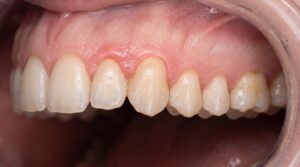




Removing stains from your teeth depends on where the stain sits. Surface-level stains usually respond well to whitening toothpaste, at-home whitening kits, or a professional cleaning, while deeper stains inside the tooth typically need a dentist’s help through treatments like professional whitening or bonding.
Coffee, tea, red wine, and other dark drinks are some of the most common culprits behind yellow or stained teeth, and this is one of the most frequent concerns dentists see, including many patients right here in Mesa, AZ our team is here to help you. The good news is that staining is rarely permanent. Most people who get their teeth professionally whitened do not have to give up their favorite drinks entirely, just manage them a bit more carefully.
Whether your stains come from years of morning coffee, smoking, certain medications, or simply getting older, this guide breaks down exactly why teeth stain, which home remedies are safe to try, when a professional treatment is worth it, and how to keep your smile bright once you get the results you want.
What Causes Stains on Teeth?
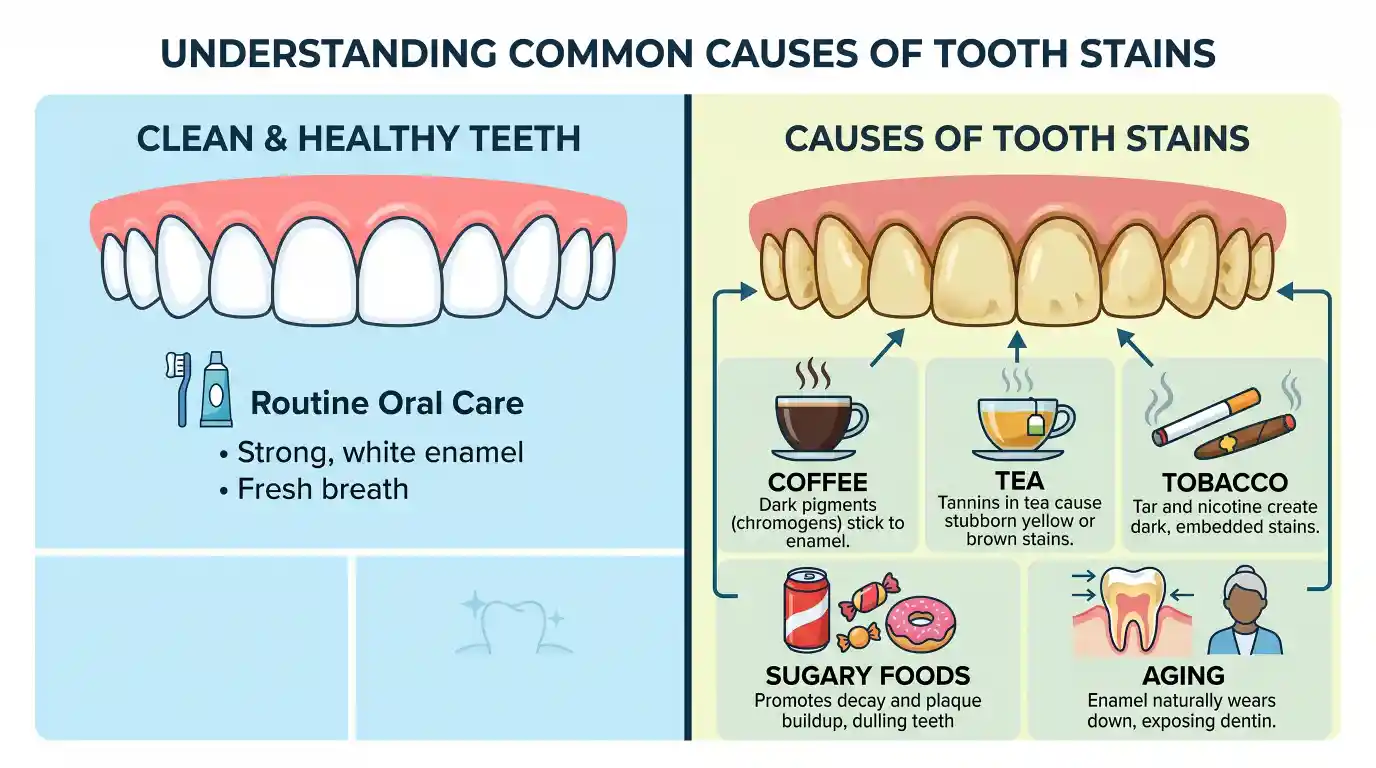
Teeth do not become stained overnight. Stains build up slowly through daily habits and natural body changes. Some causes only affect the outer layer of your teeth, while others can change the color from the inside out.
Coffee, Tea, and Dark Drinks
Coffee and tea are two of the biggest reasons for yellow or brown teeth. These drinks contain tannins, which are compounds that stick to the enamel on your teeth. Over time, this buildup turns into visible stains. Dark sodas and red wine cause the same problem because they also contain strong coloring agents.
Smoking and Tobacco Use
Smoking is one of the fastest ways to stain teeth. Tar and nicotine from cigarettes soak into the tiny pores in your enamel. This often creates a yellow or brownish color that is hard to remove with regular brushing alone.
Poor Oral Hygiene Habits
When you skip brushing or flossing, plaque builds up on your teeth. This plaque can trap food particles and bacteria, which leads to discoloration. Over time, poor hygiene can also let stains settle deeper into the tooth surface.
Aging and Enamel Wear
As we get older, the outer layer of enamel on our teeth naturally wears down. This makes the yellow layer underneath, called dentin, more visible. This is a normal part of aging and happens to almost everyone eventually.
Certain Foods and Medications
Foods like berries, soy sauce, and curry can leave stains behind because of their strong pigments. Some medications, including certain antibiotics, can also cause discoloration, especially if they were taken during childhood when teeth were still developing.
Types of Teeth Stains You Should Know
Not all stains are the same. Understanding the type of stain you have will help you choose the right treatment.
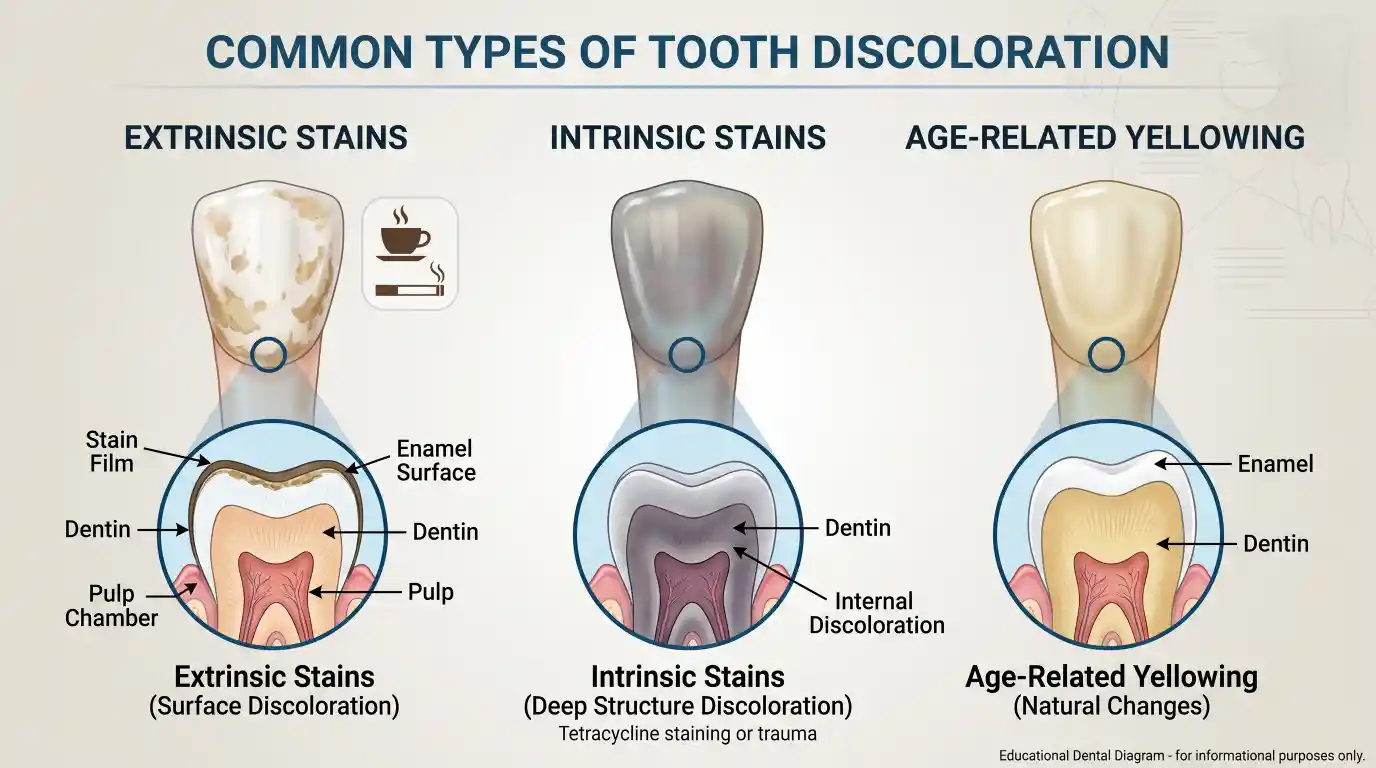
Extrinsic Stains (Surface Stains)
Extrinsic stains sit on the outer surface of the tooth. They are usually caused by food, drinks, or smoking. These stains often respond well to brushing, whitening toothpaste, and professional cleanings.
Intrinsic Stains (Deep Stains)
Intrinsic stains form inside the tooth, below the enamel. These can be caused by injury, certain medications, or too much fluoride exposure as a child. Intrinsic stains are harder to remove and usually need professional treatment.
Age-Related Yellowing
This type of staining is a mix of both surface buildup and natural enamel thinning. As enamel wears away with age, teeth can look more yellow even without obvious habits like smoking or drinking coffee.
How Each Type of Stain Responds to Treatment
Extrinsic stains are the easiest to treat. Because they sit on the outer surface of the tooth, they respond well to whitening toothpaste, professional cleanings, and at-home whitening kits. Most people see noticeable improvement within a few weeks of consistent care.
Intrinsic stains are much harder to remove. Since they form inside the tooth, bleaching agents cannot always reach them. These stains often need stronger professional treatments like internal bleaching, dental veneers, or composite bonding to fully cover or lighten them.
Age-related yellowing falls somewhere in the middle. Professional whitening can improve the appearance significantly, but because part of the problem is natural enamel thinning, results may not be as dramatic as with surface stains.
How to Remove Stains from Teeth at Home
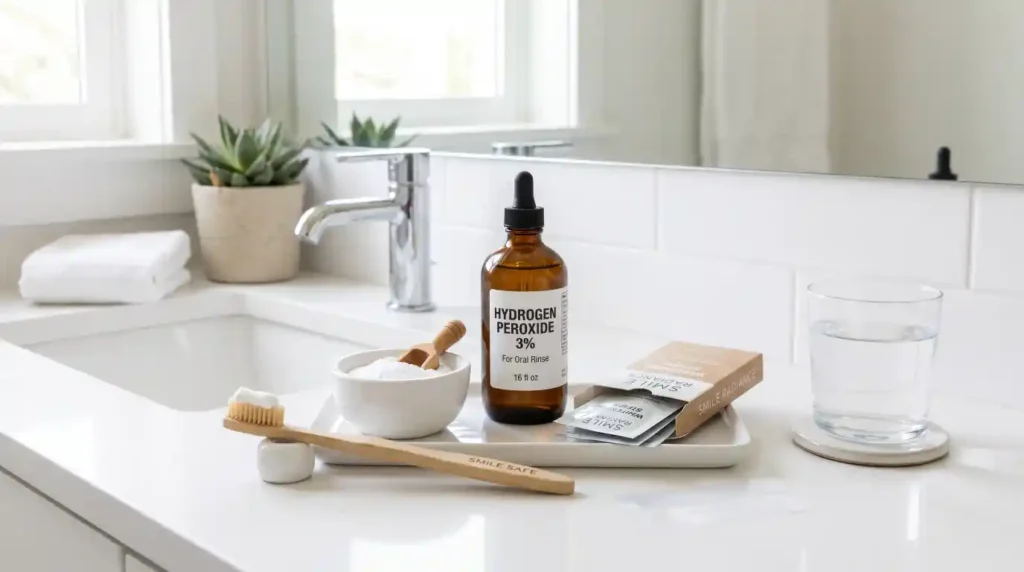
Many people prefer to start with home remedies before trying anything more expensive. Here are some simple methods you can try.
Brushing with Whitening Toothpaste
Whitening toothpaste contains mild abrasives and sometimes small amounts of peroxide. Brush gently twice a day for the best results, and give it a few weeks before expecting a noticeable change. Be careful not to brush too hard, since pressing too much can hurt your gums and wear down enamel rather than helping it.
Baking Soda Method (Safe Usage Guide)
Baking soda is a natural, mild abrasive that can help lift surface stains. Mix a small amount with water to form a paste, then brush gently for about two minutes. Do not use this method every day, since baking soda can wear down enamel if overused.
Hydrogen Peroxide Rinse (When and How to Use)
Hydrogen peroxide is a natural bleaching agent. You can mix a small amount with water and use it as a mouth rinse for about one minute, then spit it out. Never swallow it, and avoid using it too often since it can irritate your gums if used in high amounts.
Are Whitening Strips Safe
Over-the-counter whitening strips are one of the most popular at-home options and they do work for surface stains. They contain a lower concentration of peroxide than professional treatments, which makes them safe for most people to use at home. The key is to follow the instructions carefully. Do not leave them on longer than the package recommends and do not use them more often than directed.
Oil Pulling (Coconut Oil Method)
Oil pulling is an old practice that involves swishing coconut oil in your mouth for ten to fifteen minutes, then spitting it out. Some people believe it helps reduce bacteria and surface stains. While it will not replace brushing, it can be a helpful addition to your routine.
Drinking Water After Staining Foods
A simple but effective habit is drinking water right after eating or drinking something that can stain your teeth. This helps wash away pigments before they have a chance to settle on your enamel.
Using Straw for Coffee and Tea
If you drink a lot of coffee or tea, try using a straw. This reduces the amount of liquid that touches your front teeth, which can help prevent new stains from forming.
Natural Ways to Remove Teeth Stains
Beyond basic home remedies, there are natural habits that support a brighter smile over time.
Eating Crunchy Fruits and Vegetables
Apples, carrots, and celery can act like natural toothbrushes. Their crunchy texture helps scrub away surface stains while you chew, and they also boost saliva production, which protects your teeth.
Activated Charcoal
Activated charcoal has become a popular natural whitening trend. It may help absorb surface stains, but it is also very abrasive. Overuse can wear down enamel, so it should only be used occasionally and with caution.
Apple Cider Vinegar
Apple cider vinegar has mild whitening properties because of its acidity. However, this same acidity can harm enamel if used too often. If you try it, dilute it with water and rinse your mouth afterward to protect your teeth.
Maintaining a Clean Oral Routine
The simplest and most effective natural method is consistency. Brushing twice a day, flossing daily, and rinsing after meals will do more for your smile than any single trick.
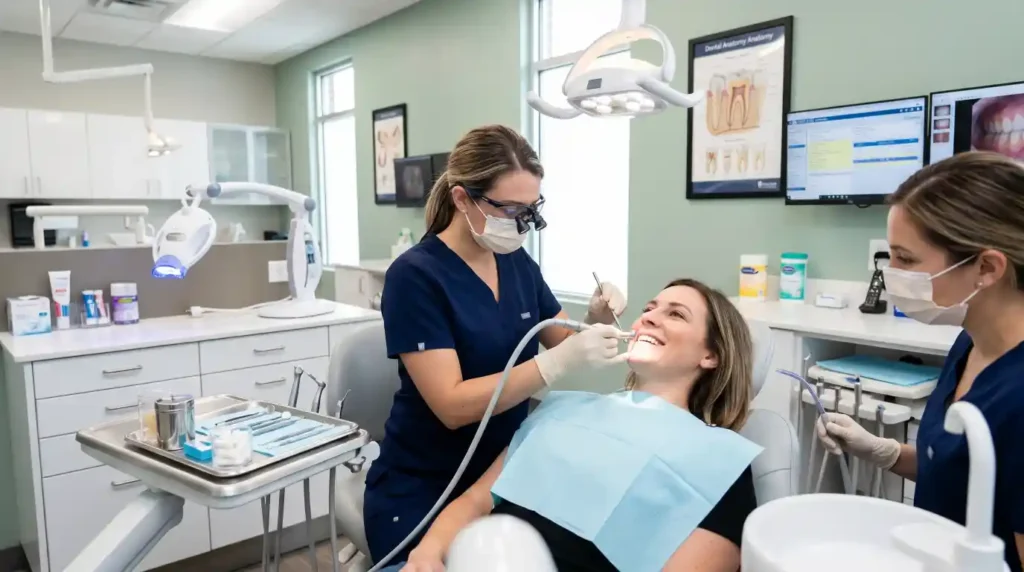
Professional Treatments for Teeth Stains
When home remedies are not enough, professional treatments can give you faster and longer-lasting results.
Dental Cleaning (Scaling and Polishing)
A professional cleaning removes plaque and surface stains that brushing alone cannot reach. Dentists use special tools to scale away buildup and then polish your teeth, leaving them smoother and brighter. Most dentists recommend getting this done twice a year, and many people notice their teeth look noticeably cleaner right after the appointment.
Teeth Whitening Treatments
Professional teeth whitening uses stronger bleaching agents than store-bought products. Dentists can apply these treatments safely while protecting your gums, often producing noticeably whiter teeth in a single visit.
Laser Whitening Options
Laser whitening speeds up the bleaching process by using light to activate the whitening gel. This method can produce faster results than traditional whitening, though it usually costs more.
When You Need a Dentist
If your stains are deep, uneven, or not improving with home care, it is time to see a dentist. They can identify whether the stains are extrinsic or intrinsic and recommend the right treatment plan for your specific case.
Sensitivity After Whitening: What to Expect
Tooth sensitivity after whitening is very common and in most cases nothing to worry about. It usually feels like a short, sharp pain when you eat or drink something cold, hot, or sweet. This happens because whitening agents temporarily open up tiny pores in the enamel, making the teeth more sensitive for a short time.
For most people, this sensitivity goes away on its own within one to three days after treatment. Using a toothpaste made for sensitive teeth during and after whitening can help reduce any discomfort. If sensitivity lasts longer than a week or feels severe, it is a good idea to speak with your dentist to rule out any underlying issues.
How to Prevent Teeth Stains in the Future
Prevention is always easier than treatment. These habits can help you keep your smile bright for the long run, and most of them take just a few extra minutes out of your day.
Improve Daily Oral Hygiene
Brush twice a day and floss at least once. This removes the buildup that leads to stains and keeps your overall mouth healthier.
Reduce Coffee, Tea, and Sugary Drinks
You do not have to cut these out completely, but reducing how often you drink them can make a big difference in preventing new stains.
Regular Dental Checkups
Visiting your dentist every six months allows for early detection of stains and other dental issues before they become bigger problems.
Avoid Smoking and Tobacco
Quitting smoking is one of the best things you can do for both your teeth and your overall health. It will also stop new stains from forming.
Rinse After Every Meal
A quick water rinse after meals helps wash away food particles and pigments before they have a chance to stick to your teeth.
Myths About Teeth Whitening and Stains
There are a lot of myths floating around about teeth whitening. Let’s clear up a few common ones.
Myth: Whitening Toothpaste Works Instantly
Whitening toothpaste does not produce instant results. It works gradually over several weeks by removing surface stains with mild abrasives.
Myth: Home Remedies Are Always Safe
Not every home remedy is safe for daily use. Ingredients like baking soda, charcoal, and vinegar can damage enamel if used too often or in the wrong way.
Myth: Whitening Damages Teeth Permanently
When done correctly, professional whitening does not cause permanent damage. Some people experience temporary sensitivity, but this usually fades within a few days.
When Should You See a Dentist?
While many stains can be managed at home, certain signs mean it is time to book a dental visit.
- Persistent deep stains that do not fade with home treatments
- Tooth sensitivity that comes along with discoloration
- Yellowing that does not improve even after consistent home care
If you notice any of these signs, a dentist can check for underlying issues and suggest treatments that are safe and effective for your specific situation.
Ready for a brighter smile?
At Valencia Dental Care in Mesa, AZ, our friendly team offers professional teeth whitening, deep cleanings, and personalized treatment plans designed to remove stubborn stains and give you lasting results. Contact us, whether your stains are from years of coffee and tea or just need a professional touch, we make the process simple, affordable, and stress free.
Conclusion
Stained teeth are common, but they are rarely something you have to live with. Whether the right fix for you is a simple change like brushing with baking soda a couple of times a week, a natural habit like eating more crunchy fruits and vegetables, or a professional treatment like in-office whitening, there is a solution that fits almost any budget and timeline. The right choice really comes down to how deep your stains are, how much time you want to put in, and how fast you want to see a difference.
No single method whitens teeth overnight, but staying consistent with a good oral care routine adds up to real, lasting results. Pairing smart daily habits, like rinsing after meals or cutting back on sugary and dark drinks, with regular dental visits will keep your smile brighter for much longer than any one-time fix.
Frequently Asked Questions
Can teeth stains be removed permanently?
Surface stains can often be removed completely with proper care and treatment. However, new stains can form again if staining habits continue, so ongoing care is important.
What is the fastest way to remove coffee stains?
Professional whitening treatments at a dental office usually give the fastest results. For a quicker home option, try brushing soon after drinking coffee and using a whitening toothpaste regularly.
Is baking soda safe for teeth whitening?
Baking soda is safe in small amounts and when used occasionally, such as once or twice a week. Using it every day can wear down your enamel over time.
How long does teeth whitening last?
Professional whitening results can last from several months to a couple of years, depending on your habits. Avoiding staining foods and drinks, along with good oral hygiene, will help the results last longer.
Why do some people get stained teeth faster than others?
Genetics play a big role in how thick and porous your enamel is. People with thinner or more porous enamel tend to pick up stains faster, even if they have similar eating and drinking habits as someone else.