


Yes, you can usually brush your teeth gently after using whitening strips. However, you do not have to brush immediately. Rinsing with water may be enough to remove the leftover gel, especially if your teeth feel sensitive.
Avoid brushing immediately before applying whitening strips because this may irritate your gums. Leave some time between brushing and applying the strips, and always follow the instructions provided with your product.
whether you should brush right away depends on how your teeth and gums feel. The sections below explain when it is safe to brush, when you should wait, and how to reduce sensitivity. If you are living in Mesa, AZ then Valencia Dental Care can take care of all your dental needs.
Should You Brush Your Teeth After Using Whitening Strips?
Your decision should depend on whether your mouth feels comfortable after treatment.
Brush Gently If:
- Your teeth do not feel sensitive
- Your gums are not sore or irritated
- The product instructions allow immediate brushing
- Whitening gel remains after rinsing
Use a soft-bristle toothbrush and light pressure. Do not scrub your teeth or gumline.
Wait Before Brushing If:
- Your teeth feel sore or sensitive
- Cold water causes a sharp feeling
- Your gums look red or irritated
- Brushing feels uncomfortable
Rinse your mouth with water and wait until the sensitivity settles. You can brush later when your teeth and gums feel more comfortable.
How Long Should You Wait to Brush After Whitening Strips?
There is no single waiting period that applies to every whitening strip. Some manufacturers allow users to brush gently as soon as they remove the strips. Crest, for example, says brushing gently after using Whitening strips is acceptable. therefore brush immediately when the product permits it and your mouth feels comfortable.
Waiting about 30 minutes may be more comfortable when your teeth feel sensitive. This pause is not required for every product. It simply gives your mouth time to settle before you use a toothbrush.
Do not invent your own waiting period when the package gives clear directions. Whitening strip formulas, peroxide levels, application times, and treatment schedules can differ. Some products remain on the teeth for a few minutes, while others stay in place much longer. After the recommended wear time ends, peel the strips away slowly. Do not leave them on longer because you believe this will produce a whiter result.
How to Brush Safely After Using Whitening Strips
A gentle brushing technique matters more than the exact minute you begin.
Use a Soft Bristle Toothbrush
A soft bristle brush cleans the teeth without placing unnecessary pressure on sensitive enamel or irritated gums. A medium or hard brush does not clean better. It may make discomfort worse when your teeth already feel sensitive from whitening.
Brush Gently Without Applying Excess Pressure
Move the brush in small circles instead of scrubbing from side to side. Clean around the gumline carefully. Whitening does not require you to brush harder. The gel performs the bleaching action while the strips are on your teeth.
Choose a Toothpaste for Sensitive Teeth
A sensitivity toothpaste may help if whitening causes short, sharp pain. Many sensitivity toothpastes contain ingredients such as potassium nitrate or fluoride.
A systematic review found that desensitizing toothpastes reduced sensitivity in some professional and home whitening situations, although the results varied by whitening method. toothpaste consistently rather than expecting one brushing session to remove all discomfort.
Avoid Abrasive Whitening Toothpaste
Using whitening strips and a strong stain removal toothpaste at the same time may feel too harsh for some people. Whitening toothpastes usually remove surface stains through polishing ingredients. Whitening strips use peroxide to change the color of stains within the tooth.
You do not need to combine several whitening products to get good results. Follow one clear treatment plan and stop if irritation develops.
How Whitening Strips Work on Your Teeth
Whitening strips are thin pieces of flexible material coated with whitening gel. They hold the gel against the front surfaces of your teeth for a set amount of time.
Common Whitening Ingredients
Hydrogen peroxide and carbamide peroxide are the most common bleaching ingredients used in tooth whitening products.
Carbamide peroxide breaks down and releases hydrogen peroxide. The peroxide then moves through the enamel and reaches colored compounds within the tooth. t ingredient and concentration depend on the product.
How Whitening Gel Breaks Down Stains
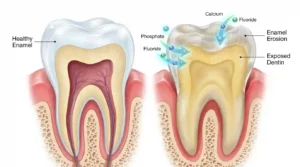
Peroxide produces reactive oxygen molecules. These molecules interact with colored compounds in the enamel and dentin. This process makes the compounds appear lighter. It does not work by sanding or scraping away a layer of tooth. That is why gentle brushing after treatment does not remove the whitening result.
Surface Stains vs. Deeper Tooth Discoloration
Surface stains often develop from coffee, tea, red wine, tobacco, and highly coloured foods. Brushing, professional cleaning, or whitening toothpaste may reduce some of these stains.
Deeper discoloration lies within the tooth. Peroxide based treatments can lighten some deeper stains, although results depend on the cause and natural tooth colour. Strips may not work well on discoloration caused by an injury, certain medications, or changes inside one tooth. A dentist should examine unusual or isolated discoloration.
How Long Should You Wait to Eat After Whitening Strips?
You can usually eat after removing whitening strips and rinsing away any gel left on your teeth. However, waiting about 30 minutes may be more comfortable, especially if your teeth feel sensitive.
The exact waiting time can differ between products. Always check the instructions included with your whitening strips before eating or drinking.
During the first few hours after treatment, consider limiting foods and drinks that may cause staining or sensitivity.
What to Avoid After Using Whitening Strips
Your teeth may feel more sensitive during a whitening course. Avoid anything that increases discomfort or adds new stains.
Acidic Foods and Drinks
Acidic items may feel uncomfortable after whitening, especially when sensitivity is already present.
Common examples include: Citrus fruit and juice, Soda, Energy drinks, Vinegar based foods and Sour candy.
You do not need to avoid every acidic food for several days. Limit it when your teeth feel sensitive, and rinse with water afterward.
Dark Colored Foods and Beverages
Coffee, tea, red wine, cola, dark berries, and tobacco can contribute to surface staining. No need to live on white food during the entire treatment. However, reducing frequent exposure to strong pigments may help you maintain your results.
Drink water after coffee or tea. Do not brush immediately after an acidic drink. Give your mouth time to recover first.
Smoking and Tobacco Products
Smoking and chewing tobacco can stain teeth. They also harm the gums and overall oral health. Whitening strips may lighten some tobacco stains, but they cannot prevent new stains while tobacco use continues.
Very Hot or Cold Foods
Cold drinks, ice cream, hot coffee, and hot soup may trigger a sharp feeling in sensitive teeth. Choose foods and drinks closer to room temperature when discomfort develops.
Additional Whitening Products
Avoid combining strips with whitening pens, strong whitening toothpaste, bleaching trays, or another whitening treatment unless a dentist recommends the combination.
Using more products than directed can increase irritation. Aggressive or repeated bleaching may also affect tooth structure and the gums. Can You Eat and Drink After Whitening Strips?
You can usually eat and drink after removing the strips and clearing away the remaining gel. Check the package first because some products may provide different aftercare instructions.
Common Side Effects of Whitening Strips
Most side effects are temporary, but they should not be ignored.
Tooth Sensitivity
Sensitivity may feel like a quick, sharp pain caused by cold air, drinks, or food. The ADA reports that sensitivity from strip or tray treatments may begin within two or three days of starting a whitening program. It often improves after the treatment ends. Whitening gel can irritate the gums when the strip overlaps the gumline or moves out of place.
Uneven Whitening
Whitening strips only lighten natural tooth material. Fillings, crowns, veneers, bridges, implants, and dentures do not change color in the same way. create a color difference between natural teeth and dental work.
Uneven placement can also produce patchy results. Make sure the strip has even contact with the visible tooth surfaces.
Use the Strips Less Frequently
Some products allow users to pause between sessions. A short break can give sensitivity time to improve. Follow the label. Do not change the schedule when the product warns against it.
Switch to a Lower Strength Product
Higher peroxide concentrations may increase sensitivity in some users. Starting with a gentler product may be more comfortable. It can help you compare options when you have a history of sensitive teeth.
Use Fluoride or Sensitivity Toothpaste
Brush with a sensitivity toothpaste before beginning a whitening course and continue during treatment. Use a soft brush and gentle pressure. Avoid harsh polishing products while your teeth feel sore.
Stop Treatment if Symptoms Become Severe
Stop using the strips when you develop significant tooth pain, gum burning, swelling, or irritation that does not improve.
Some Crest product instructions recommend stopping for two or three days when significant sensitivity develops. They advise discontinuing use if the problem continues. Whitening Strips Damage Your Teeth?
Whitening strips are generally considered safe when you select an appropriate product and follow its directions. The most common problems are temporary sensitivity and gum irritation. safe use matters.
Risks of Overusing Whitening Strips
Using the strips more often than directed may increase peroxide exposure without giving you a better result.
Overuse can lead to:
- Stronger sensitivity
- Gum irritation
- An unnatural or uneven color
- Increased risk of tooth surface changes
- Discomfort when eating or drinking
Stop when you complete the recommended treatment course.
When to Speak With a Dentist
Stop using the strips and contact a dentist when pain becomes strong, continues after treatment, or affects one specific tooth.
You should also seek advice when you notice:
- Swollen, bleeding, or burned gums
- A cracked tooth
- A loose filling or crown
- Darkening in only one tooth
- White or brown spots that remain visible
- Pain when biting
- Sensitivity that does not improve
- A cavity or exposed root
If you want to take a professional consultation from a verified dentist you can book an appointment with Valencia Dental Care in Mesa AZ.
Conclusion
You can brush your teeth after using whitening strips, but use light pressure and a soft toothbrush. If your teeth feel sensitive, rinse away the remaining gel and wait until your mouth feels more comfortable before brushing.
Avoid brushing immediately before applying whitening strips because this may make your gums more likely to become irritated. Brush earlier in the day or leave some time between brushing and your whitening treatment.
Always follow the directions included with your whitening strips, since wear times and aftercare instructions can vary. Stop using the product and speak with a dentist if you experience strong tooth pain, ongoing sensitivity, or serious gum irritation.
Frequently Asked Questions
Can I Brush My Teeth Immediately After Using Whitening Strips?
Yes, many whitening strip products allow gentle brushing after use. Crest specifically states that users can brush gently after removing Whitestrips. Rinse and wait when your teeth or gums feel uncomfortable.
Did I Brush My Teeth Before Applying Whitening Strips?
Do not brush immediately before applying the strips. Brushing may make the gumline more sensitive and increase irritation from the whitening gel. Brush earlier, then wait at least 30 minutes or follow the product instructions.
Should I Rinse After Removing Whitening Strips?
Yes. Rinsing with water helps remove whitening gel left on the teeth and gums. You may also brush gently when the instructions permit it.
How Long Should I Wait to Eat After Whitening Strips?
Many products allow you to eat after removing the strips and rinsing away the gel. Wait about 30 minutes when your teeth feel sensitive, and check the package for product specific advice.
Can I Use Toothpaste After Whitening Strips?
Yes. Use a fluoride toothpaste and brush gently. A sensitive toothpaste may be more comfortable if cold food or drinks cause pain.
Is It Normal for Teeth to Feel Sensitive After Whitening Strips?
Mild, temporary sensitivity is common. It may begin after the first few treatments and should improve after you pause or finish the course. Stop treatment and see a dentist when the pain is strong or does not improve. Do I Use Whitening Strips Every Day?