


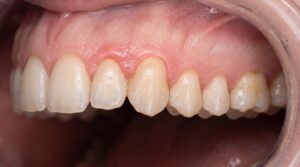
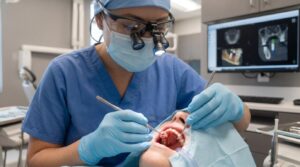



Gum graft stitches usually stay in place for one to two weeks. Dissolvable stitches break down on their own during this time, while non-dissolvable stitches are removed by your dentist at a follow-up visit. The exact timing depends on the type of graft, the type of stitches used, and how well you care for the area while it heals. Healing starts as soon as the surgery is finished and continues over the next several weeks. Mild swelling, bleeding, and redness are normal during the first couple of days.
Following the aftercare instructions, using ice packs, and keeping the head slightly raised can help reduce discomfort. If a protective dressing is placed over the graft, it may fall off on its own or be removed at the follow-up appointment. If you live near Mesa, AZ and have questions about your own recovery, Valencia Dental Care is happy to help.
This guide covers why stitches are used, how long they last, what normal healing looks like, and when to call your dentist.
What Is Gum Graft Surgery?
Gum graft surgery is a dental procedure used to treat receding gums. During the surgery, a dentist takes tissue, either from another part of your mouth or from a safe donor source, and attaches it to the area where your gums have pulled back. This new tissue covers the exposed tooth root and helps rebuild a healthy gumline.
Types of Gum Grafts
There are a few common types of gum grafts. A connective tissue graft uses tissue taken from under the surface of your palate. A free gingival graft uses a thin layer of tissue from the palate’s surface. A pedicle graft uses gum tissue from right next to the affected tooth. Your dentist chooses the type that fits your case best.
Why Gum Graft Surgery Is Needed
Gum graft surgery is often needed when gum recession has exposed the roots of the teeth. This can happen because of gum disease, brushing too hard, genetics, or years of wear. Without treatment, exposed roots are more likely to decay, feel sensitive, and lead to further gum and bone loss. A graft protects the root and helps stop the recession from getting worse.
Why Are Stitches Used After a Gum Graft?
Stitches, also called sutures, hold the new gum tissue firmly in place while it heals and connects with the surrounding gum. Without them, the graft could shift or lift away from the tooth before it attaches properly.
How Stitches Support Healing
Stitches keep the graft tissue stable and in close contact with the tooth root and nearby gum. This close contact allows blood vessels to grow into the new tissue, which is how the graft survives and becomes a permanent part of your gums. Movement during this early stage can slow healing or cause the graft to fail.
Types of Gum Graft Stitches
Dentists may use dissolvable stitches, which break down naturally as the gum heals, or non-dissolvable stitches, which stay in place until removed at a follow-up appointment. Some dentists use a mix of both, depending on where the graft is placed and how much support it needs.
What Happens If a Stitch Comes Loose or Falls Out Early?
If a stitch comes loose or falls out before your dentist expects it to, do not panic. It does not always mean something has gone wrong. Sometimes a single stitch loosens while the rest of the graft is healing normally.
Still, it is important to call your dentist’s office to let them know. They may want to check the area to confirm the graft is stable and attached properly. In some cases, they may simply keep an eye on it at your next visit, and in others, they may recommend placing a new stitch to protect the area while it continues to heal.
When Do Gum Graft Stitches Dissolve?
Most gum graft stitches are designed to be gone within one to two weeks, whether they dissolve on their own or are removed by your dentist.
Dissolvable Stitches
Dissolvable stitches are made from material that naturally breaks down in the mouth. They usually begin dissolving within one to two weeks, though small pieces may take a bit longer to fully disappear. You do not need to do anything special to help them dissolve, and your dentist will let you know if this is the type used in your case.
Non-Dissolvable Stitches
Non-dissolvable stitches stay in place until your dentist removes them, usually at a follow-up visit about one to two weeks after surgery. Removal is quick and typically causes little to no discomfort. Leaving these stitches in longer than needed can sometimes lead to irritation, so it is important to keep your follow-up appointment.

Gum Graft Healing Timeline
Healing after gum graft surgery happens in stages, and knowing what to expect at each point can ease a lot of worry.
|
Healing Stage |
What to Expect |
|
First 24–48 Hours |
Swelling, mild bleeding, and tenderness are common. A soft diet and rest are recommended. Ice packs on the outside of the cheek help reduce swelling. |
|
Days 3–7 |
Swelling and discomfort start to improve. The graft site is still fragile, so gentle care remains important. Some bruising on the cheek or gum may appear and is normal. |
|
Week 2 |
Stitches often dissolve or are removed around this time. Tissue is attached more firmly but still needs protection from hard foods and rough brushing. |
|
Weeks 3–6 |
The graft continues to strengthen and blend with the surrounding gum tissue. Most people feel back to normal daily, but healing continues beneath the surface. |
|
After 6 Weeks |
The graft has typically fully attached and matured. Color and texture should closely match the rest of your gums, and lingering sensitivity usually fades. |
Factors That Affect How Long Stitches Stay In
A few different things can influence exactly how long your stitches remain in place.
Type of Graft
Some grafts, like connective tissue grafts, may need slightly longer support than others, depending on the size and location of the treated area. Larger grafts or ones covering more than one tooth often take a bit more time to stabilize, so your dentist may keep stitches a little longer to protect the area properly.
Type of Stitches
Dissolvable stitches break down on their own within one to two weeks, while non-dissolvable stitches stay in until a dentist removes them at your follow-up visit. The choice between the two often comes down to your dentist’s preference and where exactly the graft was placed in your mouth.
Oral Hygiene
Gentle, consistent oral care supports healing and helps stitches last exactly as long as they are meant to. Poor hygiene can sometimes lead to irritation or infection that affects healing time. Even small habits, like rinsing carefully instead of skipping oral care altogether, can make a real difference in how smoothly the area heals.
Smoking
Smoking restricts blood flow to the gums and slows healing significantly. It can also increase the risk of graft failure, so most dentists strongly recommend avoiding it during recovery. Even a few cigarettes during the healing window can set your recovery back further than people expect.
Overall Health
Conditions like diabetes, or medications that affect healing and blood clotting, can change how quickly your body repairs tissue and how long full recovery takes. If you have a health condition that could affect healing, it is worth mentioning it to your dentist beforehand so they can plan your aftercare accordingly.
Can Gum Graft Stitches Get Infected?
Yes, though infection after gum graft surgery is uncommon when aftercare instructions are followed closely. Knowing the warning signs helps you catch a problem early if one does occur.
Watch for increasing pain instead of gradual improvement, pus or unusual discharge near the graft site, a foul taste or smell in the mouth, fever, or swelling that continues to worsen after the first few days.
Contact your dentist right away if you notice any of these signs, or if you are simply unsure whether what you are seeing is normal. It is always better to check in than to wait and risk the graft not healing properly.
Signs Your Gum Graft Is Healing Normally
It helps to know what healthy healing looks like so you can feel confident your recovery is on track.
Healthy Gum Color As healing progresses, the graft site should shift from red or pink toward a color that matches the surrounding gum tissue.
Reduced Swelling Swelling should steadily decrease over the first week. A small amount of puffiness is normal at first, but it should not keep getting worse.
Less Pain Over Time Some soreness right after surgery is expected, but pain should gradually lessen each day rather than staying the same or increasing.
Tissue Blending With Surrounding Gums Over several weeks, the grafted tissue should start to blend smoothly with the gum around it, with no clear line or gap between the two.

Foods to Eat and Foods to Avoid After Gum Graft Surgery
What you eat plays a real role in how comfortably and quickly your gums heal. Soft foods like scrambled eggs, mashed potatoes, yogurt, smoothies, soup, and oatmeal are gentle on the surgical site while still giving your body what it needs to heal.
Avoid hard, crunchy, or chewy foods like chips, nuts, and tough meats, since these can disturb the graft. Spicy or acidic foods can irritate the tissue, and very hot foods and drinks should wait until swelling goes down.
Activities to Avoid While Gum Graft Stitches Heal
A few everyday habits can put unnecessary strain on the healing tissue if you are not careful.
Smoking slows healing and raises the risk of complications, so it is best avoided entirely during recovery. The suction created by a straw can disturb the graft site and even dislodge it, so drink straight from a cup until your dentist says otherwise.
Strenuous activity can raise blood pressure and increase bleeding or swelling. Light activity is fine, but intense workouts should wait until your dentist gives the green light. Poking or touching the area with your tongue, fingers, or a toothbrush can disturb the stitches and slow healing, even if it seems harmless.
Oral Care After Gum Graft Surgery
Careful, gentle oral hygiene is one of the most important parts of a smooth recovery. Avoid brushing directly over the surgical site until your dentist gives you the go-ahead. You can usually continue brushing other areas gently.
Skip flossing near the graft site until it has healed enough, confirmed at a follow-up visit. Flossing elsewhere can usually continue as normal. Your dentist may recommend a gentle antimicrobial rinse to keep the area clean without disturbing the stitches. Avoid vigorous swishing or spitting, since the force can loosen the graft.
Common Mistakes That Slow Healing
A few avoidable habits are responsible for most healing setbacks after gum graft surgery.
Skipping Aftercare Instructions
Skipping steps your dentist gave you can slow healing or increase the risk of complications. Every recovery plan is tailored to your specific graft, so even small shortcuts, like brushing too soon or missing a rinse, can undo progress that took days to build.
Eating Hard Foods
Returning to crunchy or tough foods too soon is one of the most common reasons a graft becomes irritated or dislodged. Chips, nuts, and tough meats put direct pressure on the healing tissue, and it often does not take much force to cause a setback while everything is still fragile.
Poor Oral Hygiene
Not keeping the mouth reasonably clean, even gently, allows bacteria to build up and raises the risk of infection. This does not mean scrubbing the area, but skipping oral care altogether out of fear of hurting the graft usually does more harm than good.
Missing Follow-Up Visits
Follow-up appointments let your dentist confirm healing is on track and remove stitches at the right time. Skipping these visits means small issues, like a stitch that came loose or tissue that is not attaching well, can go unnoticed until they become bigger problems.
Possible Complications If Stitches Stay Too Long
Stitches are meant to do their job and then go away, whether by dissolving or being removed. When they stay in longer than needed, they can start rubbing against the cheek or tongue, causing ongoing irritation. This extra exposure also gives bacteria more time and opportunity to collect around the stitch material, which raises the chances of infection at the surgical site.
Beyond irritation and infection, stitches that overstay their purpose can sometimes get in the way of the tissue fully closing and maturing. Instead of helping the graft settle into place, they can end up slowing down the very healing they were meant to support, which is why keeping your follow-up appointments matters so much.
When Should You Contact Your Dentist?
Certain symptoms mean it is time to reach out rather than wait and see.
Severe Pain
Pain that is intense, sudden, or getting worse instead of better is worth a call. Pain that responds well to over-the-counter medication is usually normal, but pain that keeps building despite medication is not.
Heavy Bleeding
Some light bleeding right after surgery is normal, but heavy or continuous bleeding is not and needs attention. If bleeding soaks through gauze repeatedly or does not slow down after applying gentle pressure, call your dentist right away.
Swelling That Gets Worse
Swelling should peak early and then improve. Swelling that keeps increasing after the first couple of days is a sign to check in. Swelling that spreads toward your eye or neck should be treated as urgent.
Signs of Infection
Pus, a bad taste or smell, fever, or worsening redness around the site are all reasons to contact your dentist promptly. Catching an infection early usually means a much simpler fix than waiting until it spreads further.
Loose or Missing Stitches
If you notice a stitch has come out earlier than expected, let your dentist know so they can confirm everything is healing as it should. This is especially important if it happens in the first week, while the graft is still settling into place.

Have Questions About Gum Graft Healing in Mesa, AZ?
Every recovery looks a little different, and it is completely normal to have questions along the way, whether it is about pain, swelling, food, or how your stitches are supposed to look at each stage. Some people heal a little faster than others, and small worries are common even when everything is going exactly as it should. Having a dental team you trust nearby can make all the difference during those first few weeks.
If you are near Mesa, AZ and are currently recovering from gum graft surgery, or think you may need this type of treatment in the future, Valencia Dental Care is here to guide you through every step, from your very first consultation to full healing. Our team takes the time to explain what to expect, checks that your recovery is on track, and answers any questions you have along the way. Contact us today to schedule a consultation and get personalized, caring support for your gum health.
Conclusion
Healing from gum graft surgery is a gradual process that unfolds over several weeks, not something that wraps up the moment your stitches are gone. Most grafts fully settle in and blend with the surrounding gum tissue around six to eight weeks after surgery, even though daily life usually feels back to normal much sooner. Paying attention to your dentist’s aftercare instructions, eating soft foods, and avoiding smoking, straws, and hard chewing all give your graft the best chance to heal without setbacks.
If you notice a loose stitch, unusual pain, or any signs of infection along the way, it is always better to reach out to your dentist than to wait it out and hope it resolves on its own. Knowing what to expect at each stage of recovery can make the whole process feel far less stressful, and a small check-in call is always worth it if something does not feel right.
Frequently Asked Questions
Can gum graft stitches dissolve on their own?
Yes, dissolvable stitches break down naturally, usually within one to two weeks after surgery. You do not need to do anything special to speed this up, and it is normal to notice small pieces of stitch material shedding away during this time.
How can I speed up healing after gum graft surgery?
Follow post-operative care instructions closely: maintain good oral hygiene, eat soft foods, avoid smoking, attend follow-up appointments, and avoid touching or irritating the graft site.
Is it normal for stitches to come out early?
It can happen occasionally and does not always signal a problem. Sometimes a single stitch loosens while the rest of the graft continues healing just fine underneath. Still, it is worth calling your dentist so they can take a quick look and confirm the graft is stable.
Can I brush my teeth with gum graft stitches?
You can usually brush other areas of your mouth gently and normally, but you should avoid brushing directly over the surgical site until your dentist gives you the go-ahead. Being extra gentle around the area helps protect the graft while it is still fragile.
When can I eat normally after gum graft surgery?
Most people return to a normal diet within two to four weeks, though hard, crunchy, or sticky foods should wait until your dentist gives the okay. Starting with soft foods and slowly working back to your usual diet gives the graft time to strengthen without unnecessary strain.
How long does complete gum graft healing take?
Full healing, where the graft has matured and blended with the surrounding gum, usually takes about six to eight weeks. Many people feel mostly back to normal well before that point, but the tissue underneath is still quietly strengthening during this time.