





A tooth abscess is a pocket of pus caused by a bacterial infection. Home remedies may help ease pain or swelling for a short time, but they cannot get rid of the infection. A dentist can safely drain the abscess and treat the infected tooth. You cannot safely drain a tooth abscess at home. Trying to do so can spread the infection, cause serious damage, and even become life-threatening.
However, there are safe steps you can take to ease the pain and reduce discomfort while you wait to see a dentist. If you are in Mesa, AZ or the surrounding area, our team is here to help you get the right treatment fast. This article covers what a tooth abscess is, what you can do safely at home, what to avoid, and when you need emergency care right away.
 Can You Drain a Tooth Abscess at Home?
The short answer is no. Draining a tooth abscess at home is not safe, and most dentists strongly advise against it. An abscess is a pocket of infection deep inside your gum or tooth root. It is not like a surface pimple that can be squeezed out. The infection goes much deeper than it looks.
Why Dentists Do Not Recommend It
Dentists do not recommend draining an abscess at home because the mouth is full of bacteria. When you try to open an abscess yourself, you risk pushing bacteria deeper into the tissue. This can spread the infection to your jaw, neck, or even your bloodstream, which is a condition called sepsis. Sepsis is a medical emergency that can be fatal if not treated quickly.
Risks of Draining an Abscess Yourself
Trying to drain a tooth abscess at home can lead to several serious problems. The infection can spread to nearby teeth, your jaw bone, or the soft tissue in your neck and throat. You can damage healthy gum tissue around the abscess. You may introduce new bacteria into an already infected area using unclean tools. In rare but serious cases, the infection can travel to the brain or chest.
When Professional Treatment Is Needed
Professional dental treatment is always needed for a tooth abscess. No home remedy will cure the infection. Home care can only reduce pain or discomfort for a short time. The only way to fully treat an abscess is to have a dentist drain it properly, treat the source of the infection, and in some cases prescribe antibiotics.
What Is a Tooth Abscess?
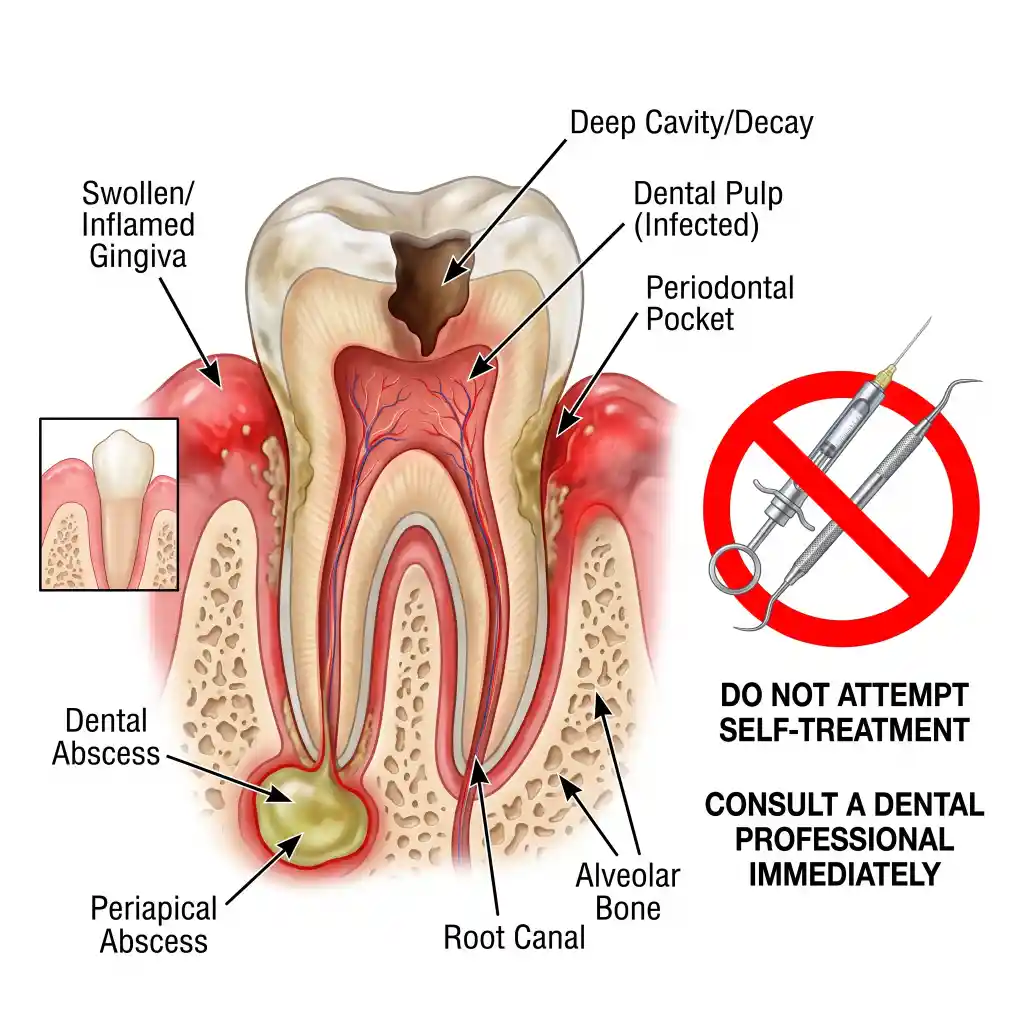
A tooth abscess is a collection of pus caused by a bacterial infection. The pus builds up inside the tooth, in the gum, or in the bone that holds the tooth in place. It usually develops when bacteria get inside a tooth through a cavity, a crack, or damaged gum tissue.
The infection grows over time and creates pressure as pus builds up. This is what causes the intense, throbbing pain that most people associate with an abscess. The body tries to fight the infection, but it cannot clear it on its own once an abscess has formed.
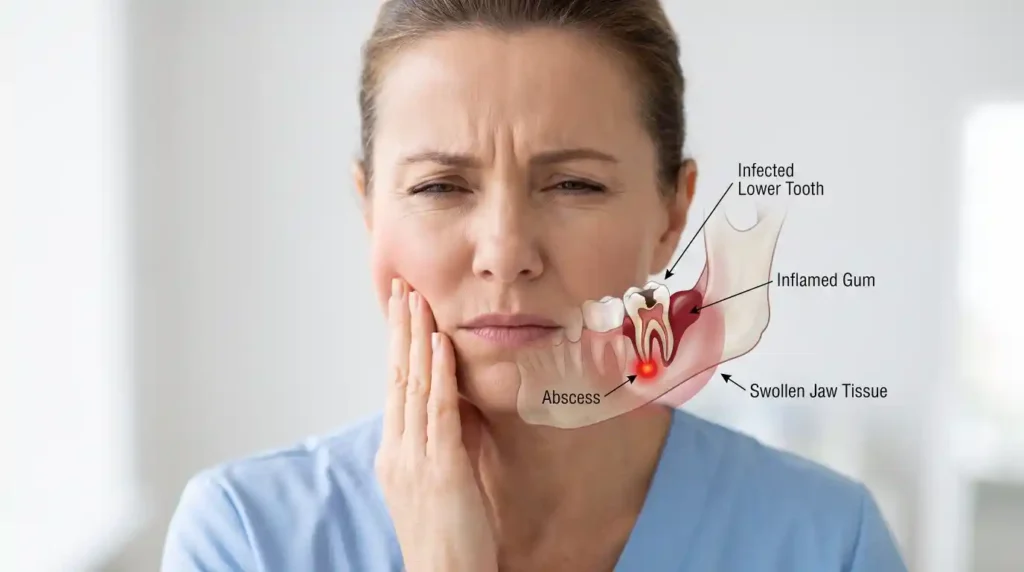
Signs and Symptoms of a Tooth Abscess
Knowing the signs of a tooth abscess helps you act quickly before the infection spreads.
- Severe throbbing or pulsing toothache that does not go away and can spread to the jaw, ear, or neck
- Swollen gums or face around the infected tooth that may feel puffy, tender, or extend to the cheek
- A small pimple-like bump on the gum filled with pus that may ooze and leave a bad taste in your mouth
- Persistent bad taste or bad breath that does not go away even after brushing
- Sharp pain when chewing or biting down, even with very light pressure on the tooth
- Fever alongside tooth pain, which is a warning sign that the infection may be spreading
- Swollen or tender lymph nodes under the jaw or in the neck as the body fights the infection
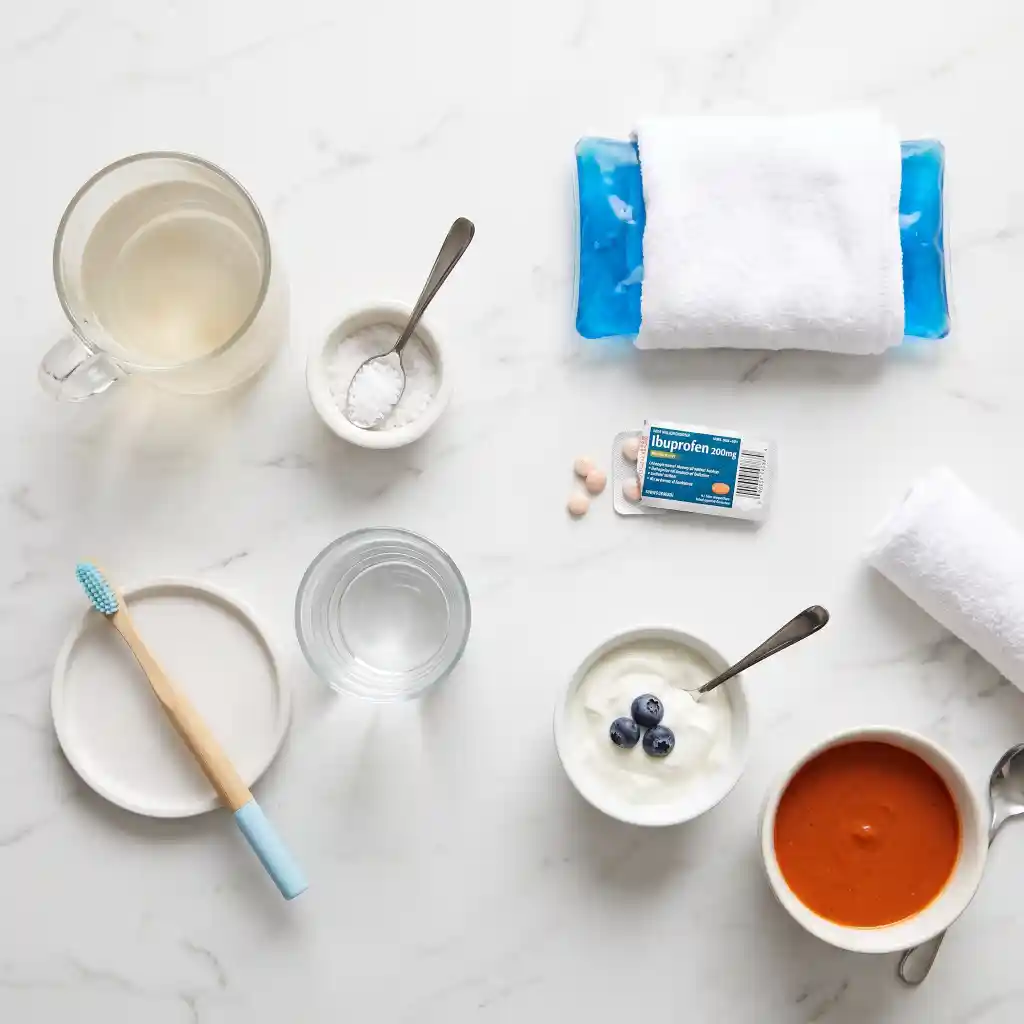
Safe Ways to Relieve a Tooth Abscess at Home
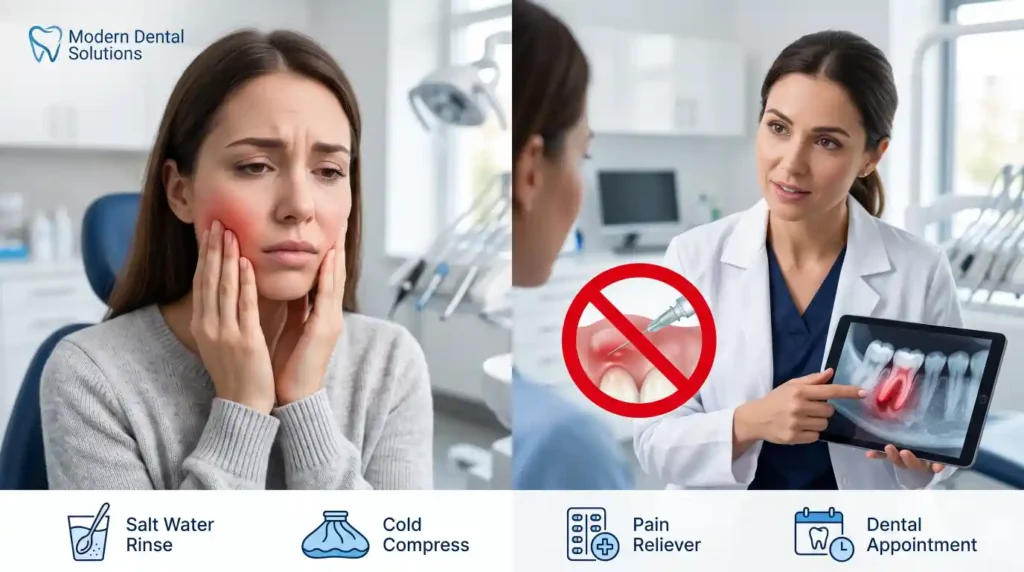
These steps will not cure the abscess. They are only meant to help manage pain and discomfort until you can get to a dentist. Do not use these as a reason to delay dental care.
Rinse With Warm Salt Water
Mix half a teaspoon of salt into a glass of warm water and rinse your mouth gently for 30 seconds. Spit it out and repeat two to three times a day. Salt water helps reduce bacteria in the mouth and can soothe irritated gum tissue. It will not remove the infection, but it may ease some of the soreness.
Apply a Cold Compress
Wrap a few ice cubes in a cloth or use a cold pack and hold it against the outside of your cheek near the swollen area. Do this for 15 to 20 minutes at a time. Cold helps reduce swelling and numbs the area slightly, which can bring some relief from pain.
Take Over-the-Counter Pain Relievers
Ibuprofen is often the most helpful over-the-counter option for tooth abscess pain because it reduces both pain and inflammation. Acetaminophen can also help with pain. Always follow the dosage instructions on the package and do not exceed the recommended amount. These medications do not treat the infection.
Keep the Area Clean
Brush gently around the affected tooth using a soft-bristled toothbrush. Try not to irritate the swollen area, but do keep the mouth as clean as possible. Bacteria in the mouth can make the infection worse if oral hygiene is neglected.
Eat Soft Foods
Avoid hard, crunchy, or chewy foods that require a lot of biting force. Stick to soft foods like yogurt, mashed potatoes, soup, or scrambled eggs. Try to chew on the opposite side of the mouth from the abscess.
Stay Hydrated
Drink plenty of water. Staying hydrated helps your body function and supports your immune system as it tries to fight the infection. Avoid very hot or very cold drinks, as extreme temperatures can make tooth pain worse.
Home Remedies That May Help Ease Symptoms
Some people find that certain home remedies offer a little extra relief from abscess discomfort. It is important to understand that none of these will remove the infection or replace dental treatment. They may ease symptoms slightly, but the abscess will not go away without professional care.
Baking Soda Rinse
Mix half a teaspoon of baking soda with half a cup of water and a small pinch of salt. Rinse your mouth with this mixture for a few minutes and spit it out. Baking soda has mild antibacterial properties and can help reduce plaque and bacteria in the mouth. It will not cure the abscess but may offer some comfort.
Clove Oil
Clove oil contains a natural compound called eugenol, which has mild numbing and antibacterial properties. Apply a small amount to a cotton ball and hold it gently against the affected area for a few minutes. Do not swallow clove oil and do not use large amounts. It can irritate the gum tissue if used too much.
Garlic
Garlic contains allicin, a compound that has natural antibacterial properties. Some people crush a clove of fresh garlic into a paste and apply it to the affected area. While it may have some minor effect on surface bacteria, it will not reach the infection inside the tooth or gum.
Hydrogen Peroxide Rinse (Use With Caution)
Mix equal parts of 3 percent hydrogen peroxide and water. Swish gently around your mouth for about 30 seconds and spit it out completely. Do not swallow it. Hydrogen peroxide can help kill some bacteria and may reduce gum inflammation slightly. Use this with caution and do not use it more than once or twice.
Oil Pulling (Limited Evidence)
Oil pulling involves swishing a tablespoon of coconut oil or sesame oil around your mouth for 10 to 15 minutes, then spitting it out. Some people believe it helps remove bacteria. However, the scientific evidence for oil pulling treating tooth infections is very limited. It will not drain or cure an abscess.
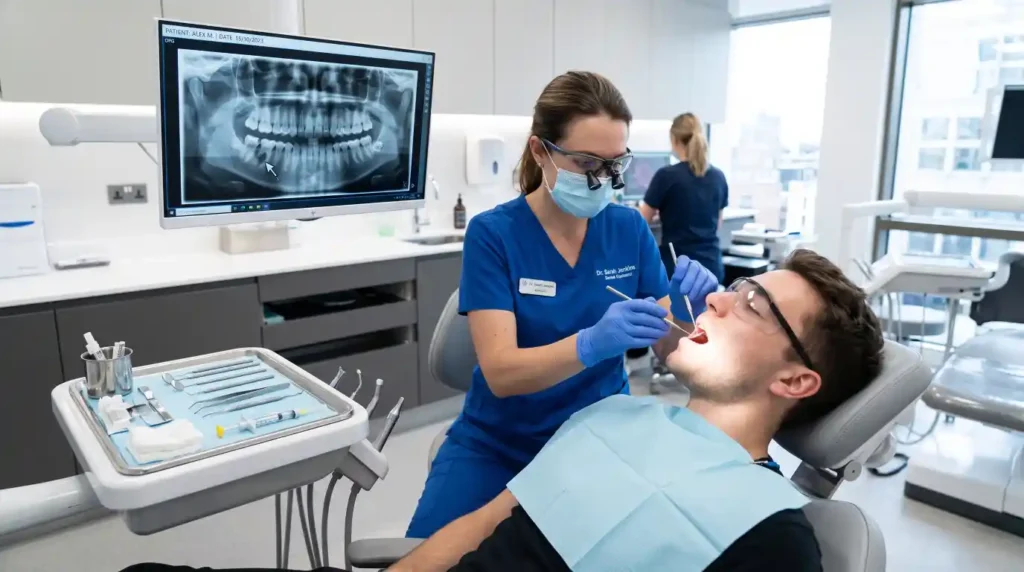
How Dentists Drain a Tooth Abscess
When you see a dentist for a tooth abscess, they start by taking an X-ray to see exactly where the infection is and how far it has spread. Then they numb the area and make a small cut in the gum to drain the pus out safely. The whole process is done carefully so the infection is fully cleared and you do not feel pain during the procedure.
After draining, the dentist treats the source of the infection. If bacteria reaches the inside of the tooth, a root canal is done to remove the infected pulp and seal the tooth. If the tooth is too damaged to save, it may need to be pulled. Antibiotics are sometimes prescribed as well, not to replace the dental work, but to stop the infection from spreading further.
What You Should Never Do at Home
Knowing what not to do is just as important as knowing what to do.
Do Not Pop or Cut the Abscess
Never try to pop, squeeze, or cut open a tooth abscess yourself. Even if you manage to release some pus, you will not clear the infection. You risk pushing bacteria deeper into the tissue, which can spread the infection rapidly and lead to serious complications.
Do Not Use Sharp Objects
Never use a needle, pin, knife, or any other sharp object near the abscess. The mouth is full of bacteria, and introducing a sharp object into an already infected area is extremely dangerous. You can cause serious injury to the gum tissue and make the infection far worse.
Do Not Ignore Severe Swelling
If the swelling in your gum, cheek, or neck is getting bigger rather than smaller, do not wait and hope it will go away. Swelling that spreads is a serious warning sign. It means the infection is moving into deeper tissue and needs immediate attention.
Do Not Place Aspirin on the Gum
Some people place an aspirin tablet directly on the gum near the painful tooth. This does not help and can actually burn the soft gum tissue, causing painful sores. Aspirin should always be swallowed with water, not placed directly in the mouth.
How to Prevent a Tooth Abscess
Most tooth abscesses can be prevented with good daily habits. Brush twice a day with fluoride toothpaste, floss every day, and visit your dentist at least twice a year. Treat cavities as soon as they are found so they do not grow deep enough to infect the tooth pulp.
Also watch what you eat. Sugary foods and drinks feed the bacteria that cause decay, so cutting back helps lower your risk. If you grind your teeth at night, ask your dentist about a mouthguard. Grinding creates tiny cracks in teeth that let bacteria in and can lead to an abscess over time.
When You Need Emergency Dental Care
Some symptoms mean you cannot wait for a regular dental appointment. If you have trouble breathing, difficulty swallowing, or swelling spreading to your face or neck, call emergency services or go to an emergency room right away.
A high fever above 101 degrees Fahrenheit combined with tooth pain is also a serious warning sign. If your symptoms keep getting worse instead of better, do not wait. The infection may be spreading fast and needs immediate medical attention.
Dealing With a Tooth Abscess in Mesa, AZ? Valencia Dental Care Can Help
A tooth abscess will not go away on its own, and the longer you wait, the worse it gets. At Valencia Dental Care in Mesa, AZ, our team treats tooth infections quickly and safely so you can get out of pain and protect your health. We serve patients across Mesa, Gilbert, San Tan Valley, and the surrounding areas with same-day appointments available for urgent dental concerns.
Contact us today or book your appointment. Whether you need an abscess drained, a root canal, or just want to know what is going on with your tooth, our experienced team is ready to help you feel better fast. Do not wait until the infection spreads.
Conclusion
A tooth abscess is a serious infection that needs treatment from a dentist. Home remedies like salt water rinses, cold compresses, and pain relievers may ease discomfort, but they cannot remove the infection.
Do not try to pop or drain the abscess yourself, as this can spread the infection and cause serious problems. See a dentist as soon as possible, and get emergency medical care if you have trouble breathing, difficulty swallowing, or swelling that spreads quickly.
Frequently Asked Questions
Can a tooth abscess drain on its own?
Sometimes a tooth abscess will break open on its own and drain, which may relieve some of the pressure and pain. However, this does not mean the infection is gone. The source of the infection is still inside the tooth or gum and will continue to cause problems. You still need to see a dentist even if the abscess drains on its own.
Is it safe to pop a tooth abscess?
No. Popping a tooth abscess at home is not safe. You risk spreading the infection into deeper tissue, introducing new bacteria, and making the situation much worse. Only a dentist should drain an abscess, and only under proper conditions.
Will antibiotics cure a tooth abscess?
Antibiotics alone will not cure a tooth abscess. They can help control the spread of infection and reduce fever, but they cannot remove the pus or eliminate the source of the infection. A dental procedure is always needed to fully treat the abscess.
What draws the infection out of a tooth?
Nothing you can apply at home will draw the infection out of a tooth abscess. Warm salt water rinses and clove oil can ease discomfort but will not remove the infection. Only a dentist can properly drain and treat the abscess.
Can salt water heal a tooth abscess?
Salt water cannot heal a tooth abscess. It can reduce bacteria in the mouth and soothe irritated gum tissue, which may offer some temporary comfort. But it has no effect on the infection inside the tooth or gum. You still need dental treatment.
How long can you leave a tooth abscess untreated?
A tooth abscess should never be left untreated for long. The infection will not go away on its own and will continue to grow. Within days to weeks, it can spread to the jaw, neck, or other parts of the body. In serious cases, an untreated abscess can become life-threatening. See a dentist as soon as possible.