


No, professional teeth whitening generally doesn’t damage enamel when done correctly. Research confirms that peroxide-based whitening treatments safely penetrate the enamel to oxidize stain molecules below the surface without compromising the tooth’s protective outer layer. However, misuse of whitening products such as excessive applications or harsh DIY remedies—can lead to temporary sensitivity and potentially weaken enamel over time.
Understanding how whitening works, knowing safe versus harmful practices, and working with your dentist at Valencia Dental Care in Mesa, AZ ensures you get the best results without putting your dental health at risk. Let’s explore what science says about teeth whitening and enamel safety, and how you can brighten your smile the right way.
What Is Tooth Enamel and Why It Matters
Before diving into the effects of whitening treatments, it’s important to understand what you’re potentially putting at risk when you pursue a whiter smile. At Valencia Dental Care in Mesa, AZ, we prioritize enamel health while helping patients achieve a brighter smile.
What tooth enamel is made of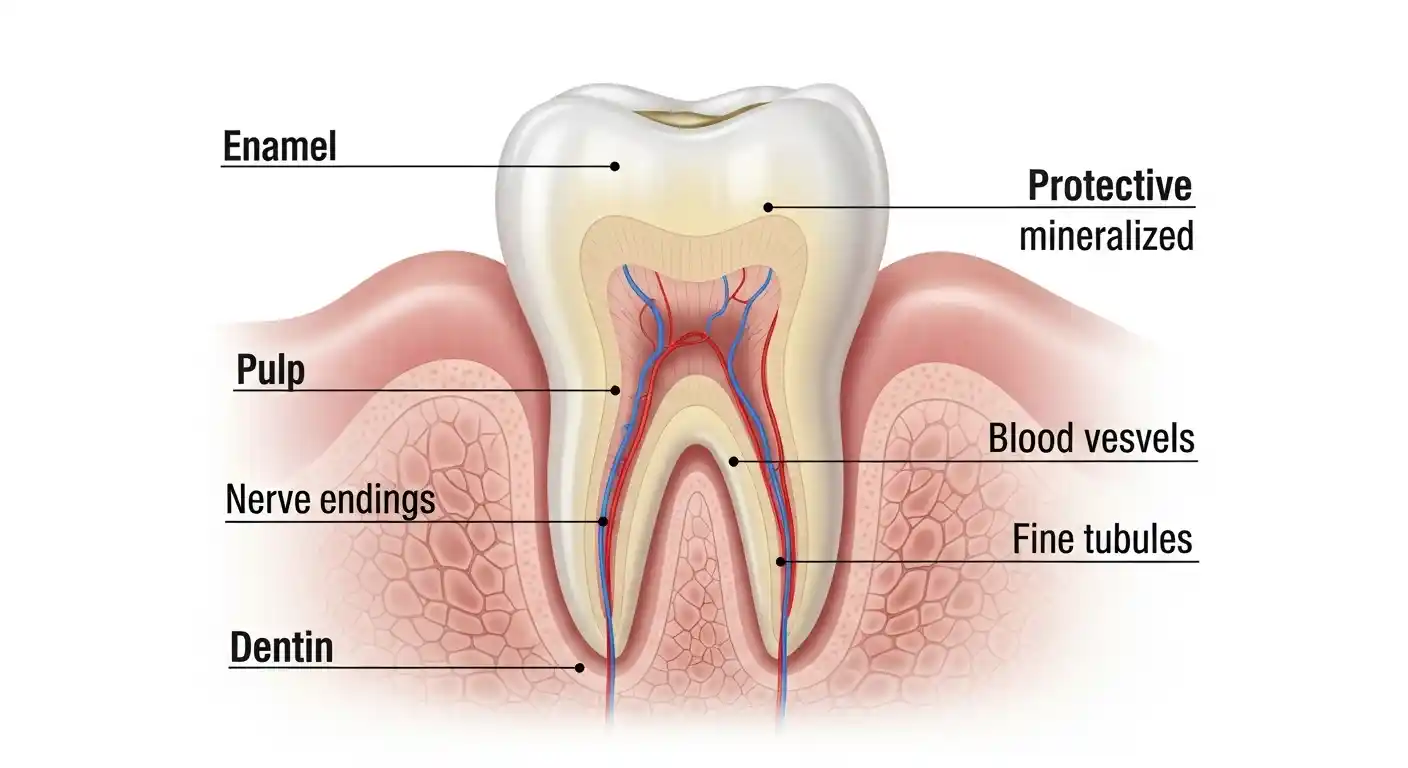
Tooth enamel represents the hardest substance in the human body, even stronger than bone. This remarkable material consists primarily of hydroxyapatite, a crystalline calcium phosphate mineral that comprises approximately 96% of enamel’s composition. The remaining 4% includes water and organic material that helps maintain enamel’s structural integrity.
Enamel is made of minerals that make it very strong and durable. Its tightly packed structure forms a hard barrier that can handle years of chewing, grinding, and contact with acidic foods and drinks.However, despite its impressive hardness, enamel has a significant vulnerability: it contains no living cells and therefore cannot regenerate or repair itself once damaged.
Why enamel protects your teeth
Your enamel has many important jobs that go beyond just making your teeth look nice. First, it acts as a protective shield for the softer dentin layer underneath. Dentin has tiny tubes that go straight to the nerve inside your tooth, which is why exposed dentin can cause sensitivity or pain.
Enamel also helps protect your teeth from bacteria. Its hard, smooth surface makes it harder for bacteria to stick and grow, which lowers your chances of getting cavities and tooth decay.
In addition, enamel is slightly see-through, which affects how your teeth look. It lets some of the dentin’s color show through, while still keeping your teeth looking white. When enamel wears down or gets damaged, your teeth can become more sensitive, more likely to get cavities, discolored, and weaker overall.
Can enamel be restored if damaged?
The truth is, once enamel is lost, your body cannot grow it back. This makes taking care of your enamel very important for long-term dental health. Unlike skin, bone, or other parts of the body that can heal, enamel damage is permanent.
However, a process called remineralization can help make weakened enamel stronger, as long as it hasn’t been completely lost. Minerals like calcium and phosphate, found in saliva, toothpaste, and some dental treatments, can help strengthen enamel.
Fluoride treatments at the dentist can also help make enamel harder and more resistant to acid attacks. The important point is this: remineralization can strengthen and repair existing enamel, but it cannot replace enamel that has completely worn away.
How Does Teeth Whitening Work?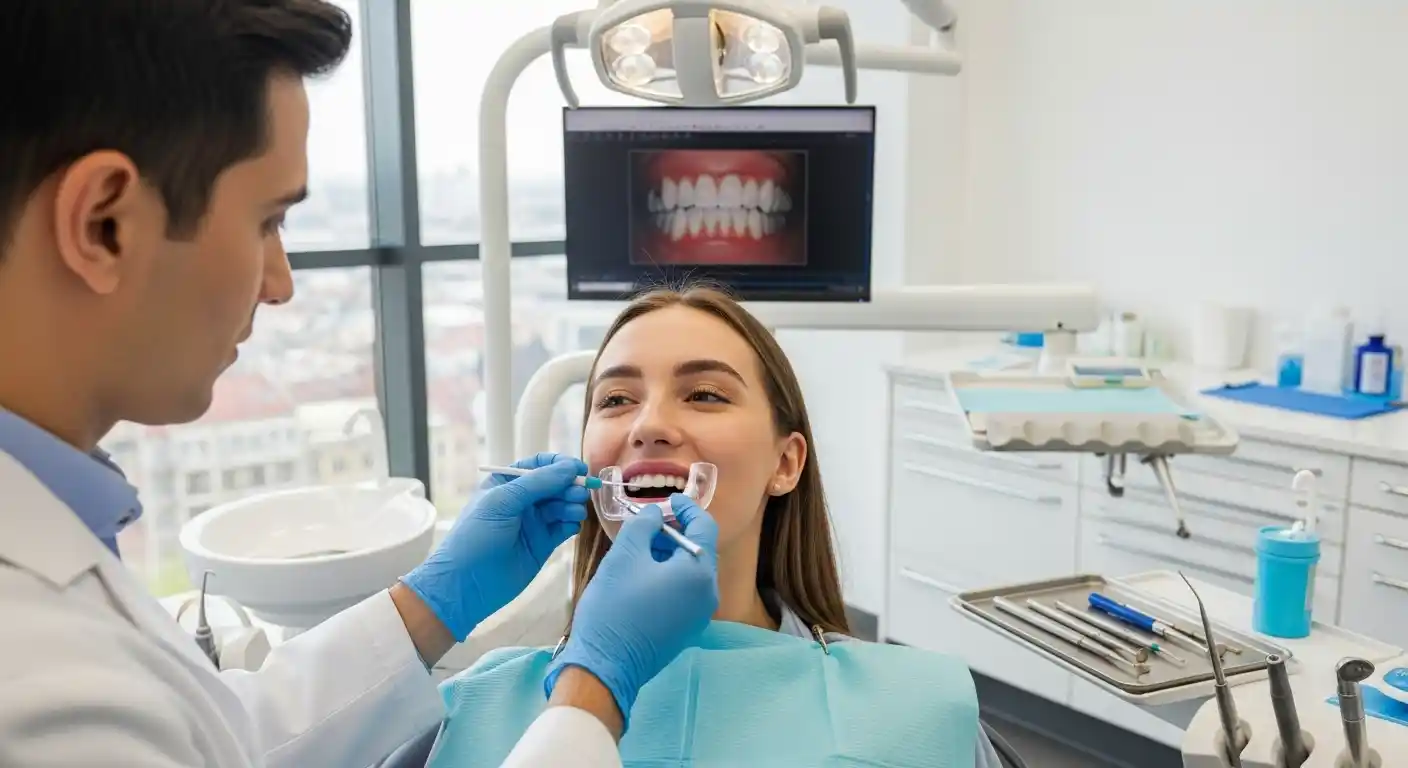
Understanding the mechanism behind teeth whitening helps explain its relationship with enamel safety.
Common whitening agents used in teeth whitening
Most teeth whitening products use peroxide-based compounds to make teeth brighter. The two main agents are hydrogen peroxide and carbamide peroxide. Hydrogen peroxide works directly to whiten teeth, while carbamide peroxide breaks down into hydrogen peroxide when it’s applied.
Professional in-office whitening treatments usually use higher concentrations of hydrogen peroxide, ranging from 25% to 40%. At-home professional kits prescribed by dentists typically contain 10% to 20% carbamide peroxide.
Over-the-counter products generally have lower concentrations, usually 3% to 10% hydrogen peroxide. The strength of the product affects both how quickly and how well it whitens your teeth.
How whitening treatments lift stains from teeth
The whitening process itself is a chemical reaction. When peroxide comes into contact with your tooth surface, it breaks down into water and oxygen molecules. These oxygen molecules penetrate the porous enamel structure and reach the discolored molecules trapped in your dentin layer below.
Once inside, the oxygen molecules interact with the discolored compounds, breaking the chemical bonds that hold their color. This process, called oxidation, essentially breaks apart the stain molecules into smaller, colorless compounds.
The result is teeth that appear whiter and brighter because the underlying stain molecules have been chemically altered to reflect light differently. This process affects only the color of organic compounds within your tooth structure, not the enamel’s composition.
Teeth whitening vs tooth bleaching: is there a difference?
In dental terminology, there’s actually a technical distinction between these terms, though they’re often used interchangeably. The FDA defines “bleaching” as any product that whitens teeth beyond their natural color, which typically requires products containing bleaching agents like peroxide.
“Whitening,” on the other hand, technically refers to restoring teeth to their natural color by removing surface stains and debris. This can be accomplished through abrasive toothpastes or professional cleaning without necessarily using chemical bleaching agents.
However, in practical usage, most people and even many dental professionals use these terms synonymously to refer to any process that makes teeth appear whiter.
Can Teeth Whitening Damage Enamel?
This is the central question that concerns anyone considering whitening treatments.
What scientific research says about enamel safety
The good news is that extensive scientific research has been conducted on this very question, and the findings are largely reassuring. Multiple peer-reviewed studies have examined the effects of peroxide-based whitening treatments on enamel structure, and the consensus among dental researchers is that when used as directed, professional teeth whitening does not damage tooth enamel.
A systematic review published in dental research journals has consistently shown that hydrogen peroxide and carbamide peroxide, when used at appropriate concentrations and application times, do not cause clinically significant enamel loss or structural damage.
Research has also shown that any minor changes to enamel surface properties that might occur during whitening are temporary and reversible. Studies using electron microscopy found no permanent alterations to the enamel structure.
Does teeth whitening weaken enamel structure?
Research shows that proper teeth whitening does not weaken enamel. The peroxide molecules used in whitening are small enough to get into the enamel without damaging the strong crystalline structure that makes enamel hard.
During whitening, there can be a temporary increase in enamel porosity. The process can slightly demineralize the enamel surface, but this usually goes back to normal within 24 to 48 hours thanks to natural remineralization from saliva.
The calcium and phosphate levels in enamel stay stable when whitening is done correctly. These minerals are what make enamel hard and protective, so keeping them intact is very important for healthy teeth.
Effects of whitening treatments on enamel microhardness
Dental researchers check enamel health using different measures, including enamel microhardness. Studies looking at microhardness before and after whitening treatments have given reassuring results.
Some studies show a small, temporary drop in enamel hardness right after whitening, but these changes are minor and usually go back to normal within a few days as the enamel remineralizes.
Long-term studies following people who have had multiple whitening treatments over several years show no lasting effect on enamel hardness or strength. This shows that whitening is safe for enamel when done correctly.
Professional teeth whitening vs at-home products (enamel impact)
The difference between professional and at-home whitening is important for enamel safety. Professional treatments done by dentists have several benefits: the right concentration of whitening gel, custom-fitted trays that protect your gums, monitoring by the dentist, and correct timing for each application.
At-home whitening kits prescribed by dentists with custom trays are also safe for enamel because they are made specifically for your mouth and come with professional guidance.
Over-the-counter products can be safe if used correctly, but they carry a slightly higher risk. Generic trays may let the gel touch sensitive gums, and people may use them too long trying to get faster results.
Facts About Teeth Whitening and Enamel
Let’s address some specific questions people commonly have about whitening and enamel safety.
Does teeth whitening remove enamel?
No, teeth whitening does not remove enamel. This is one of the most persistent myths about whitening treatments. The whitening agents work by penetrating enamel to oxidize stains in the dentin layer below—they do not strip away or dissolve the enamel itself.
What might contribute to this misconception is that abrasive whitening toothpastes can potentially wear down enamel if used excessively. However, standard peroxide-based whitening treatments do not remove enamel material.
Can whitening cause permanent enamel damage?
When whitening products are used according to instructions, they do not cause permanent enamel damage. The temporary changes that occur during the whitening process reverse naturally through saliva’s remineralizing properties.
However, misuse of whitening products can potentially lead to problems. Using whitening treatments too frequently, leaving products on teeth longer than recommended, or using excessively high concentrations without professional supervision could theoretically cause enamel erosion over time. This is why following instructions and seeking professional guidance is so important.
Are all whitening products equally safe for enamel?
Not all whitening products are created equal. Professional treatments and dentist-supervised at-home kits are formulated and tested to ensure enamel safety. These products undergo rigorous testing before receiving approval for dental use.
Over-the-counter products vary more widely in quality. Reputable brands with dental association seals are generally safe, but some products may contain unnecessarily abrasive ingredients.
DIY whitening remedies found online, such as those using lemon juice or baking soda, can be quite abrasive and potentially harmful to enamel with repeated use. The safest approach is to consult with your dentist about which whitening options are most appropriate for your specific dental health situation.
Side Effects of Teeth Whitening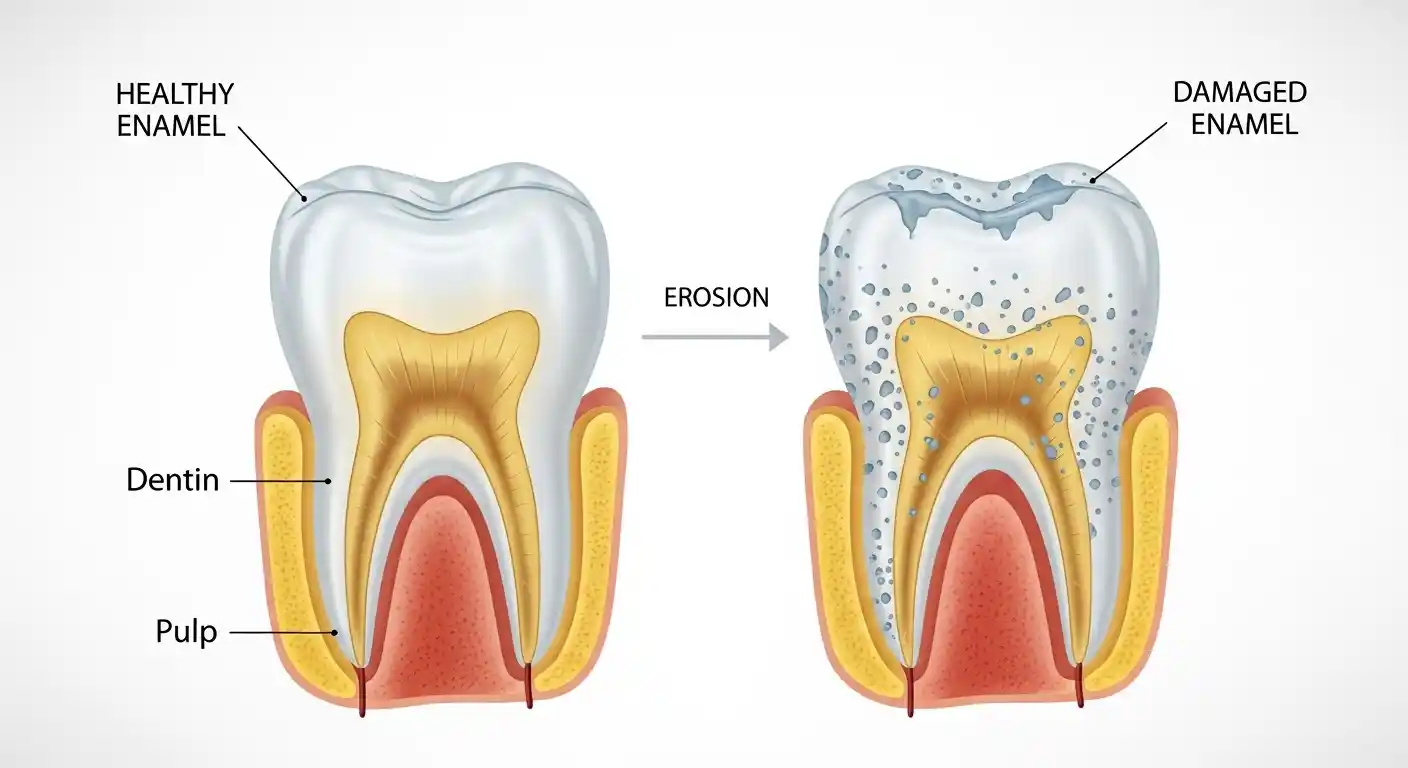
While enamel damage is not a typical concern with proper whitening, other side effects can occur.
Tooth sensitivity after whitening
Tooth sensitivity is the most common side effect of teeth whitening. It usually shows up as a sharp, temporary pain when eating or drinking hot, cold, sweet, or acidic foods and drinks.
This happens because the peroxide in whitening products temporarily makes enamel a little more porous, letting sensations reach the dentin and nerve more easily. The good news is that this effect is temporary and usually goes away within 24 to 48 hours after treatment.
Using toothpaste for sensitive teeth before and after whitening can help reduce discomfort. Some people also find that spacing out whitening treatments helps prevent sensitivity.
Can teeth whitening irritate gums?
Gum irritation can occur if whitening gel comes into contact with soft tissue. This is more common with ill-fitting whitening trays or when strips overlap onto gum tissue. The irritation typically appears as whitish or reddened gum tissue and may cause temporary discomfort.
Professional treatments minimize this risk through careful application and protective barriers. Custom-fitted trays from your dentist also significantly reduce the likelihood of gum contact.
If gum irritation occurs, it’s generally mild and resolves quickly once treatment is discontinued. Rinsing your mouth with water and temporarily stopping whitening usually alleviates the problem.
Is enamel damage possible? (rare cases explained)
While enamel damage from whitening is rare, it’s not impossible under certain circumstances. Extreme overuse of whitening products, using products with excessively high concentrations, or combining whitening with other factors that weaken enamel could potentially contribute to problems.
People with existing enamel defects, extensive dental work, or compromised enamel should be particularly cautious with whitening treatments. Professional consultation is essential to determine whether whitening is appropriate.
In the rare instances where enamel damage occurs, it’s almost always due to misuse rather than the whitening products themselves when used correctly.
How to Whiten Teeth Without Damaging Enamel
If you’re ready to pursue a whiter smile while protecting your enamel, follow these evidence-based guidelines.
Choose dentist-supervised teeth whitening
The single most important step you can take to protect your enamel during whitening is to involve your dentist in the process. A dental professional can evaluate your enamel health, identify any existing issues, recommend the most appropriate whitening method, and monitor your progress to ensure no problems develop.
Dentist-supervised whitening provides peace of mind that the products and protocols being used have been validated for safety and effectiveness. Your dentist can also address any sensitivity or other side effects that arise and adjust your treatment accordingly.
Avoid overusing whitening treatments
More is not better when it comes to teeth whitening. Overuse is one of the few ways that whitening treatments can potentially harm enamel. Follow the recommended treatment frequency and duration precisely.
Most professional whitening treatments recommend touch-ups no more than once or twice a year. If you feel you need more frequent whitening to maintain your results, discuss this with your dentist rather than self-treating more often.
Patience is key—whitening is a gradual process, and rushing it by overusing products can lead to unnecessary sensitivity and potential enamel issues.
Avoid abrasive whitening products
Not all whitening products work the same way. While peroxide-based whitening is safe for enamel, some products rely heavily on abrasive particles to scrub away surface stains. Daily use of highly abrasive products can gradually wear down enamel.
Check the Relative Dentin Abrasivity rating of whitening toothpastes when possible. Lower ratings indicate gentler products.
Avoid DIY whitening methods that use abrasive household products like baking soda or acidic substances like lemon juice, as these can damage enamel with repeated use. Stick to products that have been tested and approved for dental use.
Strengthen enamel before and after whitening
Taking steps to strengthen your enamel before beginning whitening treatments and maintaining those practices afterward helps protect against any temporary vulnerability.
Use fluoride toothpaste and consider fluoride mouth rinses, which help remineralize and strengthen enamel. Your dentist may recommend professional fluoride treatments before whitening if your enamel shows signs of weakness.
Products containing calcium phosphate compounds can also help with remineralization. After whitening treatments, give your enamel time to remineralize before consuming highly pigmented or acidic foods and beverages. Drinking water after meals and limiting acidic drinks helps maintain enamel strength.
Brighten Your Smile Safely with Valencia Dental Care
Achieve a brighter, healthier smile with Valencia Dental Care in Mesa, AZ. Our experienced team provides professional teeth whitening that is safe for your enamel and tailored to your needs. We use proven treatments and personalized care to deliver effective results without compromising your dental health. Avoid the risks of DIY kits and trust our experts to guide you through every step. Schedule your appointment today and take the first step toward a confident, radiant smile!
Conclusion
A common concern is whether teeth whitening affects the health of tooth enamel.” When performed correctly with the right products and professional guidance, teeth whitening does not damage enamel. Peroxide-based treatments work by breaking down stains without compromising the enamel’s structure. Following recommended instructions, avoiding overuse, and involving your dentist help protect enamel. While temporary sensitivity can occur, permanent enamel damage is rare and usually linked to misuse. With a careful, dentist-guided approach, you can enjoy a brighter smile while keeping your enamel healthy.
Frequently Asked Questions
Does teeth whitening permanently damage enamel?
No, teeth whitening does not permanently damage enamel when it is done correctly. Professional whitening and dentist-approved at-home products work by breaking down stains, not by removing enamel. While temporary sensitivity may occur, the enamel structure remains intact in most cases.
Is professional teeth whitening safer than home kits?
Yes, professional teeth whitening is generally safer than over-the-counter home kits. Dentists use controlled concentrations of whitening agents and protect the gums and enamel during treatment. Many home kits can cause irritation or sensitivity if misused or overused.
What should I do if my teeth feel sensitive after whitening?
If you experience sensitivity after whitening, stop whitening temporarily and use a desensitizing toothpaste. Avoid hot, cold, or acidic foods for a few days. Sensitivity usually fades within 24–72 hours. If it persists, consult your dentist for advice or treatment.
Can enamel repair itself after teeth whitening?
Enamel cannot regrow, but it can be remineralized. Saliva, fluoride toothpaste, and remineralizing treatments help strengthen enamel after whitening. Using fluoride and maintaining good oral hygiene supports enamel recovery and reduces sensitivity.
How often is it safe to whiten teeth?
Most dentists recommend professional teeth whitening no more than once or twice a year. Over-whitening can increase sensitivity and irritation. Always follow your dentist’s guidance or the product’s instructions to protect enamel health.