



Whitening strips can give you a brighter smile, but knowing when to brush your teeth makes a big difference in your results. Brushing at the wrong time can cause tooth sensitivity, gum irritation, and even reduce how well the teeth whitening works. This blog post explains exactly when to brush before and after using whitening strips, so you get the best results while keeping your teeth and gums healthy.
Understanding Teeth Whitening Strips
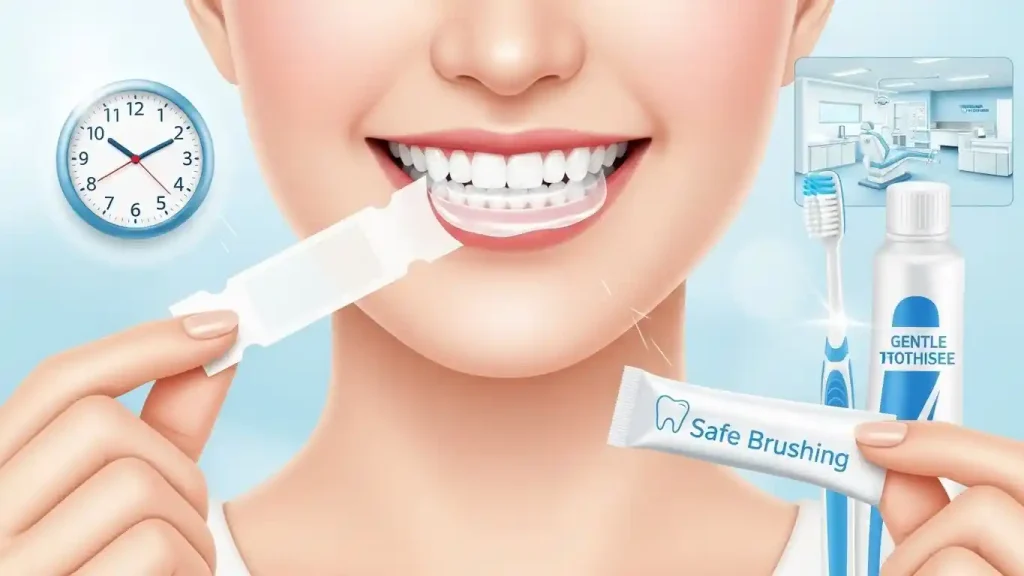
Before we discuss brushing, let’s understand what whitening strips are and how they work. Whitening strips are thin plastic strips coated with a bleaching solution that lightens stains on your teeth.
What Are Whitening Strips?
Whitening strips are thin, flexible pieces of plastic coated with whitening gel. You stick them onto your teeth for a set time, usually between 5 to 30 minutes. Most brands want you to use them once or twice daily for about two weeks.
They’re popular because they’re easy to use and more affordable, but they’re best for mild whitening and don’t replace the safer, longer-lasting results you get from professional whitening treatments.
How Whitening Strips Work on Tooth Enamel
The gel contains hydrogen peroxide or carbamide peroxide. These bleaching chemicals break down stains on your teeth. When you put on the strip, the gel gets into tiny holes in your enamel and breaks apart the stains. This makes your teeth look whiter. The process temporarily makes your enamel more porous, which is why timing matters when you brush.
Should You Brush Your Teeth Before Using Whitening Strips?
The short answer is yes, but timing is important. Brushing at the right time ensures the strips work effectively without causing sensitivity or irritation. Brushing too soon or too hard can reduce results and make your teeth uncomfortable.
Best Timing for Brushing Before Application
You should brush before using whitening strips, but not immediately before. Clean teeth help the gel work better because there’s no plaque blocking contact between the gel and enamel. However, brushing creates tiny scratches on your enamel and can irritate your gums. If you apply strips right after brushing, the peroxide can get into these scratches and cause pain.
Why Waiting After Brushing Improves Whitening Results
Brush your teeth about 30 minutes to an hour before using strips. This waiting period lets your enamel remineralize slightly and your gums settle down. Your saliva helps protect your teeth during this time. Your saliva helps protect your teeth during this time. When you apply the strips, your teeth are clean but not freshly brushed hard, meaning better results with less discomfort.
Toothpaste Ingredients to Avoid Before Whitening
Stay away from toothpastes with strong abrasives right before using strips. Ingredients like baking soda or activated charcoal can scratch your enamel. Also avoid tartar control toothpastes because they leave a film that blocks the whitening gel. A simple fluoride toothpaste works best.
Can You Brush Your Teeth After Whitening Strips?
This is another important question when it comes to brushing timing. While the short answer is yes, brushing immediately after using whitening strips isn’t always recommended.
Is It Safe to Brush Immediately After Whitening?
No, don’t brush right after removing whitening strips. Your enamel is temporarily weakened after whitening. The peroxide opens up pores in your enamel and makes it softer. Brushing during this time can scratch your enamel and cause pain.
How Long Should You Wait Before Brushing?
Wait at least 30 minutes to an hour after removing strips before brushing. Some experts say waiting longer is better, especially if your teeth feel sensitive. During this time, your saliva remineralizes your enamel and brings it back to normal hardness. If you need to clean your mouth right away, just rinse gently with water.
What Happens If You Brush Too Soon?
Brushing too quickly can cause problems. You might damage your enamel when it’s soft, making your teeth more sensitive. The brushing can also spread remaining peroxide around your mouth, causing your gums to burn. Many people who complain about severe pain from strips actually caused it by brushing too soon.
Risks of Brushing Too Soon After Whitening
Understanding the risks of brushing too soon after whitening helps explain why waiting matters. Immediately after using whitening strips, your enamel can be temporarily more porous and sensitive.
Enamel Sensitivity and Irritation
When you brush right after whitening, your toothbrush can damage your stressed enamel. This makes your teeth sensitive to hot and cold temperatures. You might feel sharp pains when drinking cold water. This sensitivity usually fades after a few days, but brushing too soon makes it worse and lasts longer.
Gum Discomfort and Soft Tissue Damage
The whitening gel also touches your gums. Your gums might already be irritated from the peroxide. Brushing pushes bristles against these tender areas, causing more pain and sometimes bleeding. Some people develop white patches on their gums from chemical burns when they brush too aggressively after whitening.
Best Practices for Brushing After Whitening Strips
Once you’ve waited the recommended amount of time, how you brush your teeth is just as important. Using gentle techniques and the right products helps protect your enamel and reduce sensitivity.
Choosing the Right Toothpaste After Whitening
After using strips, switch to toothpaste for sensitive teeth for a few days. These contain ingredients that help block pain signals and strengthen enamel. Avoid whitening toothpastes during treatment because they add extra chemicals your teeth don’t need. A gentle fluoride toothpaste works perfectly.
Gentle Brushing Techniques to Protect Enamel
Use a soft-bristled toothbrush and brush gently in small circular motions. Don’t scrub hard. Hold your toothbrush like a pencil, which helps you use less pressure. Brush for two minutes but be gentle, especially around the gum line where teeth are most sensitive.
Special Considerations for Sensitive Teeth
If your teeth are naturally sensitive, extra care is important when using whitening strips. Adjusting your routine and using gentle products can help reduce discomfort while protecting your enamel.
Tips for Reducing Sensitivity After Whitening
Try using whitening strips every other day instead of daily. This gives your enamel more recovery time. You can also use strips for less time than recommended, though results will take longer. Use a desensitizing toothpaste for two weeks before starting treatment. After removing strips, rinse with fluoride mouthwash to strengthen enamel.
When Whitening Strips May Not Be Ideal?
Strips aren’t for everyone. If you have very sensitive teeth, cavities, gum disease, or worn enamel, strips might cause too much pain. People with exposed tooth roots should avoid strips because these areas lack protective enamel. If you have crowns or fillings on front teeth, strips won’t change their color, causing uneven results.
Alternatives to Brushing Immediately After Whitening
You don’t have to rush to brush immediately after whitening. In many cases, gentle alternatives can help keep your mouth fresh while giving your enamel time to recover.
Rinsing With Water or Fluoride
The simplest option after removing strips is rinsing your mouth with lukewarm water. Swish for about 30 seconds to remove leftover gel. For extra protection, use fluoride mouthwash about 15 minutes after whitening. Just make sure the mouthwash doesn’t contain alcohol, which can irritate sensitive gums.
Using Desensitizing Products
Many companies make products to reduce whitening sensitivity. Some are gels you apply after whitening. Others are special toothpastes with high levels of ingredients that help rebuild enamel. Apply these after rinsing away the whitening gel but before brushing. They create a protective barrier and help results last longer while controlling pain.
How to Maintain White Teeth After Using Whitening Strips?
Keeping your teeth white after using whitening strips requires ongoing care and consistency. Maintaining the results depends on your daily oral hygiene habits and avoiding foods and drinks that cause staining.
Foods and Drinks to Avoid
After whitening, your teeth stain more easily for about 48 hours. Stay away from dark-colored foods and drinks like coffee, tea, red wine, berries, and tomato sauce. Also avoid acidic foods like citrus fruits, which can damage weakened enamel. If you must have coffee, drink it through a straw.
Daily Oral Care Habits That Prolong Results
Brush twice daily and floss once daily to prevent stain buildup. Use whitening toothpaste once or twice weekly to maintain results, but not every day. Drink plenty of water throughout the day to wash away staining particles. Visit your dentist every six months for professional cleanings.
When to Consult a Dentist About Teeth Whitening?
Stop using strips if you experience severe pain that doesn’t go away. White or red patches on your gums, bleeding gums, or gums pulling away from teeth are warning signs. If teeth become so sensitive you can’t eat normally, that’s too much. Any of these issues require a dentist’s attention.
Need Permanent Teeth Whitening Contact Valencia Dental Care
Whitening strips are not a permanent solution and often provide only short-term results. If you want safe and long-lasting teeth whitening, visit Valencia Dental Care, a trusted dental clinic located in Mesa, AZ. Our experienced dentists use modern whitening techniques to help you achieve better, more reliable results. To get started, schedule an appointment today and let our team take care of your smile.
Conclusion
Brushing your teeth before or after whitening strips is safe when done at the right time. Brushing too close to whitening can increase sensitivity and irritation, while waiting allows your enamel to recover and protects your results. By following proper timing, gentle brushing habits, and knowing when to seek professional whitening, you can achieve a brighter smile without harming your teeth or gums.
Frequently Asked Questions
Can I brush my teeth immediately after using whitening strips?
No. You should wait at least 30 minutes to an hour before brushing. Brushing too soon can damage softened enamel and increase tooth sensitivity.
Is it better to brush before or after whitening strips?
It’s best to brush before whitening, but not right away. Brushing 30–60 minutes before applying strips helps clean your teeth without irritating enamel or gums.
Can I eat or drink after using whitening strips?
Yes, but wait about 30 minutes and avoid dark-colored or acidic foods and drinks for at least 24–48 hours to prevent staining.
What toothpaste should I use during whitening treatments?
Use a gentle fluoride or sensitivity toothpaste. Avoid whitening, charcoal, or abrasive toothpastes while using whitening strips.
When should I choose professional teeth whitening instead of strips?
If you have sensitive teeth, uneven discoloration, or poor results from strips, professional whitening is a safer and more effective option with longer-lasting results.