
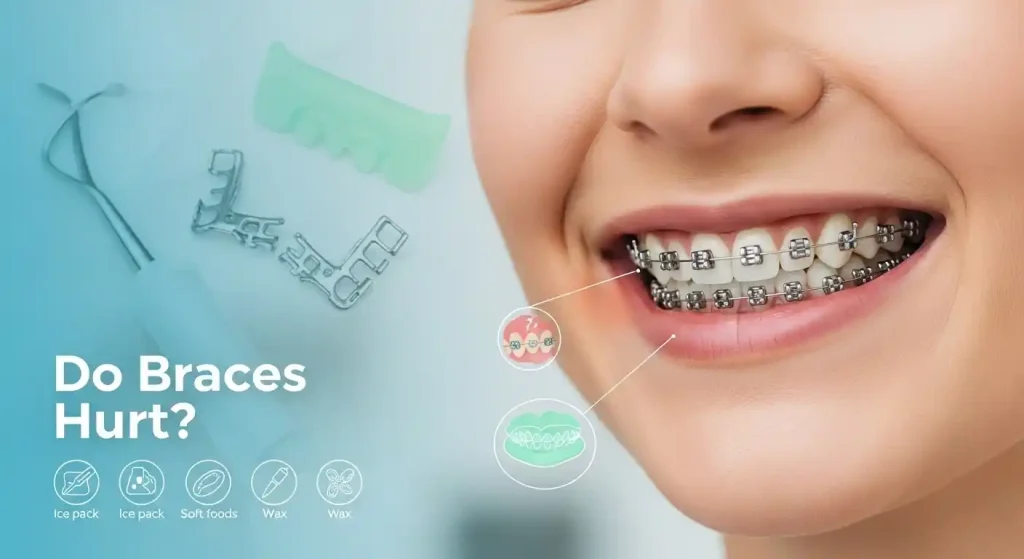




Braces can hurt, but the discomfort is usually mild, temporary, and strongest during the first 24 to 48 hours after they are fitted or adjusted. Most people describe braces pain as pressure, tenderness, or a dull ache rather than severe or sharp pain. It normally improves within a few days as the teeth and mouth adjust.
Bottom braces may sometimes hurt more than top braces because the lower teeth can be more crowded, the brackets may rub against the lips or cheeks, or greater pressure may be needed to move certain teeth. Pain relief for braces may include eating soft foods, applying a cold compress, using orthodontic wax, rinsing with warm salt water, and taking an appropriate over-the-counter pain reliever.
How Bad Do Braces Hurt?
Braces can cause mild to moderate discomfort, but they are not typically considered painful. Most patients describe the sensation as a dull ache or constant pressure as their teeth begin to shift into alignment. On a scale of 1 to 10, the initial soreness is usually rated between 3 and 5.
What catches many people off guard is the timing of the soreness rather than its intensity. As your teeth begin responding to the pressure, tenderness gradually develops and may make chewing uncomfortable by the next day. The good news is that this discomfort is temporary and usually fades within a few days.
When Do Braces Hurt?
Pain does not occur continuously throughout orthodontic treatment. Instead, braces discomfort tends to appear during specific stages as your teeth adjust to the pressure being applied.
Do Spacers Hurt Before Braces?
Before braces are fitted, some patients need spacers placed between their back teeth to create room for orthodontic bands. These small separators can cause mild pressure and soreness, often described as feeling like food is stuck between your teeth. The discomfort usually peaks during the first couple of days and then gradually improves.
When You First Get Braces
Getting braces put on is painless because no drilling or injections are involved. However, soreness typically begins a few hours after the appointment as your teeth start responding to the new pressure. During the first day or two, your teeth may feel tender, and your lips or cheeks may become irritated as they adjust to the brackets.
After Adjustments and Tightening
Throughout treatment, you will visit your orthodontist regularly for adjustments. These appointments can cause mild soreness as the wires are tightened or changed to continue moving your teeth. Most patients experience tenderness for one to three days, although it is usually less noticeable than when braces were first placed.
When Brackets or Wires Break
Broken brackets or poking wires can cause a different type of discomfort than normal braces soreness. The irritation is often sharper and more localized because the hardware is rubbing against your cheeks, lips, or gums. If this happens, use orthodontic wax for temporary relief and contact your orthodontist for repairs.
How Long Do Braces Hurt?
Understanding the typical pain timeline helps you prepare mentally and practically.
Day 1 First Few Hours
During the appointment itself, you feel nothing but mild pressure. Three to four hours after leaving the office, a dull ache begins to develop. Your teeth may feel slightly loose, which is completely normal. It means the bone remodeling process has started. Take an over-the-counter pain reliever as soon as you get home, before the soreness intensifies.
Days 2–4 Peak Soreness
This is the hardest stretch. Biting down and chewing feel uncomfortable, and your lips and cheeks may be irritated from contact with the brackets. Stick exclusively to soft foods. Continue with pain relievers and use orthodontic wax on any bracket that is rubbing. Cold water and cold foods can provide additional relief.
Days 5–7 Discomfort Fades
By day five, most patients notice a significant improvement. Chewing becomes easier, the aching is much lighter, and the inside of your cheeks begins to toughen up from repeated bracket contact. By the end of the first week, the majority of people feel close to normal.
After Each Adjustment
Post-adjustment soreness follows the same pattern but on a compressed timeline. Most patients feel tenderness for one to two days after an adjustment, then return to normal. Over time, many people report that adjustments become barely noticeable as their pain tolerance and mouth adaptation improve.
Why Do Braces Hurt?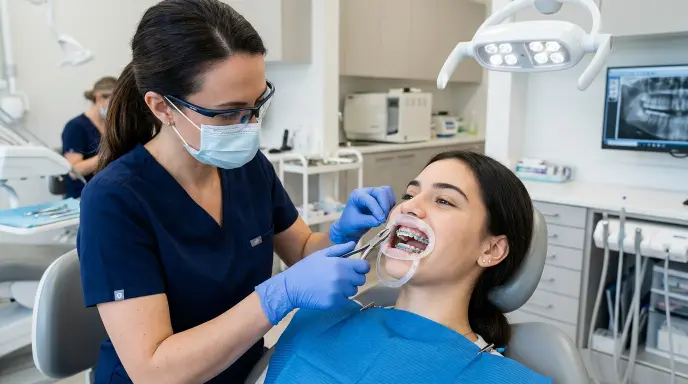
The discomfort is not random; it has a clear biological explanation rooted in how orthodontic treatment actually moves teeth.
Pressure on Teeth and Bones
Braces apply consistent, controlled pressure to your teeth through the tension in the archwire. This signals your body to remodel the alveolar bone, the bone that holds your teeth in place. On the side of the tooth being pushed toward, bone cells break down existing bone. On the opposite side, a new bone fills the gap. This cycle of breakdown and rebuilding is what allows teeth to shift and it is what creates the deep, achy sensation in the early days.
Ligament Tension
Each tooth is connected to the surrounding bone by tiny elastic fibers called the periodontal ligament. When braces exert pressure on a tooth, these ligaments are stretched and compressed. The resulting inflammation is the primary source of the dull ache you feel the same principle as delayed onset muscle soreness after exercise.
Soft Tissue Irritation
The brackets and wires rub against the soft inner lining of your lips, cheeks, and tongue surfaces that have never encountered metal before. During the first week, this causes soreness, redness, and sometimes small ulcers. Over time, the tissue toughens up, which is why months two and three feel far more comfortable than month one.
How to Prevent Braces Pain
You cannot eliminate braces discomfort entirely, but you can reduce its intensity. Take an over-the-counter pain reliever about an hour before your adjustment appointment this blunts the soreness before it starts. Keep your teeth and braces impeccably clean, as inflamed gums amplify pain. Avoid hard, crunchy, or chewy foods at all times, not just when sore broken brackets extend treatment time and create additional discomfort. Ask your orthodontist about low-friction brackets or heat-activated wires, which apply gentler, more consistent pressure than traditional options.
At Home Remedies for Braces Pain
Most braces discomfort can be handled effectively at home with a combination of the following approaches.
Over-the-Counter Pain Relievers
Ibuprofen (Advil, Motrin) is particularly effective for braces pain because it reduces both pain and inflammation addressing the root cause of the soreness rather than just masking it. Acetaminophen (Tylenol) is a good alternative if you cannot take ibuprofen. Follow the dosage instructions on the packaging and take the medication before soreness peaks rather than waiting until you are already in discomfort.
Orthodontic Wax
Orthodontic wax is one of the most useful tools in your braces care kit. Pinch off a small piece, roll it between your fingers to soften it, and press it firmly over any bracket or wire that is irritating your cheek or lip. It creates a smooth barrier that stops friction immediately. Keep a pack in your bag, at your desk, and on your nightstand you will reach for it more than you expect.
Salt Water Rinses
A warm saltwater rinse is a time-tested remedy that genuinely works. Dissolve one teaspoon of salt in eight ounces of warm water and swish gently for 30 seconds before spitting. The salt reduces inflammation, promotes healing of small sores, and keeps your mouth clean around the brackets. Rinse two to three times a day, particularly after meals.
Cold Compress and Ice Packs
Applying a cold compress to the outside of your jaw for 10 to 15 minutes reduces swelling and temporarily numbs the area, providing meaningful short-term relief. Wrap an ice pack in a thin cloth before applying and never place ice directly on skin. Cold water and cold (not frozen) foods like yogurt or applesauce can provide similar relief from inside the mouth.
Gum Massage
Gently rubbing your gums with a clean fingertip in small circular motions can help relieve the pressure buildup that causes braces soreness. This increases blood flow to the area and provides a mild counter-pressure that many patients find soothing. It is particularly helpful in the first two days after getting braces or after an adjustment.
Soft Foods Diet
During the first week and after every adjustment, shift to a soft foods diet to give your teeth a break from the pressure of chewing. Good options include mashed potatoes, yogurt, scrambled eggs, smoothies, oatmeal, soup, soft pasta, and ripe bananas. Avoid anything that requires biting force or is hard, sticky, or chewy.
Oral Anesthetics
Topical numbing gels such as Orajel or Anbesol can be applied directly to sore spots inside your mouth for fast, localized relief. Use a cotton swab to dab a small amount onto the irritated area. The numbing effect kicks in within minutes and lasts for a short period. Use these sparingly and as directed they are best for targeted relief, not whole-mouth discomfort.
Do Braces Hurt More Than Invisalign?
This is one of the most common questions patients ask when choosing between orthodontic treatments. In general, both braces and Invisalign cause similar levels of discomfort, but the type of pain is different. Braces often cause more soft tissue irritation because brackets and wires can rub against the cheeks and lips, while Invisalign aligners are smooth plastic and usually avoid this type of friction.
Invisalign can still cause pressure-based soreness when switching to a new set of trays every one to two weeks, especially during the first few days. For most patients, neither option is significantly more painful overall. The better choice depends on your dental needs, lifestyle, and treatment goals, which your orthodontist can help determine during a consultation.
Foods to Eat and Avoid with Braces
What you eat directly affects both your comfort and the safety of your braces hardware.
Safe foods: Soft bread, pasta, rice, cooked vegetables, eggs, yogurt, cheese, fish, soup, smoothies, and ripe fruit.
Always avoid: Hard candy, caramel, taffy, popcorn, nuts, bagels, hard pizza crust, raw carrots, whole apples, corn on the cob, and ice. These foods require excessive biting force or are sticky enough to pull brackets loose both lead to an emergency appointment and a longer treatment timeline.
When to Contact Your Orthodontist
Most braces pain resolves on its own within a week of placement and within a few days after adjustments. However, contact your orthodontist promptly if you experience any of the following:
- Pain that does not improve after seven days
- A wire that is poking your cheek and cannot be covered with wax
- A bracket that has completely detached from your tooth
- Significant swelling in your gums or jaw
- Signs of infection such as pus, persistent fever, or a bad taste in your mouth
- Any symptoms suggesting an allergic reaction to the metal or elastic components
Do not attempt to cut or bend a broken wire yourself. Call the office, describe what is happening, and follow their instructions until your repair appointment.
Braces Pain Relief at Valencia Dental Care in Mesa, AZ
At Valencia Dental Care, we believe that discomfort should never be a barrier to getting the smile you deserve. Our experienced team takes the time to explain exactly what to expect at every stage of your treatment, from your first fitting to your final adjustment. We use modern orthodontic techniques and materials that minimize unnecessary pressure on your teeth, making the process as smooth and comfortable as possible.
Whether you are considering traditional braces, Invisalign, or are already mid-treatment and struggling with soreness, we are here to help. Schedule your consultation today at our convenient Mesa, AZ location and take the first step toward a straighter, healthier smile.
Conclusion
Braces do cause discomfort but it is temporary, predictable, and manageable. The worst of it happens in the first few days and fades within a week. After that, post-adjustment soreness is brief and becomes easier with each visit. Armed with pain relievers, orthodontic wax, salt water rinses, cold compresses, and a soft foods plan, you have everything you need to stay comfortable throughout your treatment. The short-term soreness is a small price to pay for a lifetime of confident, aligned teeth.
Frequently Asked Questions
Do braces hurt when they are first put on?
The placement procedure itself is completely painless. Soreness typically begins three to four hours after the appointment and peaks around days two to three.
How long does braces pain last after getting them put on?
Most patients feel significant soreness for three to five days, with discomfort largely fading by the end of the first week.
Do bottom braces hurt more than top braces?
The pain level is roughly the same. Some patients find that lower brackets irritate their tongue more in the early weeks, while upper brackets may rub more against the inside of the upper lip.
Can I take ibuprofen for braces pain?
Yes. Ibuprofen is an effective choice because it addresses both pain and inflammation. Take it as directed on the packaging. If you have any health conditions that prevent you from taking ibuprofen, acetaminophen is a good alternative.
Do braces hurt more than Invisalign?
Both cause comparable levels of discomfort, but in different ways. Braces cause more soft tissue irritation from brackets and wires. Invisalign causes pressure-based soreness each time a new tray is inserted.
Is the pain the same for adults and teenagers?
The biological process is identical. Adults may find that their teeth move slightly more slowly, which can mean soreness lasts a day or two longer after adjustments. The intensity of the pain, however, is generally similar.
What should I eat the first week after getting braces?
Stick to soft foods yogurt, mashed potatoes, scrambled eggs, smoothies, oatmeal, and soft pasta. Avoid anything hard, crunchy, chewy, or sticky until the soreness has fully resolved.