
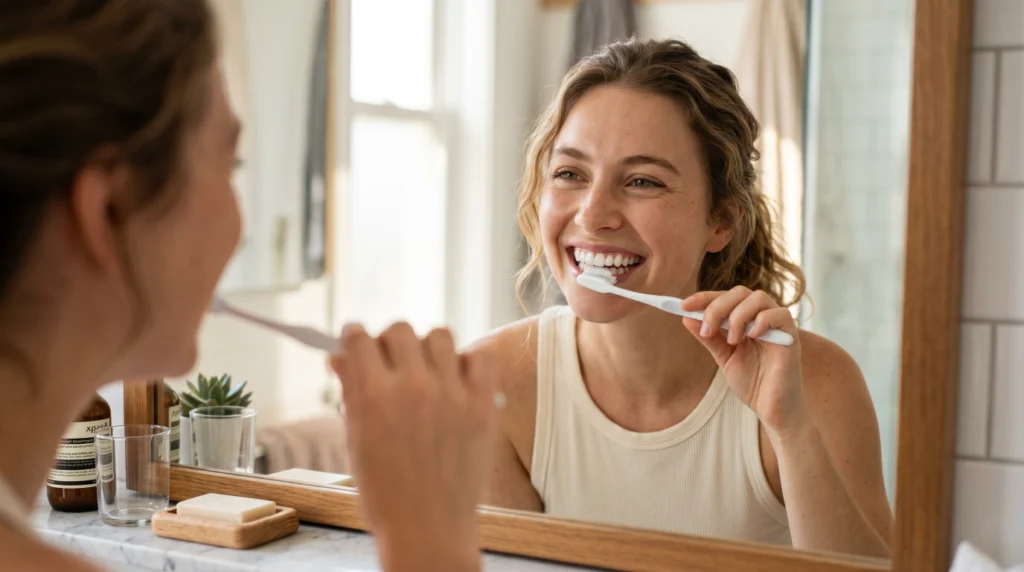





Yes, you can whiten teeth naturally, and it actually works, but only for surface stains caused by coffee, tea, food, and everyday habits. The safest methods are brushing properly with fluoride toothpaste, using baking soda once or twice a week, oil pulling with coconut oil, eating crunchy fruits and vegetables, and drinking more water throughout the day. These methods work slowly and steadily. They will not change the deep color of your teeth, but they do make a real, visible difference over time.
Not every natural method is safe, though. Lemon juice, apple cider vinegar, activated charcoal, and DIY abrasive scrubs are popular online, but they can permanently damage enamel. When enamel wears down, the yellow layer underneath shows through more, which makes teeth look worse instead of better. Knowing which methods are safe and which ones to avoid is the most important thing before you start, and if you’re in Mesa, Arizona, our team at Valencia Dental Care can help you figure out the right approach for your specific smile.
Natural teeth whitening works best when you combine a few good habits at once instead of relying on just one remedy. Baking soda lifts surface stains, oil pulling reduces bacteria and plaque, crunchy foods scrub as you eat, and water rinses away what staining drinks leave behind. None of these alone will transform your smile overnight, but done together and done consistently, they add up to noticeably whiter, healthier teeth without spending money on chemicals or treatments.
Can You Whiten Teeth Naturally?
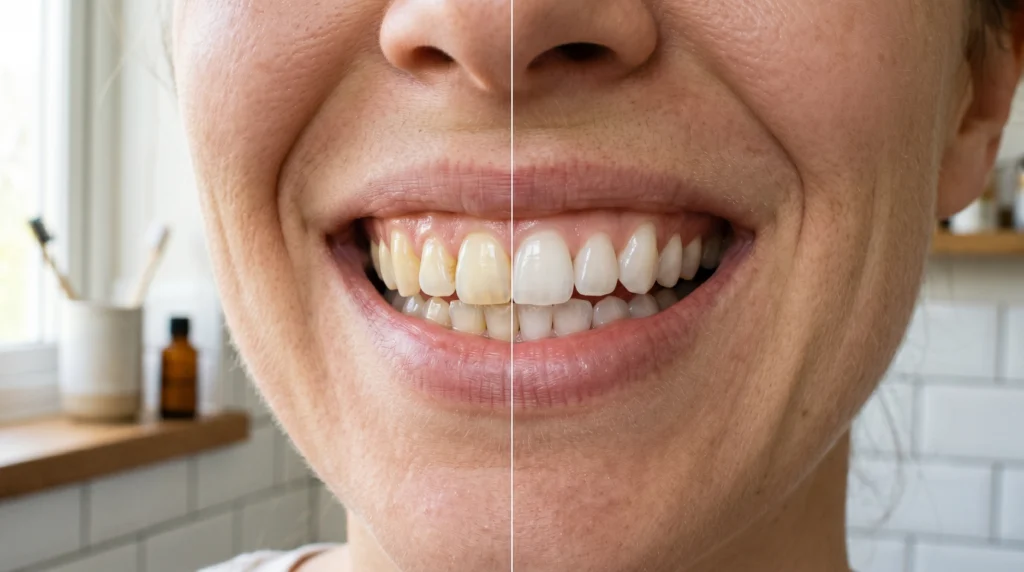
You can whiten teeth naturally, but results depend on what is causing the discoloration. Natural methods work well for surface stains that come from coffee, tea, and food. They cannot change the deeper color of your teeth or fix discoloration caused by thin enamel, aging, or medications. Think of natural whitening as a slow, steady process that removes what sits on the surface, not a complete color overhaul.

Why Teeth Become Yellow or Stained
Teeth turn yellow for several reasons, and it is usually a combination of more than one. The most common causes are daily habits like drinking coffee, tea, and red wine, all of which contain tannins that stick to enamel and leave stains over time.
Smoking and tobacco use create some of the deepest and most stubborn discoloration. Poor brushing and flossing allows plaque to build up and harden into tartar, which makes teeth look dull and yellow. Aging, genetics, and some medications can also cause teeth to look more yellow even with good care.
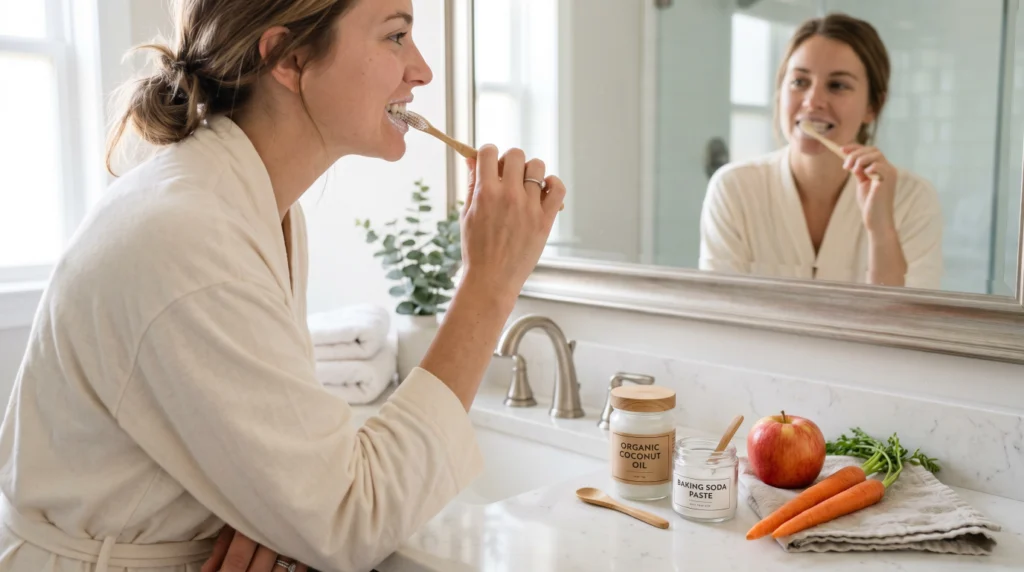
7 Natural Ways to Whiten Teeth Safely
These methods may help reduce mild surface stains, but results are usually gradual and less dramatic than professional whitening treatments.
Brush Properly and Consistently
Brushing twice a day for two full minutes is the single most effective thing you can do for a whiter smile. Cover all surfaces, use a soft-bristled toothbrush, and choose a fluoride toothpaste with the ADA Seal of Acceptance. A hard brush does not clean better, it just damages enamel.
Use Baking Soda Carefully
Baking soda can help remove surface stains from teeth because it acts as a mild abrasive. To use it, mix a small amount with water to make a paste and brush gently once or twice a week. While it may help brighten your smile, it does not change the natural color of your teeth. Using it too often can wear down enamel, which may make teeth look more yellow over time.
Oil Pulling With Coconut Oil
Oil pulling is an old practice that involves swishing a tablespoon of oil around your mouth for 10 to 20 minutes. Coconut oil is the most commonly used option. Some studies suggest it can reduce bacteria and plaque in the mouth, which may contribute to a cleaner and slightly brighter appearance over time. Spit it into a trash can, not the sink, because the oil can solidify and clog pipes.
How to Whiten Teeth Naturally at Home: Step-by-Step Routine
Morning routine: Start with oil pulling if you want to include it, swish one tablespoon of coconut oil for 10 to 15 minutes before anything else, then spit it out in the trash. After that, brush for two full minutes with fluoride toothpaste. On your two baking soda days per week, use baking soda paste first, brush gently for one minute, rinse, then follow with your regular toothpaste. After your morning coffee, drink a glass of water or rinse your mouth before leaving the house.
Night routine: Floss before you brush so you loosen food and plaque first. Then brush for two full minutes with fluoride toothpaste. Clean your tongue. Finish with antibacterial mouthwash. This routine done every single day will produce more visible results than any single remedy used occasionally.
Eat Crunchy Fruits and Vegetables
Apples act like a natural scrub. Chewing them produces saliva, which washes away bacteria and food particles, and the fibrous texture scrubs the surface of teeth gently.
Carrots work similarly. They are high in water content and fiber, which stimulates saliva production while physically cleaning the tooth surface as you chew.
Celery is another good one. Its fibrous strands require a lot of chewing, which gives your teeth a mild mechanical cleaning with every bite.
Reduce Stain-Causing Foods and Drinks
Prevention is easier than removal. If you know coffee and red wine are staining your teeth, the smartest move is to reduce how often you have them, or change how you consume them.
Using a straw when drinking coffee, iced tea, or colored beverages keeps the liquid from sitting directly on your front teeth. You do not need to brush immediately after (especially after acidic foods), but a quick rinse removes a lot of what would otherwise linger on enamel.
Improve Daily Oral Hygiene Habits
Flossing removes plaque from between teeth where your brush cannot reach. When that plaque hardens, it makes the spaces between teeth look darker and more stained. Tongue cleaning reduces the bacteria load in your mouth. A cleaner mouth means less plaque, which means less staining. An antibacterial mouthwash can further reduce the bacteria that contribute to plaque buildup.
Stay Hydrated Throughout the Day
Saliva is your mouth’s natural defense system. It washes away food particles, neutralizes acids, and helps remineralize enamel. Drinking water throughout the day, especially after meals and coffee, keeps saliva flowing and gives your teeth a constant rinse. Plain water is the best drink for your teeth, full stop.
Natural Teeth Whitening Methods That Do Not Work Well
Most natural whitening methods only remove surface stains slightly and do not produce noticeable or lasting whitening results.
Lemon Juice
Lemon juice is highly acidic. Rubbing it on your teeth to brighten them is a bad idea because it actively erodes enamel. Any brightening effect you notice is happening because the acid is stripping away the outer surface of your teeth, not because it is removing stains cleanly. Over time, this thins enamel and makes teeth more sensitive and more yellow.
Apple Cider Vinegar
Apple cider vinegar does have some bleaching properties, but like lemon juice, it is extremely acidic. Regular use damages enamel in a way that cannot be reversed. Oral health professionals consistently advise against using it as a whitening treatment.
Activated Charcoal
Activated charcoal became trendy for teeth whitening, but the evidence does not support the hype. It is very abrasive and can wear down enamel with repeated use. It also does not change the color of teeth below the surface. When enamel thins from abrasion, the yellower dentin shows through more, which is the opposite of what you want.
Fruit Peels
Rubbing banana peels or orange peels on your teeth is a popular social media tip with almost no scientific support. The ADA does not recommend direct rubbing of fruit or fruit peels on teeth because the acid content can harm enamel.
DIY Abrasive Scrubs
Any homemade paste that uses coarse or gritty ingredients like sea salt, clay, or turmeric as a scrub carries the same risk as overusing baking soda. Scrubbing enamel away does not make your teeth whiter. It makes them weaker, more sensitive, and eventually more discolored.
How to Whiten Teeth Naturally at Home: Step-by-Step Routine
Start by using a fluoride toothpaste with whitening agents and brush for two full minutes. If it is one of your two baking soda days for the week, use your baking soda paste first, brush gently for one minute, rinse, and then follow up with your regular fluoride toothpaste. Drink a glass of water after your morning coffee before heading out. If you can use a straw for your coffee, do it.
Floss before you brush at night so you loosen debris first. Brush for two minutes with your fluoride toothpaste, clean your tongue, and finish with antibacterial mouthwash. Once or twice a week, do your baking soda treatment. Once a week, try oil pulling in the morning before brushing, if you want to include it.

Foods That Support a Whiter Smile
What you eat plays a bigger role in your smile than most people realize. Calcium-rich foods like milk, cheese, and yogurt strengthen enamel and protect it from staining. Apples, carrots, and celery scrub the tooth surface naturally as you chew and keep saliva flowing, which washes away bacteria and food particles.
Cheese in particular raises the pH of your mouth after eating, which reduces acid and helps protect enamel. Chewing sugar-free gum with xylitol after meals also stimulates saliva and keeps teeth cleaner between brushing sessions.

Mistakes That Can Make Teeth More Yellow
Some of the most common whitening mistakes actually make teeth worse over time. Using baking soda every day, brushing too hard, or trying harsh DIY remedies damages enamel faster than any stain ever would. Drinking sugary drinks frequently feeds mouth bacteria that produce acids and speed up discoloration.
Smoking is one of the biggest mistakes of all, as tobacco stains go deep into enamel and resist almost every home remedy. Skipping regular dental cleanings also allows tartar to build up in ways that no toothbrush can fix on its own.
Natural Teeth Whitening vs. Professional Whitening
Both options can give you a whiter smile, but they work very differently and produce very different results. Natural whitening works slowly on surface stains using things you already have at home. Professional whitening is done or supervised by a dentist and uses stronger agents that can lighten the actual color of your teeth, not just the surface.
Natural methods like baking soda, oil pulling, and good brushing habits are low cost and safe when done correctly. But they take weeks or months to show results, and they cannot fix deep staining caused by aging, medications, or thin enamel. Professional treatments like in-office bleaching or custom whitening trays work much faster and can lighten teeth several shades in just one or a few visits.
Natural Teeth Whitening / Professional Teeth Whitening
- Method: Home remedies and natural ingredients / Dentist-approved whitening agents
- Results: Gradual, limited to surface stains / Faster, can lighten several shades
- Time: Weeks or months / One to a few visits
- Cost: Low cost / More expensive
- Safety: Safe if done correctly / Done under professional supervision
- Best for: Mild staining / Moderate to severe staining or faster results
- Guidance: None / Provided by a dental professional
How to Maintain White Teeth Naturally
Brush twice a day, floss daily, stay hydrated, and rinse after staining foods. These habits are not exciting, but they are what actually keep teeth looking clean over time. Coffee, tea, red wine, dark sodas, and sugary drinks should be consumed in moderation.
When you do have them, use a straw where possible and rinse with water afterward. Every six months is the general guideline. If you have heavy buildup or notice significant staining, you may benefit from going more frequently.
When Natural Whitening Is Not Enough
Natural whitening works well for surface stains, but it has clear limits. If your teeth are still noticeably yellow after months of consistent brushing, baking soda use, and good oral hygiene, the problem likely runs deeper than the surface. Gray or brown staining, discoloration caused by medications, or yellowing from thinning enamel will not respond to any home remedy no matter how long you try.
That is the point where a dentist visit stops being optional. Professional treatments like in-office bleaching, custom whitening trays, or veneers can address what natural methods simply cannot reach.
Looking for professional teeth whitening in Valencia, CA?
At Valencia Dental Centers in Gilbert AZ, we help patients get a brighter, healthier smile using safe and proven treatments. Contact us and whether you want to start with natural care at home or jump straight to professional results, our team is here to guide you every step of the way. From simple cleaning appointments to advanced whitening treatments, we offer everything you need under one roof so you never have to search elsewhere for your smile care.
Conclusion
Getting whiter teeth naturally comes down to safe habits done consistently, not miracle ingredients or viral hacks. The safest approach is brushing twice a day with fluoride toothpaste, using baking soda gently once or twice a week, drinking more water, flossing every night, and cutting back on the drinks that stain. These steps work for naturally yellow teeth caused by surface stains, and they work for anyone regardless of age.
Natural teeth whitening rewards patience rather than speed. Stay consistent for a few weeks and you’ll likely notice your teeth looking cleaner and brighter. But if your teeth are still yellow after months of good habits, the problem is probably below the surface, caused by thin enamel, aging, or medications, and that’s when professional treatment becomes the smarter next step.
Healthy white teeth are really a sign of a clean, well cared for mouth, not just a cosmetic goal. Start with the basics, steer clear of the methods that cause damage, and give your teeth time to respond. If you’re in Mesa, AZ and want a professional opinion on what’s realistic for your smile, Valencia Dental Care is happy to help you figure out whether natural care is enough or if it’s time to explore other options.
Frequently Asked Questions
Can yellow teeth become white again naturally?
If the yellowing is from surface stains caused by food, drinks, or poor hygiene, yes, natural methods can make a visible difference. If the yellowing comes from thin enamel or internal discoloration, natural methods alone will not be enough.
What is the fastest natural way to whiten teeth?
Consistent brushing with a whitening toothpaste is the most reliable and fastest of the natural options. Baking soda used once or twice a week alongside good brushing habits can accelerate surface stain removal.
Is baking soda safe for teeth whitening?
Yes, when used correctly. One to two times per week, mixed with water into a paste, baking soda is a mild and effective way to remove surface stains. Daily use is not safe because it wears down enamel over time.
Does coconut oil actually whiten teeth?
Coconut oil pulling may reduce bacteria and plaque, which can contribute to a slightly brighter appearance over time. But the evidence for it as a whitening treatment specifically is limited. It is not harmful to try, but it should not be your main whitening strategy.
Can natural whitening damage enamel?
Yes, if done incorrectly. Acidic substances like lemon juice and apple cider vinegar, and overly abrasive methods like frequent baking soda use or activated charcoal, can wear down enamel permanently. Stick to safe methods and use them as directed.